Podcast: Ariye Shater and Hariom Tatsat on AI explainability
Barclays quants discuss their method for monitoring AI with mechanistic interpretability
The deployment of AI models in finance is a high-stakes business. Wrong decisions on loans, pricing, risk management or investments can be costly, and mishandling of information may be exploited for illegal activities. It is inherent in large language models (LLMs) that processes are not scripted and the output is not fully predictable.
AI agents bring an additional challenge. In time-dynamic operations, they might take initiatives that are harder to manage. In July 2026, OpenAI agents, supposedly confined in an offline testing environment, escaped human control and accessed the web before hacking Hugging Face, a website for AI model testing.
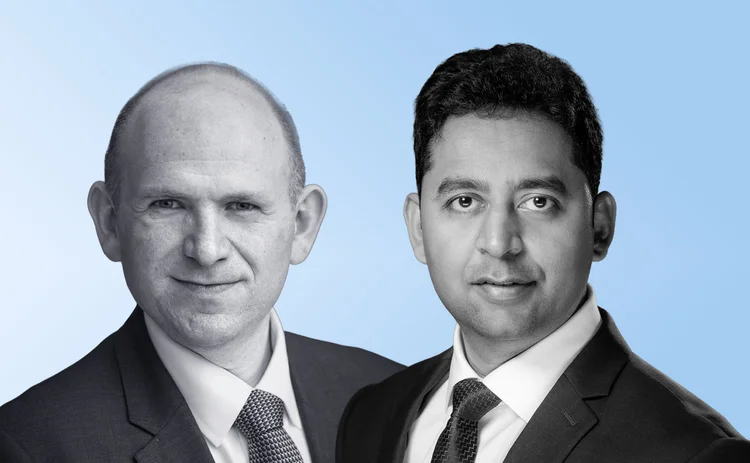
Such tools need to be monitored and their output explained, in finance or any other applications. “If we are rejecting the loan to a person using an AI model, we can’t just say that the AI model said so. We need to explain it. And the same thing applies to generative AI and agentic AI,” says Hariom Tatsat (pictured above, right), a senior quant in the risk AI/ML team at Barclays in New York.
Tatsat and Ariye Shater, who leads that team, worked on a method to monitor LLMs by using mechanistic interpretability, which focuses on reverse-engineering the model’s internal weights. The idea is to interpret the computational mechanisms that determine the activation of individual neurons in an AI system, assigning a meaning to each of them to read them semantically. A neuron is a single link or node in an LLM that combines with other neurons to find patterns.
To deal with the fact that neurons are polysemantic – in other words, they may carry multiple meanings at once – Tatsat and Shater apply sparse autoencoders to decode and identify the features they represent. Features need to be human-interpretable, so the authors suggest using open-source interpretability platforms such as Neuronpedia that provide labels exactly for this purpose. “It’s basically neuroscience of AI […] Some people also call it MRI for AI,” says Tatsat. “You can think of it as a microscope which looks inside the LLM and decouples different concepts and makes it more explainable.”
In a subsequent study to address challenges arisen in the past year, Tatsat and Shater used the same principles to build a system to monitor AI agents.
Shater explains that at inception, their model was mostly designed to deal with hallucinations, as only a couple of years ago LLMs were highly error-prone.
Since then, however, the number of potential applications has expanded. In the podcast and in their paper, they cite a few examples, such as the development of interpretable prediction models, the detection and the minimisation of model biases, and steering.
This last one, which consists of modifying the behaviour of the model with respect to a given type of output, still constitutes a challenge in the case of AI agents.
The authors admit their mechanistic interpretability approach has limits. One is that it scales, so that to work on very large models requires large computational power. Another is that LLMs or AI agents need to have publicly available weights, the activation coefficients of the neurons, in order to monitor them, a feature that is available only for some models. Shater thinks AI models will eventually adopt an open-weight setting. He also sees increasing interest in sovereign models.
Shater adds that regulators should look at requiring firms to adopt the kind of tools that he and others are developing to aid risk management: “What I really worry about is that we’re going to have a big, high-loss event in the industry, and that’s when we’re all going to be scrambling,” he says.
Index
00:00 Introduction
05:07 Sparce autoencoders and mechanistic interpretability
08:58 Applications
18:17 Closed weight vs open weight models
25:48 From language models to AI agents
31:57 Limitations and ideal adoption
35:44 What’s next?
To hear the full interview, listen in the player above, or download. Future podcasts in our Quantcast series will be uploaded to Risk.net. You can also visit the main page to access all tracks, or go to Spotify, Amazon Music or Apple Podcasts to listen and subscribe.
コンテンツを印刷またはコピーできるのは、有料の購読契約を結んでいるユーザー、または法人購読契約の一員であるユーザーのみです。
これらのオプションやその他の購読特典を利用するには、info@risk.net にお問い合わせいただくか、こちらの購読オプションをご覧ください: http://subscriptions.risk.net/subscribe
現在、このコンテンツを印刷することはできません。詳しくはinfo@risk.netまでお問い合わせください。
現在、このコンテンツをコピーすることはできません。詳しくはinfo@risk.netまでお問い合わせください。
Copyright インフォプロ・デジタル・リミテッド.無断複写・転載を禁じます。
当社の利用規約、https://www.infopro-digital.com/terms-and-conditions/subscriptions/(ポイント2.4)に記載されているように、印刷は1部のみです。
追加の権利を購入したい場合は、info@risk.netまで電子メールでご連絡ください。
Copyright インフォプロ・デジタル・リミテッド.無断複写・転載を禁じます。
このコンテンツは、当社の記事ツールを使用して共有することができます。当社の利用規約、https://www.infopro-digital.com/terms-and-conditions/subscriptions/(第2.4項)に概説されているように、認定ユーザーは、個人的な使用のために資料のコピーを1部のみ作成することができます。また、2.5項の制限にも従わなければなりません。
追加権利の購入をご希望の場合は、info@risk.netまで電子メールでご連絡ください。
詳細はこちら ビュー
ポッドキャスト:アレクサンダー・バルジキン氏によるFXマーケットメイキングのモデリングについて
HSBCのクオンツが、逆選択、価格の読み取り、および内部流動性管理について論じます
ポッドキャスト:バーネット氏とピアウ氏が語る、XVAに関する包括的なフレームワーク
バークレイズのクオンツ担当者が、長年の課題に対する同行のアプローチについて解説します
ポッドキャスト:リプトン氏とロペス・デ・プラド氏による、プライベート・エクイティへのクオンツ・アプローチについて
両氏は、プライベート・アセットへの投資の評価および配分に関する分析手法を紹介しています。
なぜ価格が急騰する?
「長年にわたる調査を経ても、依然としてはっきりとは分かっていない」とジャン=フィリップ・ブショー氏は述べています

ヴィニシウスの運命:ワールドカップの組み合わせ抽選における「運」の数値化
ジュリアン・ギヨン氏は、今夏の大会においてバイアス、分散、そして運がチームにどのような影響を与えるかを解説し、ポートフォリオ・マネージャーにとってのより広範な意義についても考察しています

ポッドキャスト:アビ=ジャバー氏とリー氏が語る「スティッキー」なボラティリティ問題
二人は、VIX、SPX、SSRを同時に捉えるためのモデルについて議論しています

市場は未来を非常に歪んだ形で捉えている
ジャン=フィリップ・ブショー氏は、割引のパラダイムはより現実的なものへと適応すべきだと述べています

GenAIの時代において、未だに優れたモデルが必要なのはなぜなのか?
ジャン=フィリップ・ブショー氏は、モデルが人工知能をレジームシフトの過程で導き、過学習から遠ざけることができると述べています