Why central banks shouldn’t ignore stablecoins
Rapid growth of stablecoins could impair monetary policy transmission
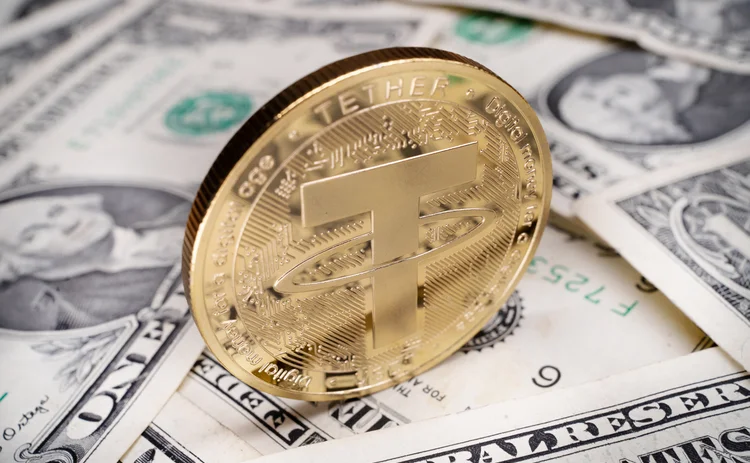
For those who remember the 1970s, the recent growth of stablecoins may bring to mind the early, Wild West days of the Eurodollar market. Back then, the emergence of cheap offshore funding allowed US banks to circumvent domestic regulations and associated capital costs.
The Federal Reserve initially ignored the rise of this shadow currency system, which grew by more than tenfold in that turbulent decade. That proved to be a mistake. The explosion of Eurodollars fuelled a sharp rise in the velocity of money – albeit on a smaller base to now – and undermined the transmission of monetary policy at a time of rising inflation.
Allowing T0 and T1 assets to be fungible is a curveball that bank treasurers will find challenging to deal with
Like Eurodollars in the 1970s, stablecoins exist outside the official money supply and beyond the reach of regulators. They also possess inherent advantages, allowing for T0 settlement of both digital and traditional assets. The fact that large commercial banks are contemplating tokenised deposits suggests they see value in the concept.
Before the FTX and Terra debacles of 2022, the market for stablecoins was growing rapidly – at a rate of 500% per annum, as of September 2021, according to the Fed. There are presently around $130 billion worth of stablecoins backed by high-quality liquid assets (HQLAs), such as US Treasuries primarily, and, in the near future perhaps, German Bunds, UK gilts and Japanese government bonds. The combined annualised payments volume of the top-three stablecoins – Tether, USDC and Binance USD – in the wholesale segment stands at around $7.5 trillion on-chain, and almost $11 trillion including on-exchange volumes (see table A, columns three and five). This is roughly equivalent to a velocity of around 80 to 100, compared with only 1.26 for traditional M1 money supply – essentially cash and current accounts.
This alternative money supply currently exists outside the regulatory perimeter. If the growth of stablecoins resumes at anything close to pre-2022 levels, this could have severely adversely consequences for repo markets and other parts of traditional financial market plumbing, especially if the timeline for unwinding the Fed’s balance sheet is extended. In other words, the rapid growth of stablecoins that silo HQLAs may have spillover effects for financial markets and monetary policy transmission. For this reason, we have previously suggested that stablecoins should be regulated and backed by central bank reserves.
That may be a bridge too far for supervisors. There are at least two other ways to bringing stablecoins within the regulator perimeter. One option is tokenised deposits – not a new concept, but a new name for electronic liabilities. Some banks already offer these, but they will need to break their ‘walled gardens’ to increase the velocity of tokenised deposits. To replicate the utility of stablecoins, a JP Morgan token must be eligible for use at Barclays or Citi, and vice versa. One problem is that tokenised deposits, which are digital assets and settle T0, must still be ring-fenced from conventional T1 deposits. Allowing T0 and T1 assets to be fungible is a curveball that bank treasurers will find challenging to deal with. In the US, the Office of the Comptroller of the Currency has signalled that it is not keen on such fungibility.
Another alternative is currently being explored by USDC, one of the big three stablecoins, which is moving the bulk of its collateral – primarily US Treasury bills – to BlackRock. These assets will be held in a BlackRock money market fund with access to the Fed’s reverse repo programme, essentially creating an explicit central bank liability without access to a Fed master account. This is an interesting development that suggests stablecoins can move inside the regulatory perimeter, but it is far from guaranteed that the Fed will permit this regulatory arbitrage from a lightly regulated non-bank entity.
It remains to be seen whether stablecoin innovations will be widely embraced by the market, or if legacy payment systems will be upgraded to make them redundant. But for any central bank that wishes to control money supply, ignoring stablecoins may create problems similar to those posed by Eurodollars in the 1970s.
Manmohan Singh is a senior economist at the International Monetary Fund and the author of Collateral markets and financial plumbing. Charles Kahn is professor emeritus at University of Illinois at Urbana-Champaign.
The views expressed in this article are those of the authors, and should not be attributed to the IMF, its executive board or its management.
コンテンツを印刷またはコピーできるのは、有料の購読契約を結んでいるユーザー、または法人購読契約の一員であるユーザーのみです。
これらのオプションやその他の購読特典を利用するには、info@risk.net にお問い合わせいただくか、こちらの購読オプションをご覧ください: http://subscriptions.risk.net/subscribe
現在、このコンテンツを印刷することはできません。詳しくはinfo@risk.netまでお問い合わせください。
現在、このコンテンツをコピーすることはできません。詳しくはinfo@risk.netまでお問い合わせください。
Copyright インフォプロ・デジタル・リミテッド.無断複写・転載を禁じます。
当社の利用規約、https://www.infopro-digital.com/terms-and-conditions/subscriptions/(ポイント2.4)に記載されているように、印刷は1部のみです。
追加の権利を購入したい場合は、info@risk.netまで電子メールでご連絡ください。
Copyright インフォプロ・デジタル・リミテッド.無断複写・転載を禁じます。
このコンテンツは、当社の記事ツールを使用して共有することができます。当社の利用規約、https://www.infopro-digital.com/terms-and-conditions/subscriptions/(第2.4項)に概説されているように、認定ユーザーは、個人的な使用のために資料のコピーを1部のみ作成することができます。また、2.5項の制限にも従わなければなりません。
追加権利の購入をご希望の場合は、info@risk.netまで電子メールでご連絡ください。
詳細はこちら コメント
AIを正しい軌道に乗せ続けるには、継続的な検証が鍵となる
意思決定ごとの検証を行うことで、ユーザーがAIの判断を信頼できるようになります

AIがリスク管理の業務をうまくこなせるようになったら、どうなるのか?
リスク担当幹部であるアレックス・ゴルビン氏は、エージェント型AIが分析業務をますます担うようになる中、リスク分野で価値あるキャリアを築くにはどうすればよいかと問いかけます

変動の激しいエネルギー市場におけるインフレリスクの再評価
バークレイズのサミー・ベン・アウン氏は、インフレ・スワップのエネルギーショックに対する感応度をモデル化する手法について概説しています
KKR、合併前の届出不備により独占禁止法違反の罰金額で過去最高を記録した
また、メキシコ国債の相場操作スキャンダルでディーラー各社が多額の賠償金を支払うこととなりました。UBSではAMLのチェックが不十分だったことも判明しています。データ提供:ORX News

トークン化:ロンドンの金融市場にとっての単なるでたらめ?
デジタルトランスフォーメーションという文脈でテクノロジーに焦点を当てすぎると、1980年代の「トーラス」の大失敗を繰り返す恐れがあります

米国債の買い戻しは、(担保の)連鎖反応を引き起こす恐れがある
あるエコノミストは、債券の満期構成の再調整により、担保の連動関係が限界まで逼迫する恐れがあると指摘しています

ECBの地政学的ストレステストにはコストが伴う
ある学者は、地政学的リスク事象による損失を補償するための保険料がいくらになるべきかについては、市場だけが判断できるものであり、現時点ではそのような市場は存在しないと主張しています。

ポッドキャスト:アレクサンダー・バルジキン氏によるFXマーケットメイキングのモデリングについて
HSBCのクオンツが、逆選択、価格の読み取り、および内部流動性管理について論じます