
Operational risk
WHAT IS THIS? Operational risks are those arising from people, processes and systems – the biggest form of exposure for many industries, but one that was neglected by financial firms until the collapse of Barings Bank in 1995. It was added to the Basel capital framework in 2004, but attempts to model operational risk were dealt a heavy blow by the huge, unforeseen losses suffered by banks in the aftermath of the financial crisis.

Royal Commission report sparks conduct risk changes at ANZ
Regulators must work with banks on conduct risk rules to avoid “box-ticking exercise”

RJ O’Brien’s chief risk officer on margin models and clearing
CME’s looming switch to VAR model will have pronounced effect on broker and its clients, says Brad Giemza

Singapore tech risk guidelines spark scramble for IT talent
Watchdog asks banks to demonstrate tech expertise among board and senior management
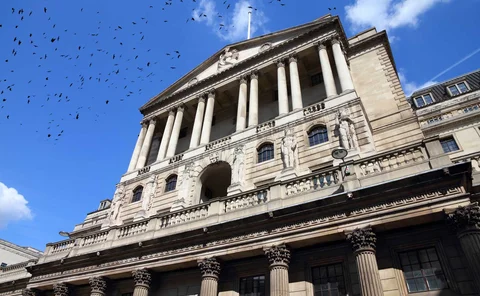
BoE makes climate risk a hot topic for banks
Financial institutions must entrust oversight of climate risk to named individual under senior managers regime

Estimation of losses due to cyber risk for financial institutions
The objective of this paper is to analyze cyber risk from an operational risk perspective and to measure cyber risk empirically.

Banks grapple with social media risk
In shadow of Metro Bank WhatsApp episode, panellists warn banks need to deftly handle social media blow-ups

FCA may delay enforcement of UK’s conduct regime
Smaller firms won’t be penalised right away, says head of regulatory decisions committee

It’s a dangerous world: stress-test your managers
Ex-British Army chief tells banks: “You need to see how your peers react when the pressure is on”

Royal Commission refunds weigh on Aussie banks
A$1.7 billion of remediation costs taken by Big Four in H1

Want to catch misbehaviour? Watch the electronic chat
“It’s amazing how many people have arguments on chat” – BNP surveillance executive

BoE to scrutinise banks’ op risk tolerance limits
Watchdog says banks must prove they can stick to tolerance limits; cyber stress test planned

HSBC hires BoE’s cyber risk chief
Watchdog’s CISO will serve as UK bank’s first head of resilience risk
As legal losses recede, Morgan Stanley's op risk falls
Bank cuts op RWAs 7% in the first quarter

Op risk data: Chinese regulators levy record fines
Also: top losses feature two frauds at Russia banks and AML provisions at Nordea. Data by ORX News

Quants propose new method of calculating op risk VAR
So-called ‘incremental value-at-risk’ offers future snapshot of op risk exposure, authors say

A Chinese megabank and its CRO in the US
Frank Morisano has put together a risk team, his unit funds itself, and he’s banned cloud technology
Higher op risk charge follows UBS tax fraud verdict
Clash with French courts adds $2.8 billion to op RWAs

Life’s a breach: banks settle uncomfortably into GDPR
A year into exacting data privacy regulation, ramifications are becoming more tangible

Stoplight system could spot imminent meltdowns – study
Proposed traffic light system sifts through transaction data for signs of trouble

Modelling cyber losses could get easier – study
Cyber losses behaved much like non-cyber losses when grouped by severity, so perhaps less data is needed

Smart weaponry aids bank fight against money laundering
Advanced algos and machine learning gain credence as regulators encourage innovation
EU G-Sibs add €2.7bn of op RWAs in 2018
Op risk charge anticipated to jump €21.5 billion under Basel III

Op risk data: Europe’s AML drive follows Danske and ING slips
Also: top five losses include mortgage penalty for Citi and reporting fines for Goldman, UBS. Data by ORX News

The future of operational risk management
As the efficiency of operational risk management remains a top priority and pressure to maximise value increases, emerging technology could prove crucial. Nitish Idnani, leader of oprisk management services at Deloitte, explores how the oprisk management…