

Confusion reigns as US prepares for Libor’s end
Mixed messages from US regulators make it more difficult to plan for life after Libor

The average US dollar Libor user can be forgiven for being a little confused about what comes next.
Regulators have called for no new Libor contracts to be written after the end of this year, though the discredited benchmark will continue to be available for use in existing contracts until mid-2023.
The Federal Reserve-backed working group tasked with ushering US markets off Libor has said it wants to see a “vibrant and innovative market” for reference rates emerge in its place. But regulators have made no secret of their preferred option – the secured overnight financing rate, or SOFR – even going so far as to describe some private-sector alternatives as “flawed”.
The back-and-forth over the availability of a forward-looking term SOFR hasn’t helped. In March, the Alternative Reference Rates Committee warned that low liquidity in overnight SOFR derivatives could push the timeline for a term version beyond 2021. Two months later, CME was named as the official provider of a term SOFR rate, though the ARRC stopped short of giving it the full endorsement necessary for use in regulator-backed fallbacks for cash products. That is expected to come in late July or early August. But as it stands, the term SOFR rate may not be available for use in derivatives for another two years.
That creates an odd situation. CME will not offer futures or swaps clearing linked to its officially endorsed term SOFR rate until June 2023, or even later. But the exchange plans to launch a futures contract referencing Bloomberg’s short-term bank yield index, or BSBY – which has been severely criticised by regulators – before the end of September, with clearing of BSBY swaps slated for year-end.
Regulators have even gone so far as to describe some private-sector alternatives as “flawed”
All of this shows how little control US regulators have over the Libor transition. In the absence of anything comparable to the European Union and UK’s benchmarks regulation (BMR), they have no real power to prohibit the use of benchmarks that meet vaguely defined international standards.
Confoundingly, the UK’s Financial Conduct Authority may have more influence over some SOFR alternatives than US regulators. Ice Benchmark Administration, which administers Libor and is developing its Bank Yield Index as an alternative, CME Group Benchmark Administration, the official term SOFR provider, and Bloomberg Index Services, which publishes BSBY, are all regulated by the FCA under the UK’s BMR.

Bank of England governor Andrew Bailey has said publicly that some of these benchmarks pose “a range of complex longer-term risks”. It is perhaps little surprise then that BSBY is not authorised for use in the UK. But that hasn’t prevented the rate from being used in US transactions.
In the US, the market will decide what comes after Libor, and the regulators’ efforts to micro-manage the outcome have only served to complicate matters. A recent survey by consulting firm SIA Partners found that confused messaging around timelines and reference rate options was a top transition concern among the roughly 50 respondents, including banks and end-users.
There’s a lot to be cleared up in the next six months before US dollar Libor disappears in the rear-view mirror. Exactly what cash products and their associated hedges will reference in its place remains something of a mystery. Regulators need to sharpen their messaging and focus on what they control to ensure an orderly transition to a post-Libor market.
コンテンツを印刷またはコピーできるのは、有料の購読契約を結んでいるユーザー、または法人購読契約の一員であるユーザーのみです。
これらのオプションやその他の購読特典を利用するには、info@risk.net にお問い合わせいただくか、こちらの購読オプションをご覧ください: http://subscriptions.risk.net/subscribe
現在、このコンテンツを印刷することはできません。詳しくはinfo@risk.netまでお問い合わせください。
現在、このコンテンツをコピーすることはできません。詳しくはinfo@risk.netまでお問い合わせください。
Copyright インフォプロ・デジタル・リミテッド.無断複写・転載を禁じます。
当社の利用規約、https://www.infopro-digital.com/terms-and-conditions/subscriptions/(ポイント2.4)に記載されているように、印刷は1部のみです。
追加の権利を購入したい場合は、info@risk.netまで電子メールでご連絡ください。
Copyright インフォプロ・デジタル・リミテッド.無断複写・転載を禁じます。
このコンテンツは、当社の記事ツールを使用して共有することができます。当社の利用規約、https://www.infopro-digital.com/terms-and-conditions/subscriptions/(第2.4項)に概説されているように、認定ユーザーは、個人的な使用のために資料のコピーを1部のみ作成することができます。また、2.5項の制限にも従わなければなりません。
追加権利の購入をご希望の場合は、info@risk.netまで電子メールでご連絡ください。
詳細はこちら 我々の見解
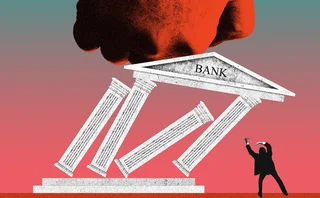
なぜ破綻処理計画を骨抜きにするのは良くないのか
銀行の破綻は避けられないものですが、銀行危機はそうではありません
日本の「大還流」?急速なリパトリは期待できない
GPIFによる米国債から日本国債への切り替えは段階的に行われる見通しであり、これはヘッジファンドにとってさらなる悪材料となる可能性があります

AIエージェントが、信頼できないスタッフのような存在である理由
GenAIシステムに内在する不確実性により、リスク管理担当者はより対立的なアプローチをとらざるを得ません

批判派は、パーペチュアルはすべてフロスだと言っています。しかし、数字はそうではないことを示唆している
TradFiを原資産とする永久先物に対する堅調な未決済建玉は、CMEやEurexといった既存の取引所にとって脅威となる可能性があります

SpaceXがCMEの個別銘柄先物に待望の追い風をもたらした
S&P 500先物契約へのIPO関連の追加契約として、新たな契約が急増する可能性があります
Bank vs non-bank: FX’s two-tier reality
CME and LSEG data show banks provide sticky and broad liquidity, while non-banks cling tightly to the price

規制当局はエンフォースメントを甘くしているのか?(そして、私たちはそれを気にするべきなのか?)
米国の規制当局は、技術的な規則違反に対する罰則を緩和しており、小さくとも重要なリスクが見過ごされてしまうのではないかという懸念が高まっています

FX HedgePoolを超えて:オール・トゥ・オール(All-to-All)の今後はどうなる?
この取引モデルの支持者たちは、その将来性を明るく見ていますが、普及に向けた障壁は依然として残っています。
