US clearing houses need not take collateral damage from Brexit
There are signs the US and EU will pull back from the brink in dispute over CCPs

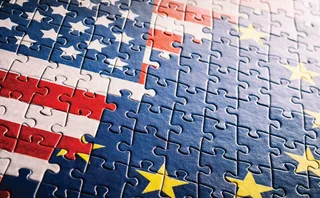
In July, the US Commodity Futures Trading Commission proposed two new ways for foreign clearing houses to service US clients without submitting to US regulations.
This, as Steven Maijoor, chair of the European Securities and Markets Authority, recently told Risk.net, “should be a moment of joy”.
If enacted, the proposed rule changes would bring the CFTC closer into line with the approach taken by the European Union. At present, European central counterparties (CCPs) such as LCH and Eurex must submit to full regulation by the CFTC in order to clear swaps for US clients, so their lives could be about to get easier.
But the atmosphere has turned sour as the EU has moved in the opposite direction. Previously, Esma deferred fully to foreign regulators in regimes deemed equivalent. But recent revisions to the European Market Infrastructure Regulation – dubbed Emir 2.2 – grant Esma direct supervision powers over foreign CCPs that are deemed to pose a systemic risk to European markets.
While Esma was asking for these powers before June 2016, no-one really doubts that Brexit has supercharged the EU’s extraterritorial ambitions. From the very genesis of Emir 2.2, Risk.net saw evidence that the rules were designed to target one specific clearing house: London’s LCH, which handles a huge proportion of the EU interest rate swaps market.
The US would have good reason to complain if its CCPs become collateral damage in the EU-UK divorce. The EU’s relationship with the UK is fundamentally different to the one it has with the US. The latter is a major foreign financial jurisdiction, and there are reciprocal advantages to each side offering the other more access to their home market. But the UK is Europe’s financial centre, and the EU is understandably anxious about such a large part of what is currently its home market moving beyond its regulatory control after Brexit day.
If Emir 2.2 is truly designed with Brexit in mind, it should not disrupt the hard-won equivalence deal between the EU and US. The latest noises from the US suggest uncertainty – rather than the basic concept of the EU’s ‘tiering’ requirements – is the main cause of alarm within the CFTC
“We should judge this tiering exercise on its results,” CFTC commissioner Brian Quintenz said in a statement on September 24. “There are results that create a positive regulatory and market framework for the appropriate supervision of CCPs that operate across jurisdictions, and there are results which would create very negative regulatory and market consequences. The earlier that I and my colleagues receive clarity on the outcomes of this tiering process, the more likely it is we can all work to avoid any negative outcome.”
That suggests there is room for a compromise that would avoid a pile-up of duplicate supervision in the US and EU. But it may not be such good news for the UK. If the main focus of US and EU regulators is on maintaining a good relationship with each other, the UK may find itself left out in the cold after Brexit.
コンテンツを印刷またはコピーできるのは、有料の購読契約を結んでいるユーザー、または法人購読契約の一員であるユーザーのみです。
これらのオプションやその他の購読特典を利用するには、info@risk.net にお問い合わせいただくか、こちらの購読オプションをご覧ください: http://subscriptions.risk.net/subscribe
現在、このコンテンツを印刷することはできません。詳しくはinfo@risk.netまでお問い合わせください。
現在、このコンテンツをコピーすることはできません。詳しくはinfo@risk.netまでお問い合わせください。
Copyright インフォプロ・デジタル・リミテッド.無断複写・転載を禁じます。
当社の利用規約、https://www.infopro-digital.com/terms-and-conditions/subscriptions/(ポイント2.4)に記載されているように、印刷は1部のみです。
追加の権利を購入したい場合は、info@risk.netまで電子メールでご連絡ください。
Copyright インフォプロ・デジタル・リミテッド.無断複写・転載を禁じます。
このコンテンツは、当社の記事ツールを使用して共有することができます。当社の利用規約、https://www.infopro-digital.com/terms-and-conditions/subscriptions/(第2.4項)に概説されているように、認定ユーザーは、個人的な使用のために資料のコピーを1部のみ作成することができます。また、2.5項の制限にも従わなければなりません。
追加権利の購入をご希望の場合は、info@risk.netまで電子メールでご連絡ください。
詳細はこちら 我々の見解
批判派は、パーペチュアルはすべてフロスだと言っています。しかし、数字はそうではないことを示唆している
TradFiを原資産とする永久先物に対する堅調な未決済建玉は、CMEやEurexといった既存の取引所にとって脅威となる可能性があります

SpaceXがCMEの個別銘柄先物に待望の追い風をもたらした
S&P 500先物契約へのIPO関連の追加契約として、新たな契約が急増する可能性があります
Bank vs non-bank: FX’s two-tier reality
CME and LSEG data show banks provide sticky and broad liquidity, while non-banks cling tightly to the price

規制当局はエンフォースメントを甘くしているのか?(そして、私たちはそれを気にするべきなのか?)
米国の規制当局は、技術的な規則違反に対する罰則を緩和しており、小さくとも重要なリスクが見過ごされてしまうのではないかという懸念が高まっています

FX HedgePoolを超えて:オール・トゥ・オール(All-to-All)の今後はどうなる?
この取引モデルの支持者たちは、その将来性を明るく見ていますが、普及に向けた障壁は依然として残っています。

バーゼル協定のCVA見直し:米国では説得力があるものの、欧州ではそれほどではない
信用リスクモデルの使用禁止は、米国の銀行がより高度なCVA手法を採用するきっかけとなる可能性があります

オルタナティブ・データは予測市場に賭けているのか?
新たなデータの豊富な情報源を提供する一方で、法的な不確実性は依然として残っています

「SaaSpocalypse」は、プライベート市場にリスクモデルが必要であることを示している
投資家たちは、プライベート・クレジットにおける損失がどれほど深刻なものになるか、ほとんど見当がつかない