
Feature
The Mastery Of Disaster
New technologies, clear plans and practice can help any Wall Street firm better prepare itself for a disaster the size and scope of the events of Sept. 11, 2001.
Sweating the Small Stuff
Preparing for catastrophes is only part of it. More frequently (albeit less extensively), firms are testing their readiness for water main breaks, subway strikes and power outages.
Book extract > Regulatory Issues on Credit Ratings
The art (and some science) of credit rating has been in place, at least in the US, for almost a century now. In the Foreword we learned that credit rating as a process has its humble beginnings in the early 1900s in conjunction with theburgeoning market…
Book extract > Regulatory Use of Credit Ratings: Implications for Banks, Supervisors and Markets
Barbara C. Matthews is Banking Advisor and Regulatory Counsel to the Institute of International Finance, Inc. (IIF). The views presented in this chapter, however, are her personal views and do not necessarily represent the views of the IIF or its members…

The new orthodoxy
Introduction
BaselAlert.com launches new books section
BaselAlert.com today launches a new section of the website devoted to books . This section will contain special offers, book reviews, and selected excerpts.
The power of the portfolio
To observers, credit portfolio modelling appears particularly dependent upon making approximations. Derivatives traders may study finite difference schemes, but at least the pricing models are finely calibrated to the market. Asset managers might have to…

Pointing the index finger
Concerns over manipulative energy price reporting has led to a call for price index reform. But many market participants are apprehensive about disclosing detailed confidential data to a third party. James Ockenden looks at developments

Greening the markets
Environmental risks are increasingly being recognised as important financial issues, but the markets are still some way from rewarding companies for good environmental performance, as Kevin Foster discovers

Models of good behaviour
The development of new models that describe the real dynamics of energy prices have to take into account the behavioural aspects of market players. The problem is how to quantify these aspects. Maria Kielmas reports

Pumping up prices
Gasoline prices in the US hit all-time highs in March, and the price is expected to remain high throughout the summer. Kevin Foster looks at the contributing factors
Optimise this
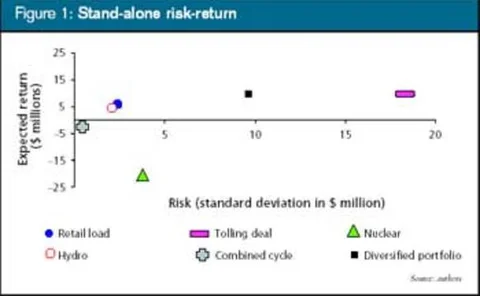
One of the reactions to recent energy trading difficulties has been a shift away from speculative activities towards portfolio optimisation, but what does the term really mean, ask Tim Essaye and Brett Humphreys

The return of Russian crude
Russia has reclaimed its position as the world’s biggest oil producer for the first time in a decade – but uncertainty is still preventing some foreign oil firms from making the investments the country needs to fulfil its potential. Kevin Foster reports

Trading with a small ‘t’
What made headlines before is now becoming everyday news: energy companies are scaling back or leaving energy trading. Some industry observers are emphasising the shift to ‘trading around assets’. Anne Ku investigates just what this means

Seeking a boost for crude
Venezuela’s internal conflict and the intended removal of Saddam Hussein from Iraq have meant both countries are seeking deals with international investors to boost oil production. But are the potential legal problems worth the trouble? By Maria Kielmas

Building a risk-efficient portfolio
Investing

A clear winner
Review

Trading places
Recruiting

RMF: a consistent performer
Profile

Trading transparency tug-of-war
Prime brokerage

A liquidity haircut for hedge funds
Cutting edge: Liquidity risk

Deciding hedge fund allocations
Pension funds

Virtual funds
Replication

A surreptitious stampede
Credit derivatives