Nickel debacle weakens UK’s case on clearing supervision
LME episode comes amid scrutiny of UK regime and fresh Brexit row

Just over a decade ago, London and its exchanges found themselves suddenly popular. Spurred on by a weaker pound, strong derivatives markets and the UK’s position as a corporate-friendly beachhead within the EU, a raft of foreign suitors queued up to buy its bourses, with none more in demand than the London Metal Exchange.
Today, the still weaker pound aside, things feel a little different.
The LME’s decision to cancel some $4 billion worth of nickel trades in early March was historic for less popular reasons. Ten days after Russia’s invasion of Ukraine, prices skyrocketed 250% inside 24 hours, leading the bourse to declare a “disorderly” market – a move that has attracted vitriol and lawsuits from the hedge funds on the winning side of those trades.
The LME’s position has remained steadfast: it acted to protect its members. Chief executive Matt Chamberlain’s own words of mitigation were blunt: the exchange felt it couldn’t call the short side of those trades without causing a chain of defaults. That may have been enough to convince LME Clear’s management – and its regulators – that it had no choice but to jump through several stages of the central counterparty’s rule book, and permit a near-unprecedented tear-up.
If that’s the case, it remains extraordinary; risk veterans quietly point out most CCPs have this option in their rule book, but none have exercised it in modern financial markets. If anything, it’s still harder to fathom why, as Risk.net first reported, margins on a metal significantly disrupted by Russia’s invasion had scarcely budged 10 days into the war. Or indeed why the bourse felt it lacked sufficient information on sizeable end-users’ aggregate positions, and perhaps most damningly of all, why it had failed to introduce circuit breakers on key contracts in the advent, despite members’ chuntering.
In laying bare the decision-making that led it to this point, exonerating factors could still come to light. But members may not wait to find out: some, including base metals player Britannia Financial, have already voted with their feet. How many follow them might depend on what emerges from one of two reports, from UK regulators and the LME’s independent report into what happened – a job Chamberlain indicated it was still tendering for last week – or via court proceedings.
Either report could have serious implications for the LME’s supervisors too. At a tricky moment for post-Brexit EU relations, the UK is trying to make the case for the right to carry on supervising its own CCPs. It is also less than two years since LME Clear was the only CCP to fail Esma’s stress tests, blowing through its stated default resources off the back of simulated metals market moves the bourse said it considered unrealistic.
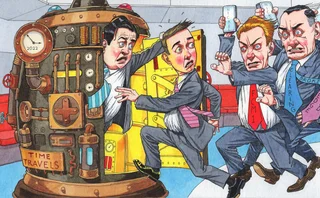
CME Group and Ice, of course, had designs on buying the LME before Hong Kong Exchanges and Clearing ultimately bought it in 2012. While one of the two exchange giants has been content to throw stones, the other is getting down to business, and is already talking to LME’s customers: CME has plans to launch a nickel contract by the end of the year, market sources have indicated.
In a very different context, the US derivatives markets’ chief regulator noted recently that his watchdog has a Congressional mandate to ensure the primacy of US markets; at the moment, London’s markets and its supervisors are doing their job for them.
Additional reporting by Costas Mourselas
コンテンツを印刷またはコピーできるのは、有料の購読契約を結んでいるユーザー、または法人購読契約の一員であるユーザーのみです。
これらのオプションやその他の購読特典を利用するには、info@risk.net にお問い合わせいただくか、こちらの購読オプションをご覧ください: http://subscriptions.risk.net/subscribe
現在、このコンテンツを印刷することはできません。詳しくはinfo@risk.netまでお問い合わせください。
現在、このコンテンツをコピーすることはできません。詳しくはinfo@risk.netまでお問い合わせください。
Copyright インフォプロ・デジタル・リミテッド.無断複写・転載を禁じます。
当社の利用規約、https://www.infopro-digital.com/terms-and-conditions/subscriptions/(ポイント2.4)に記載されているように、印刷は1部のみです。
追加の権利を購入したい場合は、info@risk.netまで電子メールでご連絡ください。
Copyright インフォプロ・デジタル・リミテッド.無断複写・転載を禁じます。
このコンテンツは、当社の記事ツールを使用して共有することができます。当社の利用規約、https://www.infopro-digital.com/terms-and-conditions/subscriptions/(第2.4項)に概説されているように、認定ユーザーは、個人的な使用のために資料のコピーを1部のみ作成することができます。また、2.5項の制限にも従わなければなりません。
追加権利の購入をご希望の場合は、info@risk.netまで電子メールでご連絡ください。
詳細はこちら 我々の見解
批判派は、パーペチュアルはすべてフロスだと言っています。しかし、数字はそうではないことを示唆している
TradFiを原資産とする永久先物に対する堅調な未決済建玉は、CMEやEurexといった既存の取引所にとって脅威となる可能性があります

SpaceXがCMEの個別銘柄先物に待望の追い風をもたらした
S&P 500先物契約へのIPO関連の追加契約として、新たな契約が急増する可能性があります
Bank vs non-bank: FX’s two-tier reality
CME and LSEG data show banks provide sticky and broad liquidity, while non-banks cling tightly to the price

規制当局はエンフォースメントを甘くしているのか?(そして、私たちはそれを気にするべきなのか?)
米国の規制当局は、技術的な規則違反に対する罰則を緩和しており、小さくとも重要なリスクが見過ごされてしまうのではないかという懸念が高まっています

FX HedgePoolを超えて:オール・トゥ・オール(All-to-All)の今後はどうなる?
この取引モデルの支持者たちは、その将来性を明るく見ていますが、普及に向けた障壁は依然として残っています。

バーゼル協定のCVA見直し:米国では説得力があるものの、欧州ではそれほどではない
信用リスクモデルの使用禁止は、米国の銀行がより高度なCVA手法を採用するきっかけとなる可能性があります

オルタナティブ・データは予測市場に賭けているのか?
新たなデータの豊富な情報源を提供する一方で、法的な不確実性は依然として残っています

「SaaSpocalypse」は、プライベート市場にリスクモデルが必要であることを示している
投資家たちは、プライベート・クレジットにおける損失がどれほど深刻なものになるか、ほとんど見当がつかない