Fed vs Fed: central bank faces traps of its own making
One of the central bank’s goals, balance sheet normalisation, is about to collide with another: banking system resilience
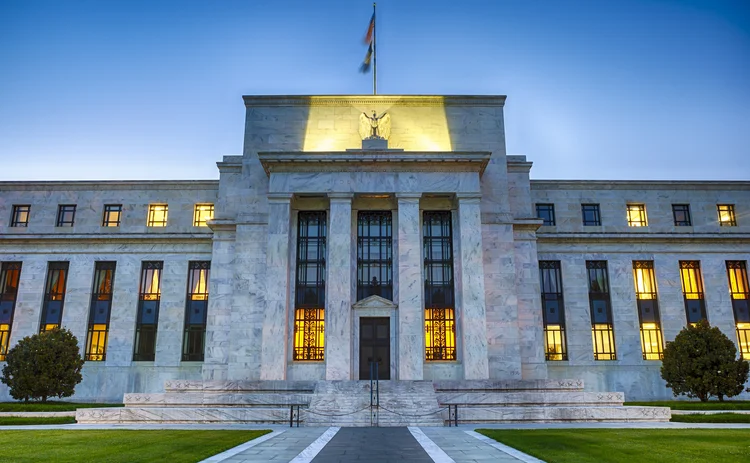

Since 1961, the lead characters of Spy vs Spy have fought a running battle in the pages of Mad magazine. Identical but for the colour of their trenchcoats and hats – one wears black, the other white – their fate is to be locked in perpetual combat with an equally talented twin.
Over the next couple of years, a similar story looks set to play out for the twin arms of the Federal Reserve Board. Just with fewer sticks of dynamite and poisonings.
The Black Fed – which cares about bank supervisory and systemic risk – has spent much of the past decade shaping a global regulatory response to the crisis, in which a key goal has been to make banks more resistant to liquidity risk.
Meanwhile, the White Fed – which cares about the economy and monetary policy – first inflated its balance sheet by purchasing vast amounts of bonds, and is now seeking to disgorge those bonds and return to normal.
The White Fed has to do this while balancing its books. As it winds down the $4.2 trillion of assets in its system open market account portfolio, it will have to reduce its liabilities by a similar amount. And the only fat on the liability side of the central bank’s balance sheet is the excess reserves that have grown in tandem with the Fed’s bond buying.
Those reserves currently stand at $2.1 trillion, having averaged only $45 billion in 2007, so it looks like there is plenty of room to move lower. But, as it drains reserves, the White Fed will have to navigate the fiendish traps set by the Black Fed.
The liquidity coverage ratio (LCR) requires banks to hold large buffers of high-quality liquid assets, which can be tapped at short notice to help a bank through a 30-day stress period. Just under half of the biggest US banks’ LCR assets are held in the form of reserves at the Fed.
As with reserves, the LCR treats US Treasuries as though the bank has cash in its pocket – other, less-liquid assets suffer a haircut when counting them towards the regulatory minimum.
Costs
But there will be costs for banks if they try to rebalance LCR holdings massively towards government bonds. Under the second of the Black Fed’s post-crisis liquidity rules, the net stable funding ratio, banks have to match 5% of their Treasury holdings with long-term funding.
In addition, one-month T-Bills currently yield 10–20 basis points less than the interest paid by the Fed on excess reserves. As interest rates rise in the US, the value of bond portfolios will suffer.
And while the LCR is supposed to cover a month-long stress period, banks have been pushed to monitor and manage intraday liquidity needs more effectively. Central bank reserves are the safest way to meet this need.
So who wins? For the duelling spies, victory was always short-lived. White would win, then black, and so on. The Fed may find itself in a similar position.
Bank treasurers and liquidity managers say post-crisis regulation has reset the industry’s demand for reserves at a new, much higher level. Above this point is some degree of excess that can be drained without too much fuss, but if the Fed tries to push further, it risks destabilising bank funding markets. It can normalise, but normality will not look the way it used to.
Only users who have a paid subscription or are part of a corporate subscription are able to print or copy content.
To access these options, along with all other subscription benefits, please contact info@risk.net or view our subscription options here: http://subscriptions.risk.net/subscribe
You are currently unable to print this content. Please contact info@risk.net to find out more.
You are currently unable to copy this content. Please contact info@risk.net to find out more.
Copyright Infopro Digital Limited. All rights reserved.
As outlined in our terms and conditions, https://www.infopro-digital.com/terms-and-conditions/subscriptions/ (point 2.4), printing is limited to a single copy.
If you would like to purchase additional rights please email info@risk.net
Copyright Infopro Digital Limited. All rights reserved.
You may share this content using our article tools. As outlined in our terms and conditions, https://www.infopro-digital.com/terms-and-conditions/subscriptions/ (clause 2.4), an Authorised User may only make one copy of the materials for their own personal use. You must also comply with the restrictions in clause 2.5.
If you would like to purchase additional rights please email info@risk.net
More on Regulation
Regulators better prepared for next Credit Suisse, says SRB head
FSB strengthening guidance on international co-operation, but EU needs more mutual support

From Pillar to Pillar… to post: where now for op risk in Europe?
Experts think enhanced Pillar 2 charge informed by Dora would be more useful than a blunt Pillar 1

PRA struggles to follow Fed’s FRTB modelling moves
Market risk experts say minor differences in US rules add up to more incentives for IMA adoption

Lifeline keeps Europe’s hopes afloat for single-sided reporting
Despite Esma’s proposal for delegated reporting of trades, the industry may yet get its wish

EU’s plan to get competitive faces big legislative hurdles
Large and controversial legislative package may be too amorphous to deliver results quickly

FDIC relearns SVB lessons in resolution tinkering
Paring back requirements gets thumbs up from some, but concerns linger

Stablecoin consortia may be ‘interim’ step to solo bank issuance
Former Citi payments head and Ubyx founder says all G-Sibs will issue their own coins

Report once: will Esma’s €1bn reforms deliver the full picture?
Critics say plan to merge three reporting regimes will see scant returns, and won’t mesh with single-sided reporting