

Podcast: Hans Buehler on the data science behind deep hedging
Top JP Morgan quant stresses importance of ‘de-trending’ training datasets used in machine learning


Machine learning systems are only as smart as the data used to train them. Train a neural network on equity market data from a bull market, and its simulation will undoubtedly display an upward drift.
“If you ask a machine to build a trading strategy for an empty portfolio . . . it will start selling puts and buying delta,” says Hans Buehler, global head of equities analytics, automation and optimisation at JP Morgan, and Risk.net’s quant of the year for 2022.
Of course, such a strategy would have produced significant losses this year, when US equity indexes suffered their first correction since the beginning of the Covid-19 pandemic. Removing the drift in financial data series is therefore a prerequisite to training trading strategies, especially hedging algorithms. In a recent paper, Buehler and his co-authors Phillip Murray, Mikko Pakkanen and Ben Wood describe a technique for doing exactly that.
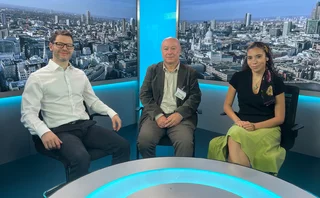
In this episode of Quantcast, Buehler explains the importance of removing drift in financial data, and discusses the general features and uses of deep hedging, as well as his future research projects. He also reveals how the origins of deep hedging can be traced back to his time as a PhD student at the Technical University of Berlin.
Buehler’s research has come a long way since then. JP Morgan already uses a version of deep hedging to price a large chunk of its Eurostoxx vanilla index options book and an increasing portion of S&P 500 options trades. Deep hedging is now being tested for cliquet options and the bank plans to expand its use to single stocks by year-end. Autocallable products, for which deep hedging was originally designed, are likely to be the next product to be priced this way, Buehler says.
Towards the end of the podcast, Buehler shares his ambition to introduce modern machine learning and AI-based methods to JP Morgan’s sales team, and further strengthen the bank’s electronic trading capabilities.
To hear the full interview, listen in the player above, or download. Future podcasts in our Quantcast series will be uploaded to Risk.net. You can also visit the main page here to access all tracks, or go to the iTunes store or Google Podcasts to listen and subscribe.
Now also available on Spotify and Amazon Music.
Index
00:00 What is deep hedging and what is it used for?
06:30 The importance of removing drift from training datasets
09:03 Application of the de-trending technique
11:25 The origins of deep hedging
15:15 Future research projects
コンテンツを印刷またはコピーできるのは、有料の購読契約を結んでいるユーザー、または法人購読契約の一員であるユーザーのみです。
これらのオプションやその他の購読特典を利用するには、info@risk.net にお問い合わせいただくか、こちらの購読オプションをご覧ください: http://subscriptions.risk.net/subscribe
現在、このコンテンツを印刷することはできません。詳しくはinfo@risk.netまでお問い合わせください。
現在、このコンテンツをコピーすることはできません。詳しくはinfo@risk.netまでお問い合わせください。
Copyright インフォプロ・デジタル・リミテッド.無断複写・転載を禁じます。
当社の利用規約、https://www.infopro-digital.com/terms-and-conditions/subscriptions/(ポイント2.4)に記載されているように、印刷は1部のみです。
追加の権利を購入したい場合は、info@risk.netまで電子メールでご連絡ください。
Copyright インフォプロ・デジタル・リミテッド.無断複写・転載を禁じます。
このコンテンツは、当社の記事ツールを使用して共有することができます。当社の利用規約、https://www.infopro-digital.com/terms-and-conditions/subscriptions/(第2.4項)に概説されているように、認定ユーザーは、個人的な使用のために資料のコピーを1部のみ作成することができます。また、2.5項の制限にも従わなければなりません。
追加権利の購入をご希望の場合は、info@risk.netまで電子メールでご連絡ください。
詳細はこちら カッティング・エッジ
ポッドキャスト:アリエ・シェーター氏とハリオム・タツァット氏によるAIの説明可能性に関する対談
バークレイズのクオンツたちが、メカニスティックな解釈可能性を用いたAIの監視手法について語ります

ブラックボックスの先へ:金融分野におけるLLMの解釈可能性
メカニズムに基づく解釈可能性、そして計算メカニズムにおける変更点を特定

P・Qキャリブレーションと経路依存的な変動性の整合
校正の堅牢性を向上させることを目的とした混合アプローチを提案します

ポッドキャスト:アレクサンダー・バルジキン氏によるFXマーケットメイキングのモデリングについて
HSBCのクオンツが、逆選択、価格の読み取り、および内部流動性管理について論じます
逆選抜と価格観測下における最適な価格提示
現実世界における重要な影響を考慮するために、マーケットメイキング・モデルが導入されています。
ポッドキャスト:バーネット氏とピアウ氏が語る、XVAに関する包括的なフレームワーク
バークレイズのクオンツ担当者が、長年の課題に対する同行のアプローチについて解説します
価格調整の基本的な表現
デリバティブ価格調整の統一的な表現について提示します

混合モデルフレームワークにおけるテールの調整
ファットテール特性を再現するために、ガウス分布とスチューデントのt分布を組み合わせたデータ生成器をご紹介します
