
Model risk

Barclays built a risk framework for GenAI from scratch
Eleven teams contribute to assessing generative AI use cases in a system that includes 35 controls

Hopes, fears and ‘mass confusion’: the sudden end of SR 11-7
Banks welcome chance to prioritise model reviews, but fret over future policy changes and AI

MRM: how banks are scaling models in the age of AI
MRM capabilities are evolving to ensure compliance while helping organisations retain a competitive edge

AI risk management and the shift to capability control
By reframing validation, banks can align innovation with regulatory demands and maintain robust risk discipline, argues risk manager

In the age of GenAI, why do we still need good models?
Jean-Philippe Bouchaud says models can guide artificial intelligence through regime shifts and away from overfitting
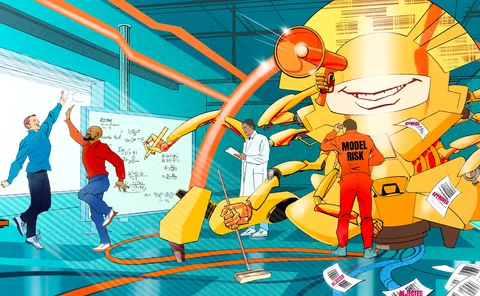
The do-it-all machine: model risk in the age of generative AI
Banks race to understand risks posed by new breed of multi-purpose bots

Top 10 op risks: AI upends risk taxonomies
AI risk enters annual poll in fifth, but firms split over treating it as a standalone risk or a cross-cutting driver

Model validation of a generative-artificial-intelligence-based avatar for customer support in banking
The authors put forward a validation method for a gen-AI-based avatar designed to deal with customer inquiries in the banking sector.

Rising reliance on internal auditors spooks regulators and industry
Risk managers warn US is substituting supervisors with auditors; could compromise independence

Generative artificial intelligence in model risk management: emerging opportunities, supervisory challenges and validation frameworks
The author proposes a structured approach to validating generative AI models in line with the principles of current regulatory standards.

Interest rate crosswinds buffet IRRBB teams
Political intervention and rapid-fire law changes are skewering bank models for forecasting cashflows

FRTB internal models: quo vadis?
Two risk experts explore how to adjust the FRTB framework to promote internal model usage

The loneliness of the model risk manager
Boards may see them as a drag on innovation; risk functions need to show they embrace efficiency

Long way round: EU banks lament credit spread saga
EBA ditches some of banks’ preferred qualitative reasonings – and shortcuts – for CSRBB exclusion

FHLB Cincinnati explores AI to spot failing banks
Agentic model detects anomalies, monitors sentiment and drafts credit reports for analyst review
Validating bank risk models under trade war stress: a framework for adaptive stress testing with AI-driven calibration and cross-industry applications
Focusing on validating and enhancing risk models, the author proposes a comprehensive framework through which to stress test under trade war conditions.

Esma won’t soften regulatory expectations for cloud and AI
CCP supervisory chair signals heightened scrutiny of third-party risk and operational resilience

BPI says SR 11-7 should go; bank model risk chiefs say ‘no’
Lobby group wants US guidance repealed; practitioners want consistent model supervision and audit

At BNY, a risk-centric approach to GenAI
Centralised platform allows bank to focus on risk management, governance and, not least, talent in its AI build

Rethinking model validation for GenAI governance
A US model risk leader outlines how banks can recalibrate existing supervisory standards

The state of IMA: great expectations meet reality
Latest trading book rules overhaul internal models approach, but most banks are opting out. Two risk experts explore why

How geopolitical risk turned into a systemic stress test
Conflict over resources is reshaping markets in a way that goes beyond occasional risk premia

Banks split over AI risk management
Model teams hold the reins, but some argue AI is an enterprise risk

Current Expected Credit Losses implementation and model risk in uncertain times: an application to consumer finance
This paper discusses challenges in economic forecasting and model misspecification errors faced by financial institutions implementing the CECL allowance methodology and its impact on model risk and bias in CECL projections.