
IFRS 9

IFRS 9 transitional measures save Lloyds £572 million
Capital relief equivalent to 30 basis points uplift to CET1 ratio
IFRS 9 charge fails to dent UBS capital
The accounting charge was more that offset by increased earnings, with total CET1 capital increasing by Sfr 0.5 billion
ECL regimes a volatile brew of risk and accounting
Fed asks banks to propose a solution to address CECL-CCAR mismatch

New BoE stress test puts focus on banks critical to UK
Annual test will attempt to gauge impact of IFRS 9


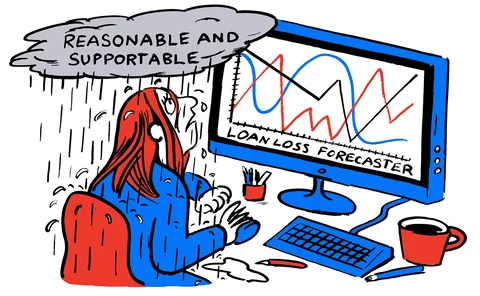
Banks grapple with IFRS 9 and CECL loan loss forecasting
Ambiguity in rules sets up potential clash between banks and auditors over “reasonable and supportable” projections

Singapore’s banks frontload IFRS 9 provisioning hit
UOB, OCBC announce $1.4 billion set-asides in Q4 results to account for oil and gas loan exposures

Credit data: the Trump effect on PDs
The war on coal is over, according to the US president – and the effect can be seen in banks' default estimates

Unified data – Key to IFRS 9 implementation
Regulatory information brief part II – Benchmarks

Doubts cast on Europe’s IFRS 9 transition period
Dynamic transition viewed as too complicated for banks to use or investors to understand

How IFRS 9 can unite risk and accounting
Regulatory information brief part I – Modelling

IFRS 9 prompts Asian banks to downgrade loan books
DBS raises provisioning on weaker energy loans fourfold in third quarter, citing rules impact

Banks eye synthetic securitisation to cut IFRS 9 loan-loss spikes
New structures would help mitigate estimated 44% increase in loan-loss provisions from revised accounting framework

JP Morgan’s CRO on the bank’s six buckets of risk
Risk30: From loan losses to electromagnetic pulses, JPMorgan Chase has a place for it

IFRS 9/CECL Special Report 2017
Implementation of International Financial Reporting Standard 9 (IFRS 9) on January 1, 2018 – just over three months away – will mark a sea change in centuries-old accounting conventions, and will force banks to dramatically increase provisioning against…

Forward ordinal probability models for point-in-time probability of default term structure: methodologies and implementations for IFRS 9 expected credit loss estimation and CCAR stress testing
This paper proposes an ordinal model based on forward ordinal probabilities for rank outcomes.

PRA’s tough line on Pillar 2 disclosure divides lenders
Watchdog seeks to level playing field with public disclosure of total capital requirements

Stage fright: banks tackle IFRS 9 loan-loss volatility
Banks look to counter volatility of loss provisioning through careful calibration of loan buckets

EBA urges European banks to step up IFRS 9 preparations
Banks not yet in testing phase face 32 basis point extra capital hit, report finds