Forex ‘Cartel’ not guilty but still paying a penalty

Despite acquittal, three former forex traders anticipate obstacles in trying to rebuild their careers

US Department of Justice
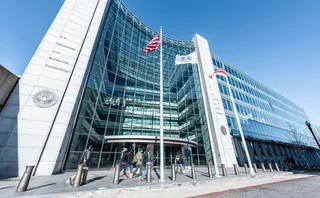
US Department of Justice: acquittal delivered a significant upset
Photo: Bjoertvedt/Wikimedia Commons

They were indicted, tried and acquitted of charges that they conspired to rig foreign exchange benchmark rates, but that victory has come at a cost for the three former currency traders in the ‘Cartel’ case.

Risk.net sister publication FX Week spoke to Christopher Ashton, Rohan Ramchandani and Richard Usher, the three forex traders whose October 2018 acquittal delivered a significant upset for the US Department of Justice. The ruling brought an end to a five-year legal fight for the London-based traders, who maintained they had followed the rules in their dealings, even as they faced potential jail sentences of up to 10 years. Now the impact of what happened to them is starting to sink in.

“What’s exciting is that now we are in control of our own future and our own destiny,” says Ramchandani, formerly a senior Citigroup currency dealer. “My passion, my heart, is still very much in trading… I would definitely like to channel my energy into finding the best opportunity back for me.”

But this is likely to be an uphill battle. While Ramchandani and his cohorts were found not guilty of market manipulation, the high-profile nature of the trial will have repercussions for them – and other traders – for a very long time, experts say.

“This was a harrowing experience for those traders. I would suspect their foreign exchange trading career is over,” says Carol Osler, a professor at Brandeis University in Waltham, Massachusetts, whose research focuses on currency trading and exchange rates.

“Anybody in the market knows they did what they did, and the banks are trying hard to weed out that kind of misconduct, at least for the next couple of years,” she adds.

It was the rare admission of guilt by several banks in 2015, that they had used code words and chatrooms to profit at the expense of clients, which paved the way for several indictments the following year. However, after an 18-month investigation, the UK Serious Fraud Office concluded in March 2016 that the evidence did not meet the test for prosecution.

For its part, the DoJ – which did not respond to a request for comment – pressed ahead with indictments against the three UK traders from competing banks, saying they had used a chatroom to conspire to fix prices. The DoJ indicted Usher and Ramchandani in January 2017, on the same day that the Office of the Comptroller of the Currency fined both men $5 million. In a surprise move, the former traders voluntarily travelled to the US to deny the charges after arraignment in July 2017.

While the US jury only took a few hours of deliberation before returning their verdict, after a trial of only a few weeks, the pressure had been building for many months before, notes Brandeis University’s Osler.

“The traders have lived through hell, and the fact they were acquitted just means that the hell was not that much worse. But they had to go through hell,” she says.

‘Bad behaviour’

Before 2013, Ramchandani, Ashton (then at Barclays) and Usher (then at JP Morgan) were seen as reputable EUR/USD traders. Then came the investigation and years of being painted as the poster boys for bad behaviour in the forex market – the kind of traders who collude to cheat clients of profit. It didn’t help that a client described their chatroom as a “Cartel” – a silly pub joke, according to Ashton.

These accusations spawned the kind of headlines that Usher says now make employers hesitant to let any of the three through their doors. And that is understandable, Usher tells FX Week.

“Whoever hires me, Chris or Rohan is going to get some attention from all the press, I’m sure, and [from] the industry itself,” he says. “So I think you need someone who wants to make a splash… You need to find the right institution that is looking for that press coverage or that profile lift.”

I am not relevant any more. I was a trader who was at the top of his game in terms of my little world of foreign exchange. But I haven’t been in foreign exchange these last five years
Christopher Ashton

Plus, after a five-year absence from the market, even star traders would be playing catch-up.

“The market has very clearly moved on in that time and, suddenly, I am not relevant any more. I was a trader who was at the top of his game in terms of my little world of foreign exchange. But I haven’t been in foreign exchange these last five years,” notes Ashton.

“My area of expertise is still foreign exchange,” he says. “But then, when someone sees your CV, it’s ‘what have you been doing for the last five years? You can trade, but you’ve been coaching tennis?’ So that’s the biggest thing. It’s the lack of relevance, rather than people not wanting to employ me because you went through a trial,” he adds.

Impact of scandal

Alexis Stenfors, senior lecturer at Portsmouth Business School in the UK, knows a thing or two about being caught up in a scandal. His reputation was shattered after he was accused of being a “rogue trader” who cost Merrill Lynch in London a total of $456 million in losses in 2009.

At the height of the financial crisis, Stenfors, who traded forex and interest rate derivatives at several banks for 15 years, made some bad bets, covered the losses and later lost his job. He was never criminally charged, but was banned from the industry until the order was lifted in May 2015. He is now an economist and author of books about his experiences.

“The media attention, and by being the focal point of a well-publicised scandal, had – and probably still has – a greater impact on my life than the ban itself that I received from the regulator,” Stenfors tells FX Week via email.

He notes that unless you have an extremely common name, the widespread use of Google means something toxic could be attached to you for the rest of your life. Add to that the general public’s distrust of the finance industry and the situation becomes worse.

“Traders are hardly the most popular or respected people at the outset. Then, being attached to something unethical or unlawful within banking or trading increases others’ negative views exponentially,” Stenfors writes.

“Being acquitted does not automatically mean a person can go back to square one or start over from a blank page. The reputational risk is still there – at least among some, which is more than enough to block routes when trying to go back to ‘normality’,” he adds.

This risk means US prosecutors could salvage a small win from their loss in the Cartel case.

Prosecutors never bring a case to trial unless they genuinely believe it can be won, and often, white-collar cases are pleaded out, says Eugene Soltes, a Harvard Business School professor, who studies corporate misconduct and fraud, and how organisations can mitigate them.

Prosecutors therefore feel a conviction is a success and a ‘not guilty’ plea is a failure, he says. “I don’t know if that is the right way of looking at it because, ultimately, the goal of regulators and enforcement agencies is to try to mitigate adverse conduct and to shape behaviour.”

All of the defendants in the Cartel case say they would have never taken a plea, because it would have been akin to admitting guilt when they knew they did not do anything wrong.

“What we see in cases like this is that you don’t have to actually send someone to prison for it to have a deterrent effect,” says Soltes. “It changes how people talk about various transactions; it elevated awareness around certain kinds of behaviour. That in itself is achieving a change in norms and that deterrent effect without explicitly sending an individual to prison or having a firm get a criminal fine.”

This story was originally published on Risk.net’s sister website, FXWeek.com.

Only users who have a paid subscription or are part of a corporate subscription are able to print or copy content.

To access these options, along with all other subscription benefits, please contact info@risk.net or view our subscription options here: http://subscriptions.risk.net/subscribe

You are currently unable to copy this content. Please contact info@risk.net to find out more.

Most read articles loading...

You need to sign in to use this feature. If you don’t have a Risk.net account, please register for a trial.

Sign in
You are currently on corporate access.

To use this feature you will need an individual account. If you have one already please sign in.

Sign in.

Alternatively you can request an individual account here