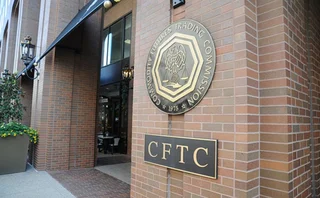
Energy companies facing ‘intrusive’ CFTC special calls

The US Commodity Futures Trading Commission is stepping up its market surveillance activities, issuing special calls to numerous firms that trade over-the-counter swaps. That is causing headaches for smaller energy companies tangled up in the dragnet. Alexander Osipovich investigates
cftc-0613-app
US Commodity Futures Trading Commission

It was the sort of email message that a compliance manager never wants to receive. "Immediate action required," the subject line screamed.

The email, which was sent to a US oil producer earlier this year, came from the US Commodity Futures Trading Commission (CFTC).

It informed the company – a small, independent producer – that it was subject to the large swaps trader reporting rule, part of the new regulatory framework for over-the-counter derivatives stemming from the US Dodd-Frank Act. The CFTC told the company it had two weeks to submit a filing called Form 40S, or else it would be breaking the law.

"Failure to provide the required 40S filing in a timely fashion is a violation of the Commodity Exchange Act and the commission's regulations," the CFTC stated in the email. "Violators may have their trading privileges suspended or denied and may be assessed a fine of $140,000 or triple their monetary gain, whichever is higher."

A compliance manager at the oil company, who shared the contents of the email with Energy Risk, recalls being dismayed as she read the sternly worded message and tried to grapple with the complexities of the Form 40S filing.

These special calls are going out to folks that you would regard as having the most minor amount of trading activity

"It was shocking," says the compliance manager, who spoke to Energy Risk under condition of anonymity. "I mean, why would a small oil and gas company get this sort of letter? We are not a swaps dealer. We are a commodity end-user hedger. So it seemed quite intrusive to have these sorts of questions."

Her frustration is hardly unique. According to lawyers, industry sources and former CFTC officials, the commission has been routinely sending similar emails to energy companies in the US and beyond, as part of a secretive sweep of the OTC swaps market that began in 2012, but has intensified sharply over the past 12 months.

In each case that has come to the attention of Energy Risk, the CFTC has issued the firm in question a ‘special call' – an authority the commission can use to collect information from traders of certain commodity contracts – and given the company two weeks to file Form 40S, or face the consequences.

It is unclear how many companies have received special calls, but some industry sources suspect it is in the thousands. The targets include many smaller commercial energy firms that had never previously received a special call, including municipal utilities, oil and gas producers and rural electric co-operatives. Such firms tend to use OTC swaps strictly for hedging purposes, and are often surprised to learn that the CFTC considers them large swaps traders.

"These special calls are going out to folks that you would regard as having the most minor amount of trading activity," says Stephen Obie, a New York-based partner with law firm Jones Day and former acting head of the CFTC's enforcement division.

'Routine surveillance'

The CFTC, which declined to comment for this article, generally does not disclose the reasons why it is issuing a special call. That has stirred speculation that the blizzard of special calls going out to energy companies might be connected with a specific enforcement aim – for instance, an investigation into manipulation in the natural gas market.

But former CFTC officials say the explanation is likely to be more mundane. They point to the large swaps trader reporting rule, finalised in July 2011. The rule, which set up the framework for Form 40S reporting, was largely based on the CFTC's long-established procedures for overseeing futures markets. For decades, the CFTC has sent special calls to futures market participants requiring them to complete Form 40, which seeks information from companies about who controls their trading accounts and whether their trades are carried out for hedging purposes, for example.

After Dodd-Frank extended the CFTC's jurisdiction to include OTC swaps, the commission broadened its large trader reporting regime to encompass swaps as well as futures. The large swaps trader reporting rule gave the CFTC the authority to issue special calls requiring market participants file Form 40S – a version of Form 40 that applies to OTC derivatives.

"Once the CFTC became responsible for the swaps market, they needed to get additional information from traders with positions in the swaps market, for the same purpose the information is used for futures – doing routine surveillance," explains Richard Shilts, a Washington, DC-based senior policy advisor at law and lobbying firm Squire Patton Boggs and a former head of the CFTC's Division of Market Oversight. "So if there would be a question about their activities in the swaps market, then the commission would have information about the person. They would now have a name, a number to call and so on, as well as some general information about the types of trading activity that person was involved in."

But when the CFTC issued its large swaps trader reporting rule, it sharply lowered a key threshold level that determines how many companies can receive special calls, compared with the previous level that had existed for futures – a decision that expanded the reach of the large trader reporting regime to include many smaller players.

In both futures and swaps, a company's trading positions must meet a certain reporting threshold for that company to be eligible for a CFTC special call. But the reporting threshold is much higher for futures than it is for swaps. If the company is trading natural gas futures on Chicago-based CME Group's Nymex exchange, for example, its position would need to consist of at least 200 contracts for the company to be eligible for a CFTC special call. By contrast, a firm trading natural gas swaps or swaptions would only need an exposure equivalent to 50 Nymex futures contracts to be eligible.

"The threshold of 50 futures-equivalent contracts is very small in the swaps world," says Obie. "As a result, this is affecting smaller players which, when they receive these special calls, are confused about why they are now subject to the large trader form."

In the interpretive guidance published along with the large swaps trader reporting rule in July 2011, the CFTC said it "would require a [Form] 40S filing if a trader has become reportable for the first time and is not known to the commission". That explains why the CFTC has been issuing special calls to so many companies that were previously not on the commission's radar, lawyers say.

"It is not technically required by the regulations, but as a matter of practice, the CFTC has said it will issue special calls routinely to people who pop up in the system," says Dan Berkovitz, a Washington, DC-based partner at law firm WilmerHale and former general counsel of the CFTC. "For people who are getting this for the first time, it can be a surprise. They've got to figure out what the form means and how it applies to their activities."

Lawyers say the large wave of special calls that began going out to energy firms in the third quarter of 2013 started soon after the CFTC obtained a trove of data from swap dealers – primarily banks that enter into OTC swaps with energy firms. Under CFTC rules, swap dealers are required to send the commission a detailed filing, called Form 102S, with information about their swap counterparties. Since mid-2013, lawyers believe the CFTC has been churning through the data it obtained from the banks' Form 102S filings and issuing special calls to each energy company with a swap position that exceeds the 50-contract reporting threshold.

"The way that the CFTC found out about these companies is that the swap dealers were required to report swaps position information to the CFTC," says Julian Hammar, a Washington, DC-based attorney with law firm Morrison Foerster. "So that's how the commission got the information that these companies had reportable positions, and that's when they issued the special calls and asked them to file Form 40S. My understanding is that, if you trigger a reportable position and you never have reported to the CFTC before, the CFTC will now routinely issue a special call to get the Form 40S filing information from you."

There are signs that the CFTC is sending out many more special calls, and targeting much smaller companies, than it initially anticipated when it finalised the large swaps trader reporting rule in July 2011. In the cost-benefit analysis published along with the rule, the CFTC forecast 500 market participants would need to submit Form 40S each year, and the commission wrote that it "does not expect the [rule] to have a significant impact on a substantial number of small entities".

The CFTC has not said how many firms it has ordered to submit Form 40S, but industry sources think it could easily be in the thousands. They point to the reference numbers the commission includes in every email message informing a company that it has been subjected to a special call. Those numbers began low, and have gradually been ticking upward. Lately, they have been well above 2,000 and are closing in on 3,000, sources say.

Shilts of Squire Patton Boggs, who was head of the CFTC's Division of Market Oversight at the time when the commission was crafting its large swaps trader reporting rule, admits the 500-filings-per-year projection may have been too low. "The numbers that we used were estimates," he says. "The commission didn't have a lot of good information about the number of parties that would be subject to the forms. It is quite possible that there are more participants in the swaps market than anticipated."

Notably, the commission's vast sweep of the OTC swaps market has reached beyond the borders of the US. Peter Malyshev, a Washington, DC-based attorney with law firm Latham & Watkins, says he has advised about 20 clients that have received special calls requiring them to file Form 40S, including several non-US companies. In the CFTC's view, the large swap trader reporting rule applies to any firm with a reportable position, regardless of whether it is located on US soil, according to Malyshev.

"They don't think it really matters where you are, so long as this position references a US jurisdictional contract," he says. "That's why they are sending these Form 40S requests to non-US companies that enter into these positions, even if they are non-US persons located overseas."

A tough call

Complying with a special call can be bewildering, especially for smaller firms that have never done so before, lawyers say. A major source of confusion is the fact that Form 40S does not actually exist as a separate form, unlike Form 40, which is available for download on the CFTC's website. Instead, the commission instructs companies to fill out Form 40 and treat any references to futures and options as though they were actually references to swaps and swaptions.

"The way that the CFTC special calls are written, and the way the new swap reporting forms are adapted from prior futures market forms, is causing confusion," says Patty Dondanville, a Chicago-based partner with law firm Reed Smith, who has advised electricity and natural gas utilities on handling special calls. In all, Dondanville says she knows of about 20 firms that have received special calls for Form 40S since the CFTC began sending them out two years ago.

Dondanville says her clients are often confused as to why they are receiving the queries, since many of them view their market activities as hedging, not trading. "They tend to be a little bit nervous because CFTC has identified the utility as a large trader and they don't think of themselves as such," she says.

When the CFTC finalised its large swaps trader reporting rule in 2011, it dismissed concerns that the new rule would impose an onerous burden on market participants. It estimated the average time it would take for a company to fill out Form 40S would be a mere 20 minutes. Lawyers and industry sources say that is almost certainly an underestimate, particularly when it comes to smaller end-users that must invest significant effort in understanding what the CFTC requires.

This was certainly the case for the compliance manager at the US oil company that received a special call earlier this year. As she studied Form 40S, she found it had little to do with her company's business. It was also unclear how various sections of the form should be answered, since they seemed to be focused on speculative traders, as opposed to hedgers. "This was obviously a trading company form," she says. "So it was difficult to make sure that we answered the questions properly."

The compliance manager spoke to multiple lawyers, as well as the company's bank counterparty, in an effort to understand the form and assemble a response. In total, she estimates that dealing with the special call took 16 person-hours throughout a two-week period, as she raced to meet the CFTC's deadline.

"I probably wasted two full business days, if you count my time, our attorney's time, our outside attorney's time and the bank's time, trying to make sure that we were all on the same page, because we didn't want to misinterpret something that would get us in trouble later," she says.

Only users who have a paid subscription or are part of a corporate subscription are able to print or copy content.

To access these options, along with all other subscription benefits, please contact info@risk.net or view our subscription options here: http://subscriptions.risk.net/subscribe

You are currently unable to copy this content. Please contact info@risk.net to find out more.

Most read articles loading...

You need to sign in to use this feature. If you don’t have a Risk.net account, please register for a trial.

Sign in
You are currently on corporate access.

To use this feature you will need an individual account. If you have one already please sign in.

Sign in.

Alternatively you can request an individual account here