Trump getting stuck in Washington ‘swamp’, says Scaramucci
Risk Live: Former White House comms director says lobbyists have become effective constraint on Trump agenda
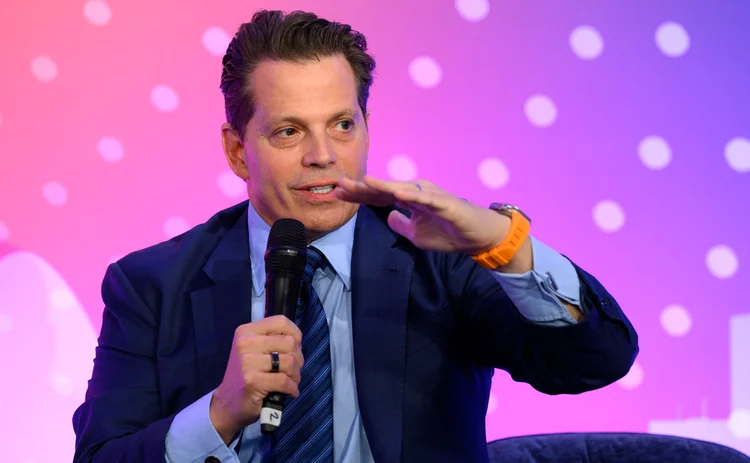

Washington lobbyists are beginning to constrain the power of US president Donald Trump, according to Anthony Scaramucci, former White House communications director, who opened the Risk Live Europe event in London on June 17.
Describing them as “the wolves of K Street”, Scaramucci said lobbyists are being paid by US companies to apply pressure “inside and outside the administration”.
“There are levers … in the system that I didn’t fully see until the last two months,” Scaramucci said.
“American business leaders have called up their lobbyists and said: ‘This does not work for me. How much money do I need to give [senators] Chuck Schumer, Rand Paul and Hakeem Jeffries? What do I have to do to further isolate and liquidate Trump’s power?’ And believe it or not, that is starting to work. That’s starting to creep into the system.”
You can hear the full recording of Scaramucci’s remarks here.
Lobbyists’ efforts are holding back the roll-out of the Project 2025 agenda that has widely been seen as a roadmap for the new administration. Trump sought to distance himself from its government-shrinking, power-grabbing tenets prior to last year’s election, after polling showed it to be unpopular with much of the electorate. Many of its authors now hold roles within the administration.
While the performance of bond markets was the primary factor in freezing Trump’s initial slate of tariffs – 10-year US Treasury yields jumped almost 50 basis points to hit 4.94% following the tariff announcement – Scaramucci says lobbyists have ramped up their activities and should be credited with triggering U-turns such as the recent halt in workplace raids by US Immigration and Customs Enforcement.
According to Scaramucci, lobbyists are telling politicians and White House officials: “‘We don’t like that policy. You’re going to be out of the administration in two years. You need to figure out a way to stop that policy.’ That’s a conversation going on in Washington.”
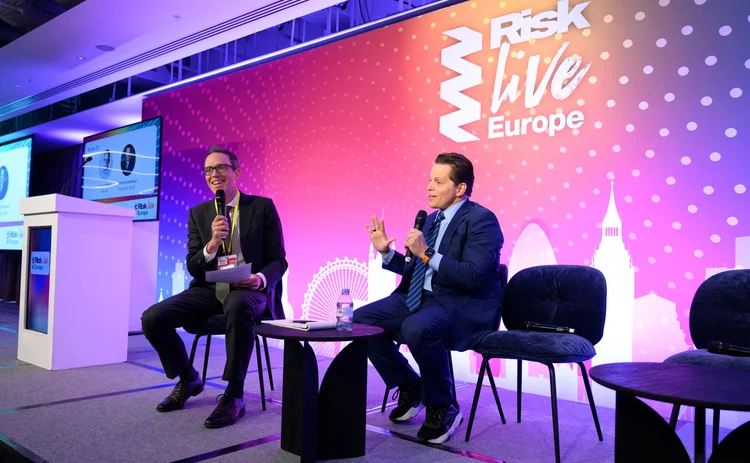
Scaramucci advised risk managers to read the Project 2025 agenda “because that’s what they really want to do”. He referred to a broad aim of liquidating levels of power in the judiciary and legislative branches of the US government.
“A secondary way to prepare yourself is to be patient. You’re going to have to wait this guy out. I’m actually more optimistic today than I’ve ever been,” he added, referring to the growing impact of lobbyists.
He expects a further pause on Trump’s ‘reciprocal’ tariffs of 45 or 90 days, when the current 90-day delay comes to an end on July 8.
The Musk party?
While Scaramucci doesn’t see any further role for Tesla boss Elon Musk in the Trump administration after his recent exit, he says the former chief of Trump’s department of government efficiency will try to find a new route to power.
“I honestly think Musk is going to try to start a third party,” he said, adding “three or four of his people have reached out to me to talk about what a third party would look like”.
“It would probably be a $50 billion or $100 billion endowment from very rich people that would turn into a potential third party movement,” said Scaramucci.
A new party would face high barriers in the form of federal campaign finance laws, state ballot access rules, and other features of the US electoral system.
“It’s almost impossible to do in the country,” he said, nodding towards a series of rule changes made after independent candidate Ross Perot gathered almost 20% of the vote in the 1992 election. “They clamped down and created this very tough duopoly, but with $100 billion, you can do a lot of things.”
Only users who have a paid subscription or are part of a corporate subscription are able to print or copy content.
To access these options, along with all other subscription benefits, please contact info@risk.net or view our subscription options here: http://subscriptions.risk.net/subscribe
You are currently unable to print this content. Please contact info@risk.net to find out more.
You are currently unable to copy this content. Please contact info@risk.net to find out more.
Copyright Infopro Digital Limited. All rights reserved.
As outlined in our terms and conditions, https://www.infopro-digital.com/terms-and-conditions/subscriptions/ (point 2.4), printing is limited to a single copy.
If you would like to purchase additional rights please email info@risk.net
Copyright Infopro Digital Limited. All rights reserved.
You may share this content using our article tools. As outlined in our terms and conditions, https://www.infopro-digital.com/terms-and-conditions/subscriptions/ (clause 2.4), an Authorised User may only make one copy of the materials for their own personal use. You must also comply with the restrictions in clause 2.5.
If you would like to purchase additional rights please email info@risk.net
More on Risk management
One legal entity. Multiple IDs. Three business risks.
How fragmented entity IDs undermine risk, compliance and revenue decisions

An agentic bank? Not so fast
With no clear definition or way to gauge ROI, claims of AI adoption should be taken with a pinch of salt

BIS’s Hernández de Cos on AI, non-bank risk and tokenisation
General manager talks about how the BIS is navigating a complex global environment

For enterprise risk, influence runs deeper than any veto
Risk Benchmarking study finds formal veto rights concentrated among the largest lenders, but used only as a last resort

Intraday pricing: fixed income’s next frontier
With firms looking to price fixed income securities on an intraday basis, specialist pricing providers such as LSEG help address cost, complexity and time-to-market challenges

Tech and data fragmentation irks enterprise risk managers
Risk Benchmarking: Often at the mercy of decisions made by other parts of the bank, ERM heads gripe at disparate systems, poor UX and reporting gaps

At bigger banks, enterprise risk owns scenario frameworks
Risk Benchmarking research finds ERM teams tasked with providing effective challenge on scenario construction across risk silos

Asian firms waiting on exemptions from UST clearing mandate
Hoping for relief on extraterritoriality, 51% of Apac firms have yet to start compliance programmes