

Go your own way: departures pose new challenges for CFTC
Loss of Democratic majority would impede chairman’s ambitions for regulatory agenda

Breaking up, as the song goes, is hard to do. And when the relationship in question is crucial for the smooth issuance of derivatives regulations, the estrangement is harder still.
This month, Risk.net examined the current state of the Commodity Futures Trading Commission and drew attention to what our sources – including 12 current and former officials and commissioners – described as an agency paralysed by a divided majority.
The divisions are between chairman Rostin Behnam and his fellow Democratic commissioners, Christy Goldsmith Romero and Kristin Johnson. The resulting frictions may help explain why the pace of rulemaking and routine business at the CFTC have slowed in recent years.
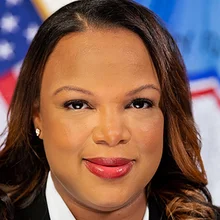
Last week, US President Joe Biden announced his intention to appoint the two dissenters to new positions: Goldsmith Romero as chair of the Federal Deposit Insurance Corporation (FDIC) and Johnson as assistant secretary for financial institutions at the Department of the Treasury.
However, it is not clear that suitably screened replacements are waiting in the wings to take over from them at the CFTC.
In March, Behnam set himself the goal of holding votes on all outstanding rule proposals. The developments of recent weeks therefore have the potential to create deadlock ahead of November’s general election. Republicans on the commission would have an effective veto over the chairman’s agenda if Goldsmith Romero and Johnson were confirmed in their new posts while their seats on the CFTC remained unfilled. If there were a 2-2 split on the committee, the chairman’s proposals would not be adopted.
Every now and then we fall apart
The best scenario for Behnam would be for Goldsmith Romero, Johnson and their replacements on the CFTC to be confirmed as a single package. That way, the new commissioners would be able to take over immediately and business could continue with a revitalised Democratic majority.
Yet it is by no means certain that the departing commissioners will be swiftly confirmed in their new roles. If their nominations are presented at a July hearing of the US Senate, proceedings would need to move quickly for them to be confirmed before the Democratic-controlled upper house goes into recess the following month.

Goldsmith Romero’s nomination is likely to be a priority for the Senate, given the urgent need to find a new FDIC chair. The current chair, Martin Gruenberg, announced his resignation last month after an independent investigation found he had presided over a toxic workplace culture.
However, Republican senators may wish to delay Goldsmith Romero’s confirmation. The chair of the FDIC is an important position and Republicans may be reluctant to confirm her appointment this close to the election, as she would continue in the role even if Donald Trump were elected president. In the past, Goldsmith Romero has taken a tough line on regulating banks – a sector Trump deregulated during his previous term.
Yet these same Republicans might have fewer qualms about expediting Johnson’s appointment – unlike the FDIC chair, she would be a political appointee, and a future President Trump could replace her if he wanted to. Her departure from the CFTC could cause deadlock on the commission until her replacement is seated.
If the CFTC’s built-in Democratic majority can be infused with new blood, this will aid the chairman’s cause. However, this supposes that CFTC nominees could be fast-tracked and their nominations synchronised with Goldsmith Romero and Johnson’s confirmations in their new roles. Commissioners are nominated by the president and confirmed by the Senate after undergoing rigorous vetting. September is likely to be the earliest time by which they could be in place. And if talks between Democrats and Republicans on the nominations stall, the replacement commissioners might have to wait until after the election before joining the CFTC.
Perhaps by making efforts to forge consensus on the commission, Behnam will be able to cut deals to avoid a stalemate on some remaining items. He is reputed to hold cordial relationships with the two Republican commissioners and is generally well-liked in the industry. But this may count for little when he wants to finalise contentious policies, such as those on carbon or crypto markets. Progress on such matters may be easier to achieve while Goldsmith Romero and Johnson are still in the building.
Meanwhile, efforts at diplomacy could take place over the summer to reach an accord with Republicans on voting through less vexing proposals in October.
It may be that Behnam and the two Democratic commissioners are never ever getting back together. But when it comes to his Republican colleagues, talking things through might be the best way forward.
Editing by Daniel Blackburn
コンテンツを印刷またはコピーできるのは、有料の購読契約を結んでいるユーザー、または法人購読契約の一員であるユーザーのみです。
これらのオプションやその他の購読特典を利用するには、info@risk.net にお問い合わせいただくか、こちらの購読オプションをご覧ください: http://subscriptions.risk.net/subscribe
現在、このコンテンツを印刷することはできません。詳しくはinfo@risk.netまでお問い合わせください。
現在、このコンテンツをコピーすることはできません。詳しくはinfo@risk.netまでお問い合わせください。
Copyright インフォプロ・デジタル・リミテッド.無断複写・転載を禁じます。
当社の利用規約、https://www.infopro-digital.com/terms-and-conditions/subscriptions/(ポイント2.4)に記載されているように、印刷は1部のみです。
追加の権利を購入したい場合は、info@risk.netまで電子メールでご連絡ください。
Copyright インフォプロ・デジタル・リミテッド.無断複写・転載を禁じます。
このコンテンツは、当社の記事ツールを使用して共有することができます。当社の利用規約、https://www.infopro-digital.com/terms-and-conditions/subscriptions/(第2.4項)に概説されているように、認定ユーザーは、個人的な使用のために資料のコピーを1部のみ作成することができます。また、2.5項の制限にも従わなければなりません。
追加権利の購入をご希望の場合は、info@risk.netまで電子メールでご連絡ください。
詳細はこちら 我々の見解
なぜ破綻処理計画を骨抜きにするのは良くないのか
銀行の破綻は避けられないものですが、銀行危機はそうではありません
日本の「大還流」?急速なリパトリは期待できない
GPIFによる米国債から日本国債への切り替えは段階的に行われる見通しであり、これはヘッジファンドにとってさらなる悪材料となる可能性があります

AIエージェントが、信頼できないスタッフのような存在である理由
GenAIシステムに内在する不確実性により、リスク管理担当者はより対立的なアプローチをとらざるを得ません

批判派は、パーペチュアルはすべてフロスだと言っています。しかし、数字はそうではないことを示唆している
TradFiを原資産とする永久先物に対する堅調な未決済建玉は、CMEやEurexといった既存の取引所にとって脅威となる可能性があります

SpaceXがCMEの個別銘柄先物に待望の追い風をもたらした
S&P 500先物契約へのIPO関連の追加契約として、新たな契約が急増する可能性があります
Bank vs non-bank: FX’s two-tier reality
CME and LSEG data show banks provide sticky and broad liquidity, while non-banks cling tightly to the price

規制当局はエンフォースメントを甘くしているのか?(そして、私たちはそれを気にするべきなのか?)
米国の規制当局は、技術的な規則違反に対する罰則を緩和しており、小さくとも重要なリスクが見過ごされてしまうのではないかという懸念が高まっています

FX HedgePoolを超えて:オール・トゥ・オール(All-to-All)の今後はどうなる?
この取引モデルの支持者たちは、その将来性を明るく見ていますが、普及に向けた障壁は依然として残っています。
