
Feature
Using transaction data to measure op risk
Since 1999, Peter Hughes has led a team of op risk specialists that has studied transaction processing environments in global banking organisations. The focus was on examining and understanding the causes of operational failure. The information and…
Managing hedge funds' op risks
The focus of this second article on the operational risks associated with hedge funds is the critical need for appropriate operational due diligence.

Learning from Esops’ fables
Corporate Risk
Basel II realities kick in for emerging markets
The emerging markets might find compliance with the new Basel Accord a struggle, but ambitions are high. And the pressure is on for regulators to be seen to be adopting Basel II within the international community.
Age of reason or age of procedure?
The risk management industry's increasing use of sophisticated models and technology – when coupled with poor modelling choices – can cause problems. Stephen Blyth calls for a return to to judgement and reasoning, and a halt to proceduralism.
The misdirected directive?
Germany's financial regulator, BaFin, tried to steal a march on its European rivals by implementing a new directive that should open the door to asset managers investing in new products and using over-the-counter derivatives. But did it get it wrong?
Fitch launches First database upgrade
Fitch Risk launched Version 2.0 of the Financial Institutions Risk Scenario Trends (First) database in August, according to Penny Cagan, the senior vice-president for research at Fitch Risk, and manager of the First database.
Basel II simplifies management of credit portfolios, says BIS
Basel II will facilitate early detection of the quality of a credit portfolio because it allows for progressive estimation of the probability of default (PD) of borrowers, according to the Basel Committee on Banking Supervision.
Hedge fund credit derivatives trading surges, says BBA
Hedge funds are expected to have a greater share of the credit derivatives market than securities firms by 2006, according to a British Bankers’ Association (BBA) survey published this week.
Sponsor's article > Op risk and Black Swans
Scarce data is a well-recognised problem for the assessment of operational risk. In such circumstances, David Rowe argues, it is necessary to blend professional judgement with the available data. In doing so, however, it is crucial to counter some well…
Increasing returns through managing risk at source
The world's largest pension fund, Calpers, has adopted an aggressive approach to corporate governance. Can this policy decrease risk and increase returns in its equity portfolio? Rachel Wolcott speaks to Christy Wood, who runs the fund's corporate…
Book extract > Integration of Qualitative and Quantitative Operational Risk Data: A Bayesian Approach
The aim of this chapter is to provide a Bayesian model thatallows us to manage operational risk and measure internally thecapital requirement, compliant with the Advanced MeasurementApproaches (AMA) recommended by Basel Committee on BankingSupervision …
Will it come out in the wash?
Special focus financial crime
Smothered by red tape
In response to a string of dubious structured finance transactions (remember Enron?), the ever-watchful regulators have proposed a set of guidelines which observers fear could choke the market.
SEC fund reforms may cost investors
Efforts by the US Securities and Exchange Commission (SEC) and legislators to reform mutual fund practices following late trading and market-timing scandals in the US last year may ultimately impair performance and cost investors more in fees and charges.
SEC fund reforms may cost investors
Efforts by the US Securities and Exchange Commission (SEC) and legislators to reform mutual fund practices following late trading and market-timing scandals in the US last year may ultimately impair performance and cost investors more in fees and charges.
Smothered by red tape
In response to a string of dubious structured finance transactions (remember Enron?), the ever-watchful regulators have proposed a set of guidelines which observers fear could choke the market.
SEC fund reforms may cost investors
Efforts by the US Securities and Exchange Commission (SEC) and legislators to reform mutual fund practices following late trading and market-timing scandals in the US last year may ultimately impair performance and cost investors more in fees and charges.
Smothered by red tape
In response to a string of dubious structured finance transactions (remember Enron?), the ever-watchful regulators have proposed a set of guidelines which observers fear could choke the market.
SEC fund reforms may cost investors
Efforts by the US Securities and Exchange Commission (SEC) and legislators to reform mutual fund practices following late trading and market-timing scandals in the US last year may ultimately impair performance and cost investors more in fees and charges.
Pulp friction
Power
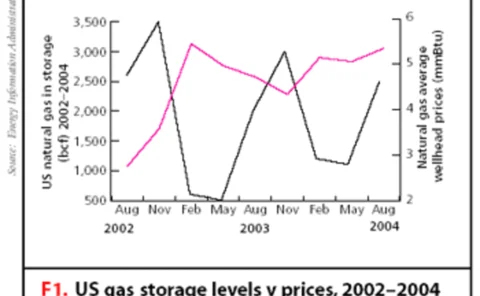
Storing up trouble
Power
Auction advances
Power
Worth 1,000 words
Power