

Currency derivatives house of the year: Bank of America
Risk Awards 2026: Early call on dollar weakness helped bank break vega records in April and quickly recycle 95% of risk


After the market close on April 2, as Donald Trump stood in the White House rose garden to announce sweeping tariff policies on what he described as Liberation Day, the foreign exchange market was the first responder. The US dollar index dropped 3.2% overnight, and volatility levels across multiple pairs surged.
The volatility continued through the next few weeks as uncertainty swirled around the tariff policy. It is during these times that options market-makers can become rattled and withdraw liquidity. On April 11, for instance, when euro/US dollar spot surged 5% in a day, bid/offer spreads for one-month options on the pair had widened to as much as 3.5 vols, up from an average of 0.2–0.3 vols.
But Bank of America’s (BofA) FX derivatives trading desk wasn’t sweating. In the months prior, it had already taken the view that the dollar was primed for a selloff and begun to build inventory in advance, which paid off when the extreme bout of volatility hit in April.
“Even in periods of super-low liquidity, [BofA] did not step back – it was the same consistency for pricing and restructuring risk,” says a trader at one large US-based hedge fund.
These were quite difficult conversations and indicated to us how strong the market conviction was on this dollar narrative
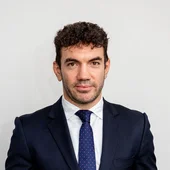
Julian Weiss, Bank of America
Another trader at a second large US hedge fund strongly agrees: “When things kicked off in March and April, BofA leaned in and then some. We had stuff to unwind and saw banks charge a premium, but they took it off our hands and matched or beat the price of other banks 100% of the time.”
Going into the US president’s inauguration day in January, the overriding theme throughout the macro community was that any new tariffs on imports from Canada, China, Europe and Mexico would result in a stronger US dollar. By December, BofA’s research team concluded that while the dollar would remain strong in the short-term, it would weaken afterwards thanks to impacts on US inflation and expected global reciprocal responses.
The team also noted that while the euro was near parity in real-effective terms, EUR/USD should be trading nearer to 1.18, which would likely be achieved by a bout of USD weakness rather than EUR strength.
In response, the team kicked into action and began engaging with the bank’s newly formed C-suite-focused sales group, who pitched potential trade ideas directly to senior traders and chief investment officers from its largest clients.
“Their senior traders were pretty negative on the dollar very early on,” says a trader at one real money firm.
Most clients, though, were initially unconvinced by the short dollar ideas: “These were quite difficult conversations and indicated to us how strong the market conviction was on this dollar narrative, which, as a trader, gives you a little room to think the dollar is at its highest,” says Julian Weiss, head of G10 FX options trading at BofA.
For the better part of two years, Weiss says, euro call options were heavily sold and positioning above 1.07 was very light, meaning topside EUR/USD options were readily available and cheap. But the bank was able to convince two macro hedge funds to lock in a topside digital EUR/USD trade struck between 1.07 and 1.08, offering a €50 million–100 million ($57 million–115 million) payout. Spot was trading at around 1.04 at the end of February.
“There was a lot of legacy long vega position on the EUR topside/USD downside, which meant sourcing that inventory for these trades we pitched was quite easy. For the minority of clients that did agree with us and wanted to position for that side, they got an incredibly good risk-reward on those trades,” says Weiss.
Personal touch
Although initially there were few takers of the trade, the bank’s short dollar view put it in a great position to handle client unwinds in April.
Carlos Fernandez-Aller, co-head of global fixed income, currencies and commodities macro trading at BofA, says the bank’s strategy of providing high-touch service to the largest and most important institutional and corporate clients – as opposed to electronifying as much flow as possible – gave the bank an edge when volatility erupted after the April 2 tariffs announcement.
“When something happens in the market, we are already ahead organising calls, discussing ideas, putting different strategies together for different clients based on their idiosyncratic needs,” says Fernandez-Aller.
“That level of personalised service that is very current with what is happening in the market has given us a huge advantage.”
Thursday, April 3 saw BofA’s highest ever single day of traded vega – the measurement of its aggregate dollar sensitivity to a 1% change in vol across all strikes and structures – trading 4.5 times more than its past year’s daily average of roughly $5 million vega. The bank was able to recycle nearly 95% of that risk within its internal franchise by the weekend.
But there was perhaps an even more pressing need to restructure barrier-type trades from corporate hedging activities.
While the market got knocked out of a lot of short volatility trades, we managed to keep them and it gave us extra inventory to service hedge funds
Varut Dechpokket, Bank of America

Previously, when EUR/USD was relatively range-bound, many European exporters had sought to cheapen and enhance their forward rates by adding American knockout barriers. This meant their hedge would knock out worthless if spot went too far in-the-money and past a barrier before expiry. But this also created an accumulation of barriers at key topside levels.
As spot rapidly surged, these barriers were at risk of being triggered, which would have left many corporates unhedged.
The team worked with these clients to restructure their hedges, either switching the barriers from American to European knockouts, where the knockout level is measured only at expiry, or rolling the barrier to higher topside levels to protect their hedges.
One large European corporate client noted that during April, BofA was highly reactive in managing the topside risk of their portfolio and restructuring hedges without any shocks.
Not only did this keep many of their corporate clients’ hedges intact, but these restructures also provided crucial supplies of vega to the trading team to meet topside EUR/USD demand from the next wave of hedge fund activity.
“This is exactly the type of environment where you need corporate and real money hedging activity. While the market got knocked out of a lot of short volatility trades, we managed to keep them and it gave us extra inventory to service hedge funds,” says Varut Dechpokket, global head of FX options trading at BofA.
As a result, April was the bank’s highest-ever month for request-for-prices (RFPs), and in that volatility still managed an overall hit rate of 37% with clients - up from 30% the year before. Figures outside of April were also impressive: average monthly RFP volume for August increased by 21% year-on-year, and notional volumes for the first and second quarter jumped 43% and 53%, respectively.
Taiwan, Turkey pressure
While the post-Liberation Day volatility was certainly a key event for the bank to risk manage, there was more to come.
On May 2 and 5, US dollar/Taiwan dollar experienced a historic 10% surge, much to the market’s surprise. As a result, one-month implied USD/TWD implied volatility shot up from 7.48 on May 1 to a high of 17.4 on May 5.
But this was another scenario in which BofA was well positioned to seize opportunities.
“We built significant long vol inventory before the selloff in May,” says Tom Cobbold, head of global emerging markets FX options trading at BofA.
Between May 2 and May 6, notional volume traded in USD/TWD FX options by the bank was already 14% above entire month of April. Meanwhile, BofA traded around $5 million of TWD vega, over 18 times its average daily volume in the currency, with a minimal change in net vega position. In other words, it was able to recycle that risk internally through other client flows – for instance, by offsetting vanilla and some digital trades from hedge funds with local real money clients.
In those times of stress, customers would come to us with their entire portfolios, not just the portfolios we had on with them
Tom Cobbold, Bank of America

“We were trading at a position of strength and were able to provide two-way markets to our customers that allows for both fresh trades being put on and unwinds of positions that may have been caught offside,” adds Cobbold.
Another example was seen in Turkey in March, when the arrest of Istanbul mayor Ekrem Imamoglu, president Recep Tayyip Erdogan’s strongest political rival at the time, caused the Turkish lira to collapse by 10% and forced the central bank to spend billions stabilising the currency.
The market reaction led to a mass unwinding of the lira carry trade, which saw hedge funds sell dollars into lira to buy government bonds, and use put options or digitals to profit from expectations that spot wouldn’t rise to the level implied by the forwards.
The spot move, though, put a substantial amount of those FX options at risk. Before the selloff, outstanding notional payouts for digitals on BofA’s books were four times larger than the previous four years combined.
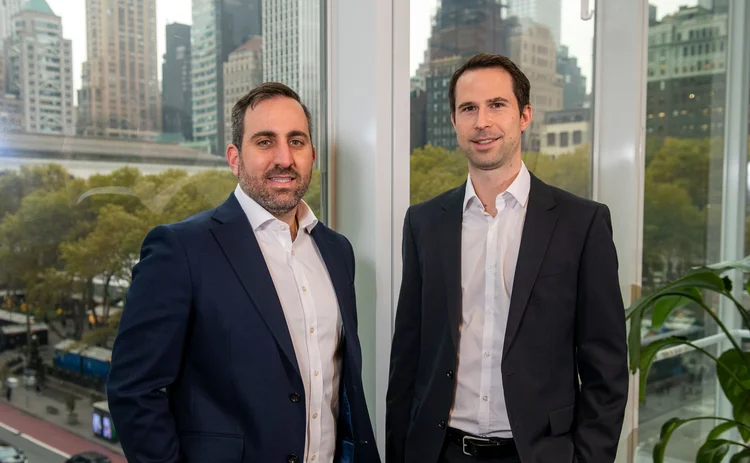
Cobbold says the episode is another example of how BofA’s high-touch approach pays dividends, allowing the bank to link up flows from large client unwinds with investors looking to put on fresh risk.
“In those times of stress, customers would come to us with their entire portfolios, not just the portfolios we had on with them,” he says.
“It became partly an advisory and partly a feasibility enterprise in terms of how clients could unwind, what they should be keeping, what the net position of derivatives impact in the Turkey market was during those moves, and a lot of this was done purely without any competition.”
Tech tweaks
In the background, the BofA’s FX options team also conducted important technological and organisational work that would ultimately give them the ability to manage these volatile events.
The bank manages an internal request-for-quote database called Reflex that captures all client activity and provides analysis such as hit ratios, spreads and profitability on trades. It can inform sales and trading teams which clients tend to sell or buy vol and what their net gross vega is for a specific currency pair over a certain time period, for example.
To get this information, however, users had to manually source it from the system themselves. Dechpokket says AI-based tools are now being hooked up to Reflex so that it can automatically feed the information to traders.
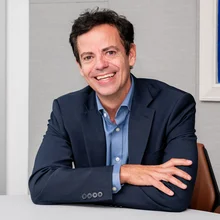
“This helps us monitor client positions and suggest what trades that client should be restructuring and rolling. We can also see our client behaviours and this allows us to be very targeted when we approach clients,” he adds.
The bank has also rebuilt its risk management systems so that it can monitor the aggregate risk across all its books. This makes it easier for it to slice and dice client portfolios during a volatile event.
“When the markets were fast moving, you could very quickly see who had exposure that was advisable to reduce or restructure. So, over this year, at various stages when we had these events, it was really helpful,” says Cobbold.
On the risk side, the FX options team extended its tenor mandate to 10 years – previously, tenors above five years were handled by the rates team. This was vital for the options desk to see more flow from Japanese real money firms that are more active in the longer-dated space. It then hired its first Japan-based trader to cater for these flows.
Weiss says the hope is that once the relationship has been built up, Japanese firms will also start sending shorter-dated flow down the line.
“A lot of G10 flow this year has directly been the result of primary emerging markets liquidity that we’ve initially provided to clients, and I think that same argument works in the longer-dated trades,” he says.
Only users who have a paid subscription or are part of a corporate subscription are able to print or copy content.
To access these options, along with all other subscription benefits, please contact info@risk.net or view our subscription options here: http://subscriptions.risk.net/subscribe
You are currently unable to print this content. Please contact info@risk.net to find out more.
You are currently unable to copy this content. Please contact info@risk.net to find out more.
Copyright Infopro Digital Limited. All rights reserved.
As outlined in our terms and conditions, https://www.infopro-digital.com/terms-and-conditions/subscriptions/ (point 2.4), printing is limited to a single copy.
If you would like to purchase additional rights please email info@risk.net
Copyright Infopro Digital Limited. All rights reserved.
You may share this content using our article tools. As outlined in our terms and conditions, https://www.infopro-digital.com/terms-and-conditions/subscriptions/ (clause 2.4), an Authorised User may only make one copy of the materials for their own personal use. You must also comply with the restrictions in clause 2.5.
If you would like to purchase additional rights please email info@risk.net
More on Awards
Regulatory capital calculation product of the year: Regnology
Regnology’s cloud-native platform helps banks streamline regulatory capital calculation while strengthening strategic decision-making

Prudential regulation reporting system of the year: Regnology
Regnology’s cloud-native platform helps firms unify risk, regulatory reporting and finance on a single data foundation, using AI‑ready architecture to support future innovation

CTRM software house of the year: Hitachi Energy
Energy Risk Awards 2026: Software developer’s portfolio approach meets changing needs of energy market participants

Climate risk service of the year: First Street
First Street helps institutions translate climate science into asset-level intelligence that supports investment, lending and risk decisions

Integrated risk management software of the year: TS Imagine
TS Imagine’s integrated risk platform helps clients monitor exposures across markets, counterparties and asset classes amid increasingly complex trading environments

Life and pensions ALM system of the year: Fentics Technology
Fentics’ ALM and capital platform helps insurers and pension providers manage balance sheets by bringing assets, liabilities and capital together within a single modelling framework

Best in-house ALM technology: EFG Bank
The EFG ALM Risk Suite has shifted ALM from a retrospective reporting exercise into a forward-looking, strategic discipline

Best use of AI: Moody’s
Moody’s Banking Decision Intelligence solution uses AI to bring together credit, liquidity, capital, profitability and other insights
