

Flow market-maker of the year: Citadel Securities
Risk Awards 2026: No financing; no long-dated swaps? “No distractions,” says Esposito
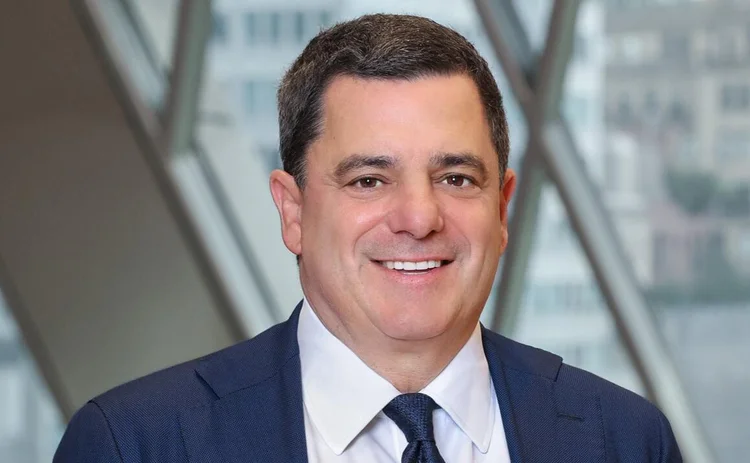

When Citadel Securities became the first non-bank to start quoting interest rate swap prices just over a decade ago, it did so without a lot of the usual furniture. There was no prime services business, no research, no white-glove sales team.
All of the things that made it different to a bank became a stick to beat it with.
Detractors argued that it held much less capital than a bank, so would be less able to take and hold risk; that the synergies it lacked – from financing, capital markets, structured and exotics trading – were all necessary to attract and retain flow trading clients.
None of those things proved true, and Citadel Securities is now increasingly asserting the opposite: it’s a successful market-maker precisely because it is not a bank.
During times of volatility, it’s more important for me as a customer to know that I can trust the dealer … and they have excelled in that respect
Senior source at a credit hedge fund
“We’re singularly focused on market-making,” says Jim Esposito, the firm’s president, who joined in 2024, after 29 years at Goldman Sachs. “When markets get volatile, we don’t have all these other distractions – from long-dated derivatives or financing activities. This allows us to be there when our clients need us the most.”
This year, clients needed the firm most in April, when US Treasury volumes spiked following the announcement of US president Donald Trump’s tariff plans.
During the course of the month, Citadel Securities boasted average daily Treasury volumes worth $70 million in per-basis-point sensitivity, with hit ratios of 45%. For context, in two earlier stress periods – when Covid fears hit markets in 2020, and the aftermath of the Silicon Valley Bank collapse in March 2023 – the firm executed $23 million and $20 million on the back of 35% and 36% hit ratios respectively.
Across the markets that Citadel trades, gross volumes also set a new peak in April when compared with prior black swan events. The previous record was set in March 2023, when the firm racked up a total of roughly $800 billion during the month. In this year’s tariff turmoil, gross volume hit $1,400 billion – a 75% jump.
Clients provide anecdotal evidence of the firm’s performance.
“During times of volatility, it’s more important for me as a customer to know that I can trust the dealer … and they have excelled in that respect,” says a senior source at a credit hedge fund.
In equities, another hedge fund source says: “[Citadel is] extremely efficient, extremely quick. They provide an incredible amount of liquidity. Basically, the banks don’t want to enter into that kind of business.”
Net gains
So, it’s not just Citadel claiming they can do things the banks can’t.
While Esposito and Matt Culek – the firm’s chief operating officer – explain what makes the firm tick, three sharp distinctions emerge between Citadel Securities and the average bank market-making operation.
First, many banks are riddled with invisible fractures. Their siloed businesses often calculate and manage risk independently, so struggle to take advantage of the offsets that might exist between two (or more) books. Citadel Securities calculates exposure across multiple business lines and product sets – also across both client and proprietary positions – so is able to capture more netting effects.
“Given our size and scale, you get a lot of diversification, such that one individual trade, one individual flow or stream of flows from a given client isn’t necessarily going to materially impact the overall way our portfolio is constructed,” says Culek.
These diversification benefits have grown with the firm, of course. Each new product Citadel Securities adds to the mix creates the potential for more risk-reducing effects.
A second – related – distinction is that the firm is able to allocate capital quickly to teams that are best-positioned to make use of it, thanks to a real-time system that monitors risk and capital consumption.
Our system is not going to slow down and struggle to keep up. We always keep up
Matt Culek, Citadel Securities

“We’re thoughtful stewards of our capital, given our focus on trading liquid products. We’re fluid deploying our capital to where our clients are most active,” says Esposito.
The firm keeps a buffer at the top of house for occasions when a team identifies spikes in volume from clients or a big, profitable trading opportunity.
“We can allocate them more capital on a temporary basis, whether that’s intraday, two days, three days. Whatever it is, if we think that opportunity is worth an investment, capital can be adjusted in real time,” says Culek.
This is harder at banks because many of the exposures they take are less liquid.
“Traditional bank market-makers are growing their markets business more from financing activities than market-making activities. You can see this in public disclosures. Financing activities tend to be long-dated trades and capital-intensive. Banks’ capital allocation is often less fluid for those reasons,” explains Esposito.
The third and final difference is operational – Citadel Securities avoids third-party technology, and has also been working to consolidate its in-house solutions into a single system for each core part of business operations. This gives the firm more control, more confidence about how technology will perform, and a greater ability to fix any problems.
“You can take that platform, you can stress-test it, and you can do all sorts of things to it. And you can build transparency into how it’s operating to make you confident that you’ve addressed potential uncertainties,” says Culek.
The benefits extend into the trading teams, he adds: “Our system is not going to slow down and struggle to keep up. We always keep up. And it gives the traders the confidence to know that what they see on the screen makes sense and is true, and they can layer their judgement on top of that and give the client the best price possible.”
Grey days
In other respects, Citadel Securities has been growing to more closely resemble the banks – it now has a content team producing market analysis, to capitalise on its market-leading share of US equity markets. And this year, it has continued to develop what are often referred to as ‘high-touch’ capabilities: skilled salespeople who can help institutions with big-ticket trades.
Many of these have been poached from banks. Over the past year in rates, Citadel Securities has hired: Nohshad Shah to lead fixed income sales for Europe, the Middle East and Africa, from Goldman; Paul Hutchen to lead hedge fund rates sales, from BNP Paribas; and Jordan Brink and Keith Cynar to co-head US rates sales, from Morgan Stanley and Goldman Sachs respectively.
What we’ve brought to bear, in terms of our electronic offering, is a bunch of small, elegant things adding up to solving a major client pain point
Jim Esposito, Citadel Securities
In equities, the firm has added Scott Rubner, another Goldman Sachs alumnus, as head of equity and equity derivatives strategy, and Elan Luger, as head of high-touch equities, from JP Morgan.
The firm is also filling out gaps in its product coverage. In 2024, the firm launched an investment-grade (IG) credit business. Naysayers had initially argued that Citadel would struggle to break into the market for IG credit trading because it lacked an underwriting business.
Once again, though, not having the traditional banking business proved to be a market-making strength – underwriters are barred from participating in the so-called grey market that exists before trading in a new issue has officially begun. This means liquidity is typically thin. Unencumbered by underwriting, Citadel has been able to turn this into a major new business for the firm.
As of end-July, Citadel Securities had traded over $15.5 billion in grey market volume in 2025, making up an 18% market share, with average ticket sizes of $7.5 million and 72 tickets of over $15 million.
“I think what we’ve brought to bear, in terms of our electronic offering, is a bunch of small, elegant things adding up to solving a major client pain point. That’s how we thought about bringing innovation to what has been a business that hasn’t enjoyed that much change, and I think we’ve been a welcome partner to our clients,” says Esposito.
Only users who have a paid subscription or are part of a corporate subscription are able to print or copy content.
To access these options, along with all other subscription benefits, please contact info@risk.net or view our subscription options here: http://subscriptions.risk.net/subscribe
You are currently unable to print this content. Please contact info@risk.net to find out more.
You are currently unable to copy this content. Please contact info@risk.net to find out more.
Copyright Infopro Digital Limited. All rights reserved.
As outlined in our terms and conditions, https://www.infopro-digital.com/terms-and-conditions/subscriptions/ (point 2.4), printing is limited to a single copy.
If you would like to purchase additional rights please email info@risk.net
Copyright Infopro Digital Limited. All rights reserved.
You may share this content using our article tools. As outlined in our terms and conditions, https://www.infopro-digital.com/terms-and-conditions/subscriptions/ (clause 2.4), an Authorised User may only make one copy of the materials for their own personal use. You must also comply with the restrictions in clause 2.5.
If you would like to purchase additional rights please email info@risk.net
More on Awards
Regulatory capital calculation product of the year: Regnology
Regnology’s cloud-native platform helps banks streamline regulatory capital calculation while strengthening strategic decision-making

Prudential regulation reporting system of the year: Regnology
Regnology’s cloud-native platform helps firms unify risk, regulatory reporting and finance on a single data foundation, using AI‑ready architecture to support future innovation

CTRM software house of the year: Hitachi Energy
Energy Risk Awards 2026: Software developer’s portfolio approach meets changing needs of energy market participants

Climate risk service of the year: First Street
First Street helps institutions translate climate science into asset-level intelligence that supports investment, lending and risk decisions

Integrated risk management software of the year: TS Imagine
TS Imagine’s integrated risk platform helps clients monitor exposures across markets, counterparties and asset classes amid increasingly complex trading environments

Life and pensions ALM system of the year: Fentics Technology
Fentics’ ALM and capital platform helps insurers and pension providers manage balance sheets by bringing assets, liabilities and capital together within a single modelling framework

Best in-house ALM technology: EFG Bank
The EFG ALM Risk Suite has shifted ALM from a retrospective reporting exercise into a forward-looking, strategic discipline

Best use of AI: Moody’s
Moody’s Banking Decision Intelligence solution uses AI to bring together credit, liquidity, capital, profitability and other insights
