OLA rollback plan threatens US bankruptcy reform

Supporters of bankruptcy act want it separated from repeal of Dodd-Frank Title II
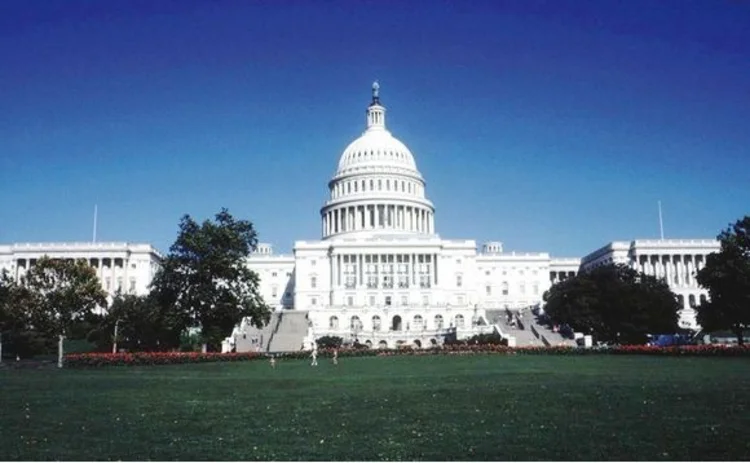
The US Senate
Controversial measure: passage of HR 10 would eliminate Title II of Dodd-Frank – the Orderly Liquidation Authority, which allows federal regulators to resolve a bank

Supporters of a key, long-delayed bankruptcy reform bill in the US are urging lawmakers to separate the proposal from a more controversial plan to dismantle regulators’ powers of resolution.

On June 8, the House of Representatives passed the Financial Choice Act (HR 10), a bill that seeks to roll back much of the Dodd-Frank Act by 233 votes to 186 along party lines. If it passes the Senate, the bill would establish a new procedure called the Financial Institution Bankruptcy Act (Fiba), designed to facilitate the resolution of a large bank through the courts. But it would also eliminate Title II of Dodd-Frank – the Orderly Liquidation Authority (OLA), which allows federal regulators to resolve a bank. Proponents of Fiba fear this much more controversial measure will prevent its passage through the Senate.

“If the debate about whether to repeal Title II or not gets attached to the debate about whether to enact Fiba, it will make it extremely difficult to get Fiba enacted. Fiba has already passed the House three times. If the passage of Fiba through the Senate was conditioned on a repeal of Title II, it would be very difficult to get it adopted as law,” says Stephen Hessler, a partner in the restructuring group at Kirkland & Ellis, who has testified before the House numerous times in support of Fiba.

A standalone version of Fiba (HR 1667), which does not touch Title II, passed through the House in March. Another bankruptcy reform that originally pre-dated Dodd-Frank, generally referred to as Chapter 14, is now before the Senate. Hessler points out that Fiba minus the Title II repeal is not controversial: HR 1667 was passed by the House unanimously. By contrast, political divides over Title II have previously beset similar attempts to amend the bankruptcy code. 

HR 10, written by the House Financial Services Committee chair, republican Jeb Hensarling, has already prompted a prominent group of academics to plead the case for Dodd-Frank’s Title II resolution provisions. The group of some 100 academics form the US and Europe, all with research interests in financial regulation and bankruptcy, addressed their letter of May 23 to ranking members of the judicial and banking subcommittees, including Hensarling. They said that while they welcomed Fiba as a useful amendment to the bankruptcy code, Title II is a crucial regulatory backstop.

“Bankruptcy institutions alone cannot manage a full-blown financial crisis,” the experts wrote. According to their letter, courts are not equipped for the necessary international co-ordination with regulators to maintain trust and ensure a firm’s foreign assets are not seized, nor can they ensure liquidity provision to the entity during its resolution. Regulators can perform both of these functions.

Title II was a complete overreaction in the wrong direction
Stephen Hessler, Kirkland & Ellis

Bank industry groups say their members are happy to have Title II remain in place, and JP Morgan chief executive Jamie Dimon, in his April 4 letter to shareholders, emphasised Title II is “secured lending”, not a bailout.

The OLA’s detractors, however, would have been encouraged by a presidential memorandum on April 21, asking Treasury secretary Steven Mnuchin to review the authority, to ensure it does not encourage excessive risk-taking. He has 180 days to conduct the review.

“While I acknowledge the bankruptcy code has some shortcomings within the context of a major bank failure, the optimal response is to fix or modify the bankruptcy code… Title II was a complete overreaction in the wrong direction,” says Hessler.

In common with Title II, Fiba seeks to address the shortcomings of the bankruptcy code to contain systemic risk when a firm with complex contractual relationships founders – shortcomings observed when Lehman Brothers went bankrupt. Fiba would amend Chapter 11 of the code with a Subchapter V to make it more suitable for resolving large banks. Republicans say Fiba is a transparent legal process backed by tested bankruptcy courts, rather than an opaque regulatory process overseen by the Federal Deposit Insurance Corporation, which Title II empowers as receiver.

Central to Fiba’s modifications to Chapter 11 is its single-point-of-entry (Spoe) strategy: under this approach, only the holding company of a failing bank goes into Chapter 11, while its subsidiaries continue doing business. A new bridge bank is created to which critical components of the bank are transferred so that it can keep operating. Repayment to creditors would come in the form of equity in the bridge bank or proceeds from the liquidation of bad assets.

Swap stays

A key aspect of Fiba is the lifting of exemptions for counterparties to qualified financial contracts (QFCs) – derivatives and short-term funding. Chapter 11, as a result of pre-crisis bank lobbying, allows ‘safe harbour’ from the 48-hour stay on repayments and termination of contracts that kicks in automatically with every bankruptcy filing. Fiba removes these safe harbours for QFCs so that a bank can hold all creditors – including derivatives counterparties – at bay while it is wound up over a weekend.

“The automatic stay safe harbours are a pretty significant reason why Chapter 11, in its present form, is insufficient to handle a major financial institution’s bankruptcy. Many of the interdependent relationships a major bank has with its creditors are QFCs,” says Hessler, who has testified in the House in favour of Fiba.

Fiba and its twin in the Senate, Chapter 14, were developed from work carried out on bank resolution by the resolution project of the Hoover Institution at Stanford University. John Taylor, a professor of economics and fellow at Stanford, worked on the project, which began in the spring of 2009, before Dodd-Frank and Title II were even passed.

“Now that Title II has been passed, the situation is more complicated from a legislative perspective. It would be easier politically to retain the bankruptcy reform along with Title II – I would not object to that. But Fiba does have advantages over Title II, and I would very much hope that if this were the case, the first line of action would be to proceed towards bankruptcy, according to Fiba,” says Taylor.

These advantages, he adds, are that Fiba is based on the rule of law and upon an established process that is already well understood.

“The idea behind the modification of Chapter 11 is to wind up a bank like Lehman quickly. You have experienced, knowledgeable judges, many of whom have had experience in other parts of government or other parts of the markets. There is the advantage of having the ‘pre-packaged’ bankruptcy – the living wills that are available to use now, which wasn’t the case when Lehman failed,” Taylor says.

He adds: “It’s about speed and certainty and the fact the new institution could be up and running on Monday morning and providing the services to many of the customers of the old institution.”

Taylor believes Fiba has “found the right level” with the 48-hour stay on QFCs.

Excessive risk-taking

But some critics of too-big-to-fail banks warn Fiba unfairly favours Wall Street and encourages excessive risk-taking. Simon Johnson, who was chief economist at the International Monetary Fund during the financial crisis and is now a professor at the MIT Sloan School of Management, is in this camp.

Johnson says that as Chapter 11 stands now, it mandates creditors must be notified of a transfer of a debtor’s property. Under Fiba, only large creditors would be notified. Smaller creditors would not have representation for 48 hours after a bankruptcy, by which time Fiba’s stay would have elapsed, with QFC counterparties (likely to be other dealers and large institutional investors) taking their cut of whatever was left. This is grossly unfair to smaller Main Street creditors.

“The question is how different kinds of creditors are treated in bankruptcy and we think the original problem that has not been dealt with – in fact, has been made worse – is the fact that counterparties to derivatives transactions have an implicit seniority that can accelerate their claims in bankruptcy,” he says.

Johnson has argued Fiba incentivises risk-taking in two ways: because Wall Street participants in derivatives and repo markets know they will get their money out, even if their counterparty goes under; and because Subchapter V would remove liability from the directors of a failing bank. No other kind of corporate director receives this immunity under Chapter 11. 

The best solution to Chapter 11’s inefficacy in resolving big banks is to return to the pre-crisis norm that all payments would be stayed immediately in bankruptcy for as long as it takes to resolve the bank. This means ending Dodd-Frank’s 48-hour time limit on the stay for QFCs.

“That’s where we went off track. Fiba would just exacerbate the problem,” Johnson says.

Only users who have a paid subscription or are part of a corporate subscription are able to print or copy content.

To access these options, along with all other subscription benefits, please contact info@risk.net or view our subscription options here: http://subscriptions.risk.net/subscribe

You are currently unable to copy this content. Please contact info@risk.net to find out more.

Most read articles loading...

You need to sign in to use this feature. If you don’t have a Risk.net account, please register for a trial.

Sign in
You are currently on corporate access.

To use this feature you will need an individual account. If you have one already please sign in.

Sign in.

Alternatively you can request an individual account here