

CFTC close to fixing Dodd-Frank commodity option woes
The Commodity Futures Trading Commission is said to be exploring solutions for the so-called 'seventh prong' problem created by its definition of a swap under the Dodd-Frank Act

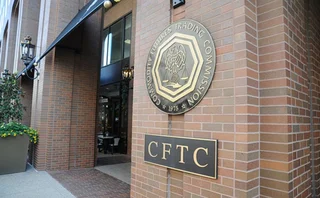
The US Commodity Futures Trading Commission (CFTC) and its new chairman, Timothy Massad, are said to be moving closer to resolving an ambiguity in the agency's Dodd-Frank Act regulations that is causing major headaches for energy companies.
The ambiguity lies in the definition of a swap, which was finalised in July 2012. Specifically, the CFTC designed a seven-part test to help companies determine
Only users who have a paid subscription or are part of a corporate subscription are able to print or copy content.
To access these options, along with all other subscription benefits, please contact info@risk.net or view our subscription options here: http://subscriptions.risk.net/subscribe
You are currently unable to print this content. Please contact info@risk.net to find out more.
You are currently unable to copy this content. Please contact info@risk.net to find out more.
Copyright Infopro Digital Limited. All rights reserved.
As outlined in our terms and conditions, https://www.infopro-digital.com/terms-and-conditions/subscriptions/ (point 2.4), printing is limited to a single copy.
If you would like to purchase additional rights please email info@risk.net
Copyright Infopro Digital Limited. All rights reserved.
You may share this content using our article tools. As outlined in our terms and conditions, https://www.infopro-digital.com/terms-and-conditions/subscriptions/ (clause 2.4), an Authorised User may only make one copy of the materials for their own personal use. You must also comply with the restrictions in clause 2.5.
If you would like to purchase additional rights please email info@risk.net
More on Dodd-Frank Act
US Treasury hands CCP resolution powers to FDIC
Mnuchin regulatory review explicitly refers to FDIC as receiver under a Title II resolution

Treasury review not rollback of reforms – CFTC counsel
Trump order is a chance to ease some rules and promote cross-border regulatory deference
Industry pushes CFTC to prioritise cross-border clarity
Approaching Mifid II deadline adds urgency to Giancarlo’s overhaul of Sef rules

Final US position limits rule will take ‘at least a year’
CFTC expected to draft a narrow list of contracts in scope

Covered funds seen as starting point for Volcker rule reform
Inter-agency consensus may prove more elusive on altering prop-trading definitions

US gives 21 banks another year to solve resolution problems
Banks including Societe Generale, Santander and BNP Paribas have until end-2018 to file plans

Bailout obsession holds back US CCP resolution regime
Dodd-Frank leaves legal uncertainty, but proposed alternatives could be even worse

Fed paper reignites debate on bank capital ratios
US industry association criticises official analysis suggesting optimal Basel ratios of up to 26%
