Desert sands yield opportunity: special report on the Middle East

The Middle East has weathered the financial crisis well. Hedge Funds Review finds out why it is time for hedge funds to start setting up shop in the region.
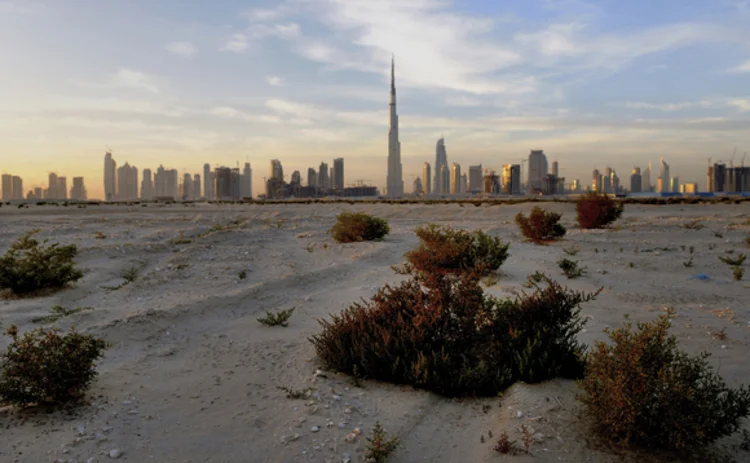
Road to dubai across a desert

“It’s not a big region, but if you look at the amount of money involved it’s a huge region,” says Kevin Birkett, executive director for asset management at the Dubai International Finance Centre.

He is referring to the six countries that make up the Gulf Cooperation Council (GCC) – Bahrain, Kuwait, Oman, Qatar, Saudi Arabia and the United Arab Emirates (UAE). As the rest of the world struggles to return to growth, buoyant oil prices mean there is money to be spent in the region.

For those seeking to put money into hedge funds, the Middle East remains a market that is more about opportunity than realisation, although private equity, commodity and property funds have a strong investor base.

There are no reliable statistics about the current state of the hedge fund market across the GCC nations. Even the most optimistic guess puts the total number of active indigenous hedge fund managers at about 25. A few global asset management companies, such as GAM, also have offices in the region. Even fewer hedge funds are domiciled in the Middle East.

Figures published in September from the Dubai Financial Services Authority (DFSA) reveal at that time there were nine collective investment “fund operators” or management companies, four private funds and one public fund registered in the Dubai International Finance Centre (DIFC).

A total of 87 asset managers and 24 fund administrators were also registered (but not necessarily active) at the DIFC. As of December 31, 2008 there were 47 authorised companies distributing a total of 1,643 foreign funds from the DIFC.

However, the situation is changing. Financial regulators are trying to open up the markets while lawyers and Islamic scholars are looking at how to reconcile hedge funds with Shariah law. Meanwhile, more local managers are setting up business.

“It hasn’t reached the level of maturity that we would find in a more developed environment but particularly in the rising markets of 2007 and 2008 you saw a lot of people leaving the more established institutions and going out on their own to set up hedge funds,” says Casey Gordon, private equity and business development manager at the Capital Partnership (TCP) in Dubai.

“For those that got their timing particularly bad, there’s very little hope of recovery. Some of them have closed down while new ones are starting to open up. There’s a lot of jumping around in terms of personnel and there’s a lack of stability that you’d find in a more mature market,” Gordon adds.

Traditionally the Middle East has been a fertile environment for private equity, real estate funds, and equity funds. Haissam Arabi, chief executive of newly established Gulfmena Alternative Investments, says just a decade ago Kuwait and Saudi Arabia were the only developed asset management markets.

By 2007, according to Arabi, there were 587 funds managing around $80 billion across the whole GCC asset management industry. Today, following the financial crisis, the numbers remain pretty much the same.

But Arabi says “home-grown” hedge funds are still in the “very early stages”, particularly compared to traditional investments.

Zubair Mir, a finance partner in the Dubai office of law firm Herbert Smith, says: “Hedge funds are a relatively new phenomenon in that we have a lot of managers who thought they were doing a hedge fund but were doing private equity or some sort of deviation from that.”

DIFC executive director for asset management Kevin Birkett sees the whole indigenous investment management industry as “embryonic”.

Birkett thinks much of the asset management industry to date has been driven by “suitcase bankers” or foreigners, often Westerners, travelling to the Middle East to raise capital for overseas funds.

He says that is changing as local investors begin demanding an on-the-ground presence.

Setting up in the GCC
Establishing a local fund management business requires both the regulatory environment and the support of third-party service providers. The latter is especially important if a manager plans to seek investment from outside the region as well as domestically.

Craig Roberts, managing director of Apex Fund Services’ Dubai office, notes there is a “handful of key providers” offering custodial services in the region. These are led by Citi, HSBC and BNP Paribas.

State Street opened its second Middle Eastern office in Qatar in 2008. Citi’s head of securities and fund services for the Middle East Richard Street says the bank is planning local launches in Kuwait, Bahrain and Qatar to add to its services presence in the UAE.

Roberts says it is easier for companies like Apex, with a background in hedge funds, to advise managers setting up in the region. Service providers that worked with private equity managers and others, he says, have found the developing environment trickier.

“It’s been more of a problem for the people providing services here beforehand. They have had much more difficulty transitioning,” Roberts says.

Herbert Smith partner Judith Watson says the region is still not equipped with the services a hedge fund needs.

“Prime broker services are still mostly accessed from London,” says Watson. “It’s always easier to set up a hedge fund elsewhere.”

Street says Citi offers local custody in the region as well as giving access to global services. He would welcome more entrants to the market. “All of our clients want competition. They want choice and improved pricing,” he notes.

Arabi agrees regulated, independent service providers are important. He thinks global custodians can all service Middle Eastern equities and says there are also providers for middle- and back-office functions. Gulfmena chose SunGard less than a year after the technology company launched a regional headquarters in the DIFC.

Arabi also sees advantages for a manager being located in the region.

“Structurally being in a place like the DIFC will open the doors to many opportunities,” he says. For example, the Dubai Mercantile energy and commodities futures exchange is located in the DIFC. “You can’t have this in any other local jurisdictions. That’s part of the edge that being in the Dubai financial centre can have,” he declares.

Street says all the local markets need to play a role in developing the industry and the infrastructure to support it.

According to Mir, the service provider industry is still in development. “We have a number of big banks that are beginning to provide these sorts of services.” For some service providers, he adds, Middle Eastern offices “almost act as a window back into their operations in Hong Kong or London.”

The Herbert Smith partners say this means there is a time lag between advice being sought and given. Lack of significant presence can also lead to cultural differences, they think.

Despite the difficulties with service providers, having managers on the ground who understand the region is more critical. Amiri Capital partner Richard Ellis says the Middle Eastern investment culture is still one where interpersonal relationships are key.

“Investors tend to be less obsessive about analysis and numbers. They want to feel like they’re investing in the right person and the right team. I also think that they have probably been taken advantage of in the past, they’re quite cautious about who they team up with,” Ellis says.

Khaled Abdul Majeed, founder of London-based MENA Capital which invests predominantly in the Middle East, says he has seen no difference between the performance of managers based in the Middle East versus those investing in the region from overseas.

“If you’re a trading-orientated manager then it’s probably important for you to have your ear close to the ground,” Majeed adds.

Street thinks local investment banks and conventional asset management houses provide a perfect breeding ground for hedge fund managers. “It’s from those sorts of nursery grounds that hedge fund managers break away and set up their own shop,” he says.

Having your manager on the ground does not necessarily extend into having your fund domiciled in the Middle East. Despite efforts by the DIFC and the DFSA to open up the collective investment regime, there is only one public fund domiciled in Dubai at present. The consensus view is that both managers and investors still prefer established offshore jurisdictions such as the Cayman Islands over the Middle East.

According to Arabi, even in “the most advanced” jurisdictions the legal structure is not as “lenient and efficient” as in Cayman.

Conyers Dill & Pearman associate Fawaz Elmaki agrees with Arabi. “There’s a good balance in Cayman and Bermuda between investors’ and managers’ interests and it’s easy to establish the funds there; it’s quick. That’s now very appealing to managers over here.”

Elmaki says fund managers are “keeping a close eye” on the progress of hedge fund regulation in Europe. But this is likely to only have a significant effect on future fund domiciliation if there is a large European investor base, says Elmaki.

Herbert Smith’s Mir agrees. “Cayman is a jurisdiction that most investors in this part of the world are very, very comfortable with. I’m not sure that setting up a hedge fund onshore in the Middle East is going to bring investors any more confidence than in the Caymans. My personal view is that that’s not going to change,” he says.

The DIFC and DFSA are planning to make it easier for local fund managers to run funds domiciled elsewhere (see box, page 17). At the moment the practice is tolerated rather than expressly permitted in the DIFC.

TCP’s Gordon points to moves by the Saudi Arabian government to open up its markets to investment but thinks when it comes to Western-style regulation for funds, Dubai has an unassailable edge.

“So much of what the other countries have done to modernise the infrastructure, regulation or outlook towards the West has a lot to do with playing catch-up to Dubai. In that way it’s been incredibly useful. Dubai has set a standard for progressive government management of investors that can’t be ignored,” he says.

Gordon thinks the DIFC will maintain its hold as a regional hub, especially given its first-mover advantage.

Strategies and Shariah
Another way in which the funds industry and especially the hedge fund industry in the Middle East is still underdeveloped compared to the West is in the range of strategies available and the range of stocks that a hedge fund can invest in.

Elmaki and others identify the Saudi government’s move in 2008 to open the stock market to foreign investors, permitting trading in local stocks through Saudi intermediaries, as significant. Foreigners are also allowed to own property in Saudi Arabia now, another major step especially given the preference many Middle Eastern investors have for investments like real estate.

“Arab investors tend to like something that they can see and touch,” says Birkett, explaining many investors’ preference in the past for equity and property funds.

Regulations in most of the GCC countries prevent fund managers from using most of what are seen in the region as ‘exotic’ strategies available to managers based in London or the US. Futures and derivatives are either not permitted or are new. Nasdaq Dubai, for example, began trading in equity derivatives only in November 2008.

“There are derivative platforms that are being established in Kuwait and Dubai which give hedge fund managers the investment tools,” Amiri’s Ellis says.

“The investors here in the region would like a broad range of products and the manager can only offer that broad range of products if the regulators in the GCC countries and other Middle Eastern countries allow new products to be traded,” explains Elmaki.

Everyone is quick to identify restrictions on short selling, convertibles and securities lending as areas that could be opened.

Arabi says the industry would benefit from more access to such strategies.

Talking about shorting opens up the Shariah law debate. Under Islamic rules shorting is possible although it uses a different structure and needs someone, like the prime broker, to own the actual assets.

Arabi also thinks the GCC markets are not developed enough to provide the liquidity needed for shorting. “Markets here are relatively small and hedge funds coming along with a certain amount of leverage in them would have a fairly significant impact on a small market,” he says.

Ali Hijazi, an analyst focusing on the Middle East at UK management company Perinvest, says that impact would be small.

“Overall hedge funds do tend to be net long and that does provide the market with some liquidity,” he says.

Nevertheless, making shorting and other strategies prohibited by Islamic law possible is something that is being actively pursued on a number of fronts. Mir and Watson work with local investment managers on Shariah-compliant vehicles but say “the jury’s still out” when it comes to Shariah hedge funds.

Opinion from commentators is definitely mixed. “Shariah in a hedge fund in my opinion doesn’t work,” Roberts notes. According to Gordon, Shariah compliance is especially important in Saudi Arabia and service providers are responding to the demand they see from investors there.

Ellis, whose company Amiri Capital runs Shariah-compliant funds from London, says there was initially a “strong, visceral reaction” against the concept. That, says Ellis, has changed.

“I think that there’s been a change in the market and I believe rightly so. Where Islamic finance has its appeal and its merits is that it disdains excessive risk taking and volatility. You won’t get some of the most volatile hedge fund investment strategies being made Shariah compliant,” he explains.

Shortage of learning
Watson says an issue impeding the popularity of Shariah funds is the workload of the best Islamic scholars who provide expert advice and are in limited supply. “One of the constraints in relation to Shariah is how overworked the top scholars are in the region. The class of scholar is vital for the saleability of the fund,” she explains.

The majority of Middle Eastern funds of all types, not just the small number of hedge funds, are not Shariah compliant. At the moment it looks as though this will not change dramatically, although even the Shariah naysayers agree there is a role for Shariah-compliant funds as portfolio diversifiers.

In the future, growth of the industry is expected. Analysis by Hedge Fund Research, BNY Mellon and Casey Quirk estimates net outflows to hedge funds by Middle Eastern investors will turn into net inflows next year and steadily increase into 2013. The analysis suggests in 2013 Middle Eastern investors will account for about $194 billion in hedge fund assets, or about 7.5% of the global total. Most of the allocations have and will continue to come from high net worth investors, including family offices and bank platforms.

If, as commentators suggest, these investors are looking to have their managers located in the GCC region, that should mean a greater inflow to the indigenous industry.

“There was a period when they were investing in hedge funds that were driven out of North America and Europe,” says Mir. “We have seen quite talented fund managers move across from Europe and join regional firms. As and when they get funds off the ground there will be an increase in funds managed regionally.”

Ellis adds: “The majority of investors are beginning to position themselves for growth. There’s definitely an uptick in investor confidence which is good to see. I think fundamentally the Middle East is in a strong position.”

Citi’s Street believes the opportunities for investment will bring both managers and investors into the region, as people choose to be physically closer to the markets. However, both he and Hijazi take a slightly more long-term view of the situation than others. Hijazi says while there are opportunities at present created by mispriced equities, investors and managers need to look further into the future.

Arabi thinks the region needs more visibility in a global sense before hedge funds managed from the Middle East really take off. He feels added weight given to local equities in the emerging market indexes would help raise that visibility.

“I think overall people are seeing the opportunities here,” Roberts says, adding that he sees no reason why the Middle East cannot continue to perform well.

At the DIFC, Birkett is confident the infrastructure is ready and continued work on the regulatory environment will help attract managers.

Majeed says investment into the Middle East will come from both domestic and foreign investors. He points to another catalyst for growth and reform – a generational shift towards younger, Western-educated investors. As they take over responsibility for family offices and private wealth, allocations to innovative, Western-style investment vehicles are likely to rise.

The market has enormous potential for growth. The key now is to encourage all participants – regulators, managers, investors and service providers – to work together across the GCC to enable that growth to happen. n

Breaking down the hedge in Dubai
As part of efforts to attract more hedge funds to set up locally, the Dubai International Finance Centre (DIFC) and the Dubai Financial Services Authority (DFSA) are liberalising regulation of the funds sector.

In 2008 the DFSA published a code of practice for managers designed to address risks “inherent in the operation of hedge funds”.

The principles stipulated that managers should have controls including adequate back-office systems, valuation procedures and ways to mitigate trading risks. Managers should develop robust and flexible investment processes and funds of fund managers should carry out due diligence before investing in underlying funds.

The code is principles-based to allow market participants flexibility. It does not cover every aspect of Dubai’s collective investment scheme laws. However, the DFSA said compliance with the code of practice would provide strong evidence for compliance with the law.

More recently the DFSA established a working group to explore how the growth of collective investment funds within the DIFC could be supported. The group, including senior lawyers, fund managers and others within the industry, reported back in September.

The panel called for a “well-defined and clearly articulated long-term strategy” on funds that would align the regulatory framework with the interests of the regulator, the industry and investors.

To make the DIFC regulatory framework the “right fit” for the DIFC funds industry, it requires some “fairly significant fine-tuning”, said the group.

The report suggested reducing the costs of establishing a funds business in Dubai and removing restrictions that prevent foreign managers from domiciling funds in the DIFC, and fund managers based in Dubai from running funds domiciled elsewhere.

Currently the regime allows a “tolerated practice” which means that it is possible to manage a fund domiciled outside Dubai due to lack of clarity in the legal wording. The working group said the current practice should be formalised and the terminology used by the DFSA, which talks about “operating” a fund, revised to the more commonly used “managing”.

Managers should be able to market foreign funds from Dubai to sophisticated institutional investors, said the group.

The report recommended easing requirements for Shariah-compliant funds to make it less onerous to establish one and also simpler to run an Islamic fund together with a conventional fund.

Concluding, the group said the DFSA should try to position the DIFC funds regime as the “central attraction” for funds considering establishing in Dubai. The report suggested exploring ways of promoting the DIFC as a hub for Shariah-compliant funds and setting up an industry practitioner panel to promote participation and dialogue with the regulator.

The DFSA is now seeking public comment on the report. The consultation ends on December 5, 2009.

[ASSET_TAG_ERROR]

GCC country snapshots

As with any wider region, lumping all of the six GCC countries into a group masks the significant differences in market maturity, infrastructure and regulation.

For foreign investors Dubai’s International Finance Centre offers a system that is comfortingly modelled on Western regulatory standards. But the Emirate was particularly badly hit by the recession and some of those looking at the United Arab Emirates (UAE) think Abu Dhabi is now a better bet.

“Maybe Dubai deserved to be hit hard but Abu Dhabi has money,” says MENA Capital managing partner Khaled Abdel Majeed.

Meanwhile, a contender for Dubai’s throne as the financial capital of the GCC could well be Qatar, although its financial centre has grown relatively slowly since its establishment in 2005 and its stock market is tiny.

What Qatar currently has going for it is a glut of natural resources and associated wealth. The International Monetary Fund (IMF) predicts it will be the fastest-growing nation in the world next year.

Saudi Arabia is the GCC’s largest nation in geographical, demographic and economic terms. Historically it has also been one of the hardest to access for foreign investors, but the government is beginning to liberalise regulation. Saudi equity and property are the top tips from those in the region.

Sitting somewhere between the more Westernised regimes of the UAE and Qatar and the traditionally restrictive environment of Saudi are Bahrain and Kuwait. Bahrain is seen as a better bet for investment and has a mature investment market, regulated by the central bank. Herbert Smith partner Zubair Mir says he sees Bahrain as being a strong market in the future for hedge funds.

The sixth GCC state, Oman, is not really on anyone’s radar for hedge funds, although like its neighbours it does have a local conventional investment community.

Economic outlook

The International Monetary Fund’s (IMF) economic outlook for the Middle East, published in October, projects stronger growth in the region than in the developed world.

But the IMF notes: “The crisis has revealed some vulnerabilities in the region’s financial sector: weak risk management systems and overleveraged institutions. Measures to strengthen financial regulation and supervision, – already being instituted in some countries – will remain crucial for safeguarding the financial system against future shocks.”

Examining the financial health of the region,  including North African countries and the south Caucasus, the IMF says: “In 2010, for the group as a whole, oil and non-oil growth are projected at 4.4% and 3.9%, respectively. To help realise these economies’ potential, public spending on infrastructure and social development will remain a key feature of economic policy. Looking ahead, governments will need to begin designing strategies to unwind the exceptional liquidity support provided to mitigate the impact of the crisis.

“In the medium term, financial market development, including diversification beyond a bank-based system, will remain a priority, as will efforts to improve the business climate to support economic diversification and generate employment.”

IMF and national figures show Qatar has the strongest growth projection over the next year, with gross domestic product growth estimated at 18.5%. That is largely on the back of growth in oil production.

Although Kuwait, Saudi Arabia and the United Arab Emirates are likely to see a fall in GDP this year, they will all come back into growth in 2010.

The projected growth will also lead to fiscal surpluses in all the GCC countries except Bahrain, which is expected to see a 4.7% deficit this year and a 0.7% deficit in 2010.

Bahrain is also the only country where a stock market recovery has failed to take hold since March. The recovery in Qatar, where the stock exchange dropped 56 points between January 2008 and March 2009, has been particularly strong with a 72-point bounce back as of September.

The IMF expects continued public investment in the GCC during the next year, and, given the expected increase in oil prices, says this is both “warranted and feasible”.

Only users who have a paid subscription or are part of a corporate subscription are able to print or copy content.

To access these options, along with all other subscription benefits, please contact info@risk.net or view our subscription options here: http://subscriptions.risk.net/subscribe

You are currently unable to copy this content. Please contact info@risk.net to find out more.

Most read articles loading...

You need to sign in to use this feature. If you don’t have a Risk.net account, please register for a trial.

Sign in
You are currently on corporate access.

To use this feature you will need an individual account. If you have one already please sign in.

Sign in.

Alternatively you can request an individual account here