Can anyone be expected to manage a modern bank?
Misbehaviour at banks may not just be the result of poor management; it's conceivable that the largest banks are simply too big and complex to be managed by anyone

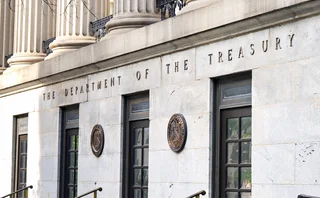
The latest approach to the problem of regulating systemically important financial institutions (Sifis) can't be criticised for complexity: Bernie Sanders, a veteran US senator, has introduced a bill simply requiring that every designated Sifi (and any other institutions regarded as too big to fail) should be broken up by the US government, on the basis that no institution should be allowed to grow to the point where its collapse alone could threaten systemic stability.
While the bill's very unlikely to pass, it has a certain elegance from an engineering point of view: any Sifi is, by definition, a single point of failure for the financial system, and you shouldn't have single points of failure in critically important systems. But a related argument is that financial institutions of Sifi scale are not only too big to fail, they're simply too big to manage.
This is not an isolated view. HSBC's chief executive, Stuart Gulliver, complained earlier this year that it was "not reasonable" to hold him responsible for the actions of all 275,000 of the bank's employees (the context being the Swiss authorities' investigation of HSBC money-laundering). Bank of America faced accusations of being too big to manage effectively at its shareholders' meeting in May. And even in 2012, the St Louis Fed was already citing examples such as the London Whale to argue that the largest banking groups are simply unmanageable in their current form.
The St Louis Fed argued that the position was particularly bad at banks because boards of non-expert directors are out of their depths managing complex international financial institutions. But it's also possible - and plausible - that a large multinational bank is simply too complex for any person to manage successfully, just as the first generation of US military supersonic aircraft were so lethal to their pilots (26% of whom could be expected to die in accidents) because human reflexes and senses were no longer fast and accurate enough to control them directly; they were, in fact, borderline unflyable. Only the advent of fly-by-wire technology, in which a computer intermediated between the pilot and the airframe, reduced this unacceptable death rate. And it is not easy to see how a parallel technological leap would render large banks manageable again.
The imperatives of air combat meant that it was not feasible to simply revert to older, slower, simpler aircraft. But this option is available for the financial sector. It may even be advisable, given the growing evidence for diseconomies of scale at larger size, and the harm to economic stability produced by an overdeveloped financial sector.
And every new management failure in the sector will simply strengthen the argument for using force to create a smaller, simpler banking industry; one which might once again be manageable by human beings, as the current one apparently is not.
Only users who have a paid subscription or are part of a corporate subscription are able to print or copy content.
To access these options, along with all other subscription benefits, please contact info@risk.net or view our subscription options here: http://subscriptions.risk.net/subscribe
You are currently unable to print this content. Please contact info@risk.net to find out more.
You are currently unable to copy this content. Please contact info@risk.net to find out more.
Copyright Infopro Digital Limited. All rights reserved.
As outlined in our terms and conditions, https://www.infopro-digital.com/terms-and-conditions/subscriptions/ (point 2.4), printing is limited to a single copy.
If you would like to purchase additional rights please email info@risk.net
Copyright Infopro Digital Limited. All rights reserved.
You may share this content using our article tools. As outlined in our terms and conditions, https://www.infopro-digital.com/terms-and-conditions/subscriptions/ (clause 2.4), an Authorised User may only make one copy of the materials for their own personal use. You must also comply with the restrictions in clause 2.5.
If you would like to purchase additional rights please email info@risk.net
More on Regulation
Burning ambition: will Europe join the US in setting fire to the rules?
As the US dismantles post-crisis regulations, some think Europe will follow in a bid to boost economic growth

Can US perpetual futures solve their identity crisis?
Market could fall under four different regulatory categories, with sharply diverging outcomes

Banks want AML data upgrade to complement US regulatory reform
FinCEN’s proposed overhaul sparks debate on whether it will lead to smarter or weaker supervision
Industry pushes EU exchanges to solve equity post-trade frictions
Deutsche Bank, Goldman Sachs and JP Morgan join calls for mandatory cash CCP interoperability

Regulatory clarity urged for CME’s single-stock futures
SEC short selling and market access rules may hamper clearing and broker participation

Imminent US shake-up of LCR slated to include discount window
Adding Fed liquidity facility to bank regulation may help overcome stigma, raise lending capacity

French regulator wants permanent changes to EU’s output floor
Push for capital relief faces resistance from supervisors in Finland and the Netherlands

Council plans take Aquis, BME out of Esma oversight
German push to exempt Deutsche Börse catches three others, according to sources