Geithner calls for law change to force OTC derivatives clearing
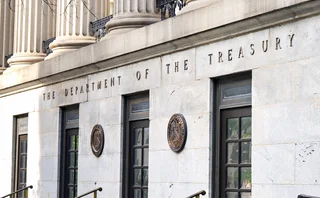
The US Treasury called upon Congress yesterday to amend the Commodities Exchange Act (CEA) to compel the "clearing of all standardised over-the-counter derivatives through regulated central counterparties".
In a letter to Senate majority leader Harry Reid, Treasury secretary Timothy Geithner wrote that financial regulators will need to take steps to ensure that central counterparties (CCPs) impose robust margin requirements and other necessary risk controls "to ensure that customised OTC derivatives are not used solely as a means to avoid using a CCP. If an OTC derivative is accepted for clearing by one or more fully regulated CCPs, it should create a presumption that it is a standardised contract and thus required to be cleared," he said.
Geither called for further changes to the CEA and other securities law, including authorising the Commodities Futures Trading Commission (CFTC) and the Securities and Exchange Commission (SEC) to impose more conservative margin requirements as well as record-keeping and reporting requirements, including an audit trail, on all derivatives trades.
Regulators would, however, consider these requirements satisfied if standardised trades are cleared through approved CCPs and bespoke transactions are reported to a regulated trade repository, such as the Depository Trust & Clearing Corporation's trade-information warehouse.
For their part, central counterparties and trade repositories would be obliged to "make aggregate data on open positions and trading volumes available to the public and to make data on any individual counterparty's trades and positions available on a confidential basis to the CFTC, SEC and the institution's primary regulators".
Institutions acting as large counterparties to derivatives trades will also be subject to conservative capital requirements, business conduct standards and reporting requirements. Legislative amendments will seek to empower the CFTC and SEC with "clear and unimpeded authority for market regulators to police fraud, market manipulation and other market abuses".
The Treasury also plans to further restrict unsophisticated investors from accessing derivatives markets, in the wake of a raft of scandals across the US where small municipalities have racked up billions of dollars in losses on derivatives contracts they claim were mis-sold - the most infamous being the $3.9 billion debt incurred by Jefferson County, Alabama on interest rate swaps written against bonds financing sewer reconstruction.
Geithner's language concerning what constitutes a "standardised" contract remained unclear in the letter. In one such example, he wrote that "price transparency should be improved in derivatives markets by requiring the clearing of standardised contracts through regulated CCPs and by moving the standardised part of these markets onto regulated exchanges".
Initiatives to standardise credit derivatives trading have accelerated in the months since the collapse of Lehman Brothers in September 2008, with the establishment of two CCPs in the US and a further two in Europe, and the hardwiring of CDS contracts and the conversion to standardised coupons on North American contracts under the International Swaps and Derivatives Association's 'big bang' protocol.
See also: Bair: US should pull back from Basel II
Fed divulges process behind bank stress tests
Geithner: US will "force all standardised OTC derivatives into central clearing"
Jefferson County head indicted on bribery, money laundering charges
The sewers of Jefferson County
Only users who have a paid subscription or are part of a corporate subscription are able to print or copy content.
To access these options, along with all other subscription benefits, please contact info@risk.net or view our subscription options here: http://subscriptions.risk.net/subscribe
You are currently unable to print this content. Please contact info@risk.net to find out more.
You are currently unable to copy this content. Please contact info@risk.net to find out more.
Copyright Infopro Digital Limited. All rights reserved.
As outlined in our terms and conditions, https://www.infopro-digital.com/terms-and-conditions/subscriptions/ (point 2.4), printing is limited to a single copy.
If you would like to purchase additional rights please email info@risk.net
Copyright Infopro Digital Limited. All rights reserved.
You may share this content using our article tools. As outlined in our terms and conditions, https://www.infopro-digital.com/terms-and-conditions/subscriptions/ (clause 2.4), an Authorised User may only make one copy of the materials for their own personal use. You must also comply with the restrictions in clause 2.5.
If you would like to purchase additional rights please email info@risk.net
More on Regulation
Burning ambition: will Europe join the US in setting fire to the rules?
As the US dismantles post-crisis regulations, some think Europe will follow in a bid to boost economic growth

Can US perpetual futures solve their identity crisis?
Market could fall under four different regulatory categories, with sharply diverging outcomes

Banks want AML data upgrade to complement US regulatory reform
FinCEN’s proposed overhaul sparks debate on whether it will lead to smarter or weaker supervision
Industry pushes EU exchanges to solve equity post-trade frictions
Deutsche Bank, Goldman Sachs and JP Morgan join calls for mandatory cash CCP interoperability

Regulatory clarity urged for CME’s single-stock futures
SEC short selling and market access rules may hamper clearing and broker participation

Imminent US shake-up of LCR slated to include discount window
Adding Fed liquidity facility to bank regulation may help overcome stigma, raise lending capacity

French regulator wants permanent changes to EU’s output floor
Push for capital relief faces resistance from supervisors in Finland and the Netherlands

Council plans take Aquis, BME out of Esma oversight
German push to exempt Deutsche Börse catches three others, according to sources