

Podcast: Andrew Dickinson on CCPs’ defence mechanisms
Trades’ size limits, membership rules and more transparency are key to avoid another CCP default, says BofA quant
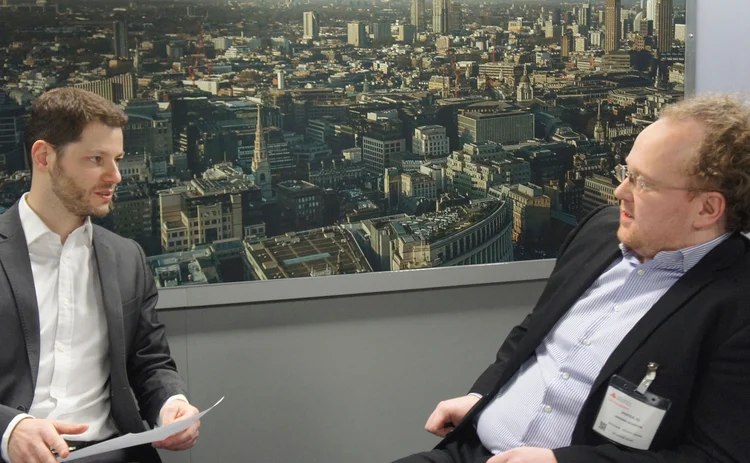

For this Quantcast, Risk.net spoke with Andrew Dickinson, who leads the CCP analytics group at Bank of America.
With Leif Andersen, global head of the quantitative strategies group, Dickinson developed a model to assess exposure to a central counterparty. Crucially, the model has the ability to capture wrong-way risk stemming from the presence of clearing members with outsized positions. Such positions can trigger the member’s default in the case of large, adverse market moves.
If the defaulting member has an unhedged position and is unable to meet the margin calls, the CCP’s default fund could suffer significant losses. The case of power trader Einar Aas’ default at Nasdaq Clearing in September 2018, and the default fund’s subsequent loss of $119.7 million, set alarm bells ringing for banks, CCPs and regulators.
“In our view, initial margin on its own is not a sufficient risk mitigant in isolation. It needs to be complemented by suitable controls in order to prevent members clearing outsized, unhedged positions,” says Dickinson.
The concerns of broker-dealers have been debated in meetings organised by the Futures Industry Association and the International Swaps and Derivatives Association. The message from the industry seems to be unanimous.
“We and our peers are suggesting there needs to be a strengthening of the regulation to either impose limits or stronger membership criteria, or at the very least have greater transparency,” says Dickinson, lamenting the scarcity of transparent information released at the time of Nasdaq’s default.
He explains how their previous model was extended to include a probability distribution, a Student-t, which allows for arbitrarily fat tails to model rare events. Its output is one easy-to-interpret figure that can provide precious information to all of the parties involved and help them decide how to deal with such circumstances.
Index
00:00 Intro
02:02 Central clearing vs bilateral clearing
05:05 One bad apple
07:10 What are the results in the paper?
09:40 Key components of the model
12:30 Wrong-way risk
17:00 How this model helps understanding of Einar Aas’ default at Nasdaq
19:15 What info does the model give you and how can you use it?
20:50 Who should decide to adopt this model?
23:15 Feedback from CCPs and regulators
26:20 Model’s further developments
To hear the full interview, listen in the player above, or download. Future podcasts in our Quantcast series will be uploaded to Risk.net. You can also visit the main page here to access all tracks, or go to the iTunes store or Google Podcasts to listen and subscribe.
コンテンツを印刷またはコピーできるのは、有料の購読契約を結んでいるユーザー、または法人購読契約の一員であるユーザーのみです。
これらのオプションやその他の購読特典を利用するには、info@risk.net にお問い合わせいただくか、こちらの購読オプションをご覧ください: http://subscriptions.risk.net/subscribe
現在、このコンテンツを印刷することはできません。詳しくはinfo@risk.netまでお問い合わせください。
現在、このコンテンツをコピーすることはできません。詳しくはinfo@risk.netまでお問い合わせください。
Copyright インフォプロ・デジタル・リミテッド.無断複写・転載を禁じます。
当社の利用規約、https://www.infopro-digital.com/terms-and-conditions/subscriptions/(ポイント2.4)に記載されているように、印刷は1部のみです。
追加の権利を購入したい場合は、info@risk.netまで電子メールでご連絡ください。
Copyright インフォプロ・デジタル・リミテッド.無断複写・転載を禁じます。
このコンテンツは、当社の記事ツールを使用して共有することができます。当社の利用規約、https://www.infopro-digital.com/terms-and-conditions/subscriptions/(第2.4項)に概説されているように、認定ユーザーは、個人的な使用のために資料のコピーを1部のみ作成することができます。また、2.5項の制限にも従わなければなりません。
追加権利の購入をご希望の場合は、info@risk.netまで電子メールでご連絡ください。
詳細はこちら カッティング・エッジ
短期オプションのための二次ラフHeston+モデル
0DTEのスキューと曲率は、拡張Hestonモデルを用いて捉えられています

ポッドキャスト:アリエ・シェーター氏とハリオム・タツァット氏によるAIの説明可能性に関する対談
バークレイズのクオンツたちが、メカニスティックな解釈可能性を用いたAIの監視手法について語ります

ブラックボックスの先へ:金融分野におけるLLMの解釈可能性
メカニズムに基づく解釈可能性、そして計算メカニズムにおける変更点を特定

P・Qキャリブレーションと経路依存的な変動性の整合
校正の堅牢性を向上させることを目的とした混合アプローチを提案します

ポッドキャスト:アレクサンダー・バルジキン氏によるFXマーケットメイキングのモデリングについて
HSBCのクオンツが、逆選択、価格の読み取り、および内部流動性管理について論じます

逆選抜と価格観測下における最適な価格提示
現実世界における重要な影響を考慮するために、マーケットメイキング・モデルが導入されています。

ポッドキャスト:バーネット氏とピアウ氏が語る、XVAに関する包括的なフレームワーク
バークレイズのクオンツ担当者が、長年の課題に対する同行のアプローチについて解説します

価格調整の基本的な表現
デリバティブ価格調整の統一的な表現について提示します
