Podcast: Mercurio and Henrard on Libor transition and the need to involve quants early in discussions
Some derivatives products will become more complex if there are no forward rates; industry must act fast, say quants
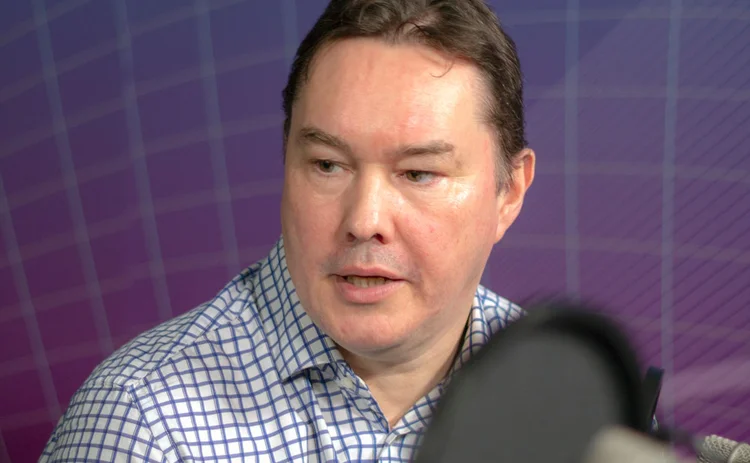
Marc Henrard, a managing partner at muRisQ Advisory, visited our London offices to record a podcast on the challenges of Libor transition as part of benchmark reform. He was joined over the phone by Fabio Mercurio, head of the quant analytics team at Bloomberg.
The derivatives industry is preparing for the death of Libor, which is most likely to happen after 2021. After this time, panel banks will no longer be required to contribute to the rate. The UK, US and Europe have already selected new overnight risk-free rates (RFRs) to replace Libor as the reference rate in new contracts, while the International Swaps and Derivatives Association is leading the derivatives industry’s efforts to develop a fallback rate for existing contracts.
Recent industry consultation found the derivatives market’s preferred fallback for contracts referencing Libor is a backward-looking term version of RFRs, which would compound daily rates in arrears, while an additional fixed spread would reflect the bank credit element inherent in Libor.
This would create some challenges for derivatives products, which are fundamentally defined based on forward rates, the quants argue.
For instance, forward rate agreements (FRAs) allow the buyer to lock in a future loan by agreeing to pay a forward rate set at the beginning of the contract. Without a forward rate, the products won’t work.
“You have to change the nature of the contract; you are not just changing the underlying rate,” says Mercurio.
He suggests one solution is to redefine an FRA as a single period swap based on a backward rate, but Henrard argues market participants need to start thinking about implementing these sorts of solutions now rather than after the fallback triggers.
“If we think fallback in arrears is the best, we should probably change the term sheet of the FRAs now before having the fallback instead of having the fallback and then, when it’s there, noticing that it’s too late to change the definitions,” he argued.
Pricing of caps and floors – which are like options on FRAs – will also become more complex, argued the quants, as the compounded-in-arrears rate is calculated based on multiple daily overnight rates over a period instead of a single Libor term rate.
“When it comes to pricing, if you have to keep track of daily changes, that is more complicated than keeping track of a single number,” says Mercurio.
Mercurio recently developed a pricing model with Andrei Lyashenko, a senior quant at consultancy Quantitative Risk Management in Chicago, to deal with these issues, but admitted the eventual changes to models and systems because of the Libor transition would be quite disruptive.
Given the complexities the transition is likely to introduce, both Mercurio and Henrard agreed quants should have been involved in the decision-making process earlier.
“In general, quants are called in later and we need to fix the issues rather than being called to be part of the conversations,” says Mercurio.
However, he adds that the introduction of complexity does keep his job more exciting – “As a quant I am also happy not to be involved too early. This means there could be more issues to address and even more job security for us – and more fun.”
Index
0:00 Introduction
1:30 Current state of Libor reform
3:23 Impact of backward-looking rate on derivatives
7:38 Products that will be impacted the most
10:43 Increase in complexity
11:16 Solution for using backward rate in FRAs
18:34 Pricing of caps and floors
24:20 Impact on structured products
32:17 Mismatch in type of term rate between currencies
37:40 Why quants should be involved early in reforms
References
- Marc Henrard (2019)
A quant opinion on Libor fallback - Lyashenko A and Mercurio F (2019)
Looking Forward to Backward-Looking Rates: A Modeling Framework for Terms Rates Replacing LIBOR
To hear the full interview, listen in the player above, or download. Future podcasts in our Quantcast series will be uploaded to Risk.net. You can also visit the main page here to access all tracks, or go to the iTunes store or Google Podcasts to listen and subscribe.
コンテンツを印刷またはコピーできるのは、有料の購読契約を結んでいるユーザー、または法人購読契約の一員であるユーザーのみです。
これらのオプションやその他の購読特典を利用するには、info@risk.net にお問い合わせいただくか、こちらの購読オプションをご覧ください: http://subscriptions.risk.net/subscribe
現在、このコンテンツを印刷することはできません。詳しくはinfo@risk.netまでお問い合わせください。
現在、このコンテンツをコピーすることはできません。詳しくはinfo@risk.netまでお問い合わせください。
Copyright インフォプロ・デジタル・リミテッド.無断複写・転載を禁じます。
当社の利用規約、https://www.infopro-digital.com/terms-and-conditions/subscriptions/(ポイント2.4)に記載されているように、印刷は1部のみです。
追加の権利を購入したい場合は、info@risk.netまで電子メールでご連絡ください。
Copyright インフォプロ・デジタル・リミテッド.無断複写・転載を禁じます。
このコンテンツは、当社の記事ツールを使用して共有することができます。当社の利用規約、https://www.infopro-digital.com/terms-and-conditions/subscriptions/(第2.4項)に概説されているように、認定ユーザーは、個人的な使用のために資料のコピーを1部のみ作成することができます。また、2.5項の制限にも従わなければなりません。
追加権利の購入をご希望の場合は、info@risk.netまで電子メールでご連絡ください。
詳細はこちら 市場
How US shutdown set off long-awaited basis bet
Hedge funds dust off a years-in-the-making relative value trade to profit from fallback mismatch
ECBは、スパイアの再パッケージ化に関する資本の明確化を求めている
再構成RWAについて、ディーラーはカウンターパーティ信用リスクと市場リスクの枠組みの間で対応を分ける

FXSpotStream、米国債取引への事業拡大
銀行が所有するストリーミング会場は、年の中頃のサービス開始を目指しており、「食べ放題」式のサブスクリプション料金を提供いたします。

アテネ社にとって、危機時代のCDO保護は引き続き恩恵をもたらしている
アポロ傘下の保険会社は、2006年に実施された合成証券化取引において売却したCDS保護契約に基づく支払いを受け続けております。

The changing shape of variation margin collateral
Financial firms are open to using a wider variety of collateral when posting VM on uncleared derivatives, but concerns are slowing efforts to use more non-cash alternatives

生命保険会社の移動は、台湾のNDF市場を崩壊させるのか?
保険会社による外国為替ヘッジからの撤退が、取引業者にとって助けとなるか妨げとなるかについて、意見が分かれています。

オーストラリアのインフレ対策改革が世界のトレーダーを惹きつける可能性について
オーストラリアが物価統計の月次報告に移行する動きにより、国内の物価連動債およびスワップ市場が活性化することが見込まれます。

カラモス、米国で人気のオートコーラブル型ETFを欧州に導入
ダブリンでの申請により、カラモス・オートコーラブルインカムUCITS ETFの第1四半期上場が示唆されています。