

Could a phase-in save FRTB?
Regional banks fear they will run out of time to implement FRTB, but Europe’s proposal for a phase-in could set a welcome trend

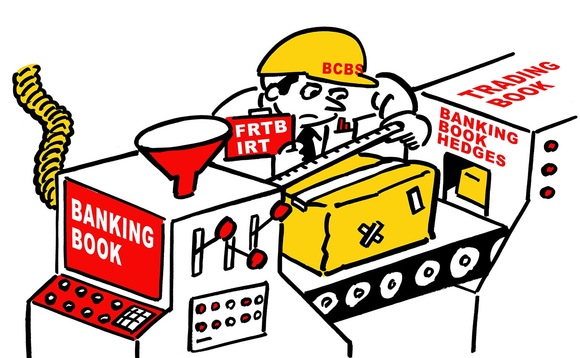
For regulators wondering how regional banks are getting on with their efforts to implement the Basel Committee's Fundamental review of the trading book (FRTB), Risk.net's inaugural survey on the subject should be an eye-opener.
Asked for their views on key elements of the framework, 11 regional banks from around the world answered – and their responses made for uniformly grim reading. Top of the list of concerns was securing approval for trading desks to use the internal model approach (IMA) under the regime. More than half of those surveyed feared 20% or more of their desks were likely to lose IMA approval; two said 80% or even 100% of their desks would be in the firing line.
Losing approval would be a blow: desks that fail to qualify for the IMA will be forced on to the more punitive standardised approach, which could produce a capital jump of between 2 and 6.2 times.
The biggest barrier to a desk gaining approval to use IMA will be Basel's fiendishly complex P&L attribution test, used to determine whether a dealer's risk models track the desk's actual performance sufficiently closely – something they can no longer rely on backtesting alone to prove.
In some quarters at least, regulators seem alive to the problem. An analysis prepared by the European Banking Authority (EBA) for the European Commission suggested approximately 40% of desks would likely fail the P&L attribution test. This matters, since it will be up to the EBA to pen the technical standards that will underpin Europe's version of the rules once the EC's legislative proposal has been agreed on and transposed into European law next year. A sympathetic hearing for dealers here would be very useful indeed.
Front and centre in the EC's proposal when it emerged in late November was an acknowledgement that implementing FRTB is likely to lead to a "steep increase" in banks' own fund requirements for market risks – something European legislators fear could lead to the continent's capital markets seizing up if all aspects of the rules enter into force simultaneously. That has led the EC to call for a three-year phase-in for the framework.
A longer lead-in time would help the market: almost half of Risk.net's survey respondents said they would need at least three years to fully implement FRTB. In addition, a desk wishing to use the IMA must have been running P&L calculations for at least a year before applying the attribution test, further eroding the time available to get the ducks in line.
Regional lenders, for which the barriers to implementation look more difficult still – either the markets in which they operate are too illiquid to apply the P&L attribution test successfully, or they have too few quants to cope with a shift in modelling approaches – will be hoping local market regulators take a leaf out of the EC's approach. The longer Europe seeks to delay full implementation of the regime, though, the greater the risk of global regulators' approaches diverging.
Further reading
コンテンツを印刷またはコピーできるのは、有料の購読契約を結んでいるユーザー、または法人購読契約の一員であるユーザーのみです。
これらのオプションやその他の購読特典を利用するには、info@risk.net にお問い合わせいただくか、こちらの購読オプションをご覧ください: http://subscriptions.risk.net/subscribe
現在、このコンテンツを印刷することはできません。詳しくはinfo@risk.netまでお問い合わせください。
現在、このコンテンツをコピーすることはできません。詳しくはinfo@risk.netまでお問い合わせください。
Copyright インフォプロ・デジタル・リミテッド.無断複写・転載を禁じます。
当社の利用規約、https://www.infopro-digital.com/terms-and-conditions/subscriptions/(ポイント2.4)に記載されているように、印刷は1部のみです。
追加の権利を購入したい場合は、info@risk.netまで電子メールでご連絡ください。
Copyright インフォプロ・デジタル・リミテッド.無断複写・転載を禁じます。
このコンテンツは、当社の記事ツールを使用して共有することができます。当社の利用規約、https://www.infopro-digital.com/terms-and-conditions/subscriptions/(第2.4項)に概説されているように、認定ユーザーは、個人的な使用のために資料のコピーを1部のみ作成することができます。また、2.5項の制限にも従わなければなりません。
追加権利の購入をご希望の場合は、info@risk.netまで電子メールでご連絡ください。
詳細はこちら リスク管理
トークン化された取引には、フロントランニングへの懸念が付きまとっている
デジタル証券取引所の立ち上げにより、MEVやブロックチェーンの物議を醸すインセンティブ制度をめぐる議論が再燃しています

Credit risk at a crossroads: private credit transparency and the limits of AI
Assessing private credit vulnerabilities and the role of AI in credit risk oversight

Risk management at the speed of the market
Fast-evolving liquidity shocks are exposing gaps in banks’ risk frameworks, prompting greater focus on integrated data, continuous monitoring and explainable AI

オペリスク・データ:バイナンスの大規模ハッキングを受け、損失が急増
また、米国の銀行はAMLに関する新たな罰金の波に直面しており、トルコの銀行は労働市場を操作しています。データ提供:ORX News

JSCCのレポ計画、エージェンシー・モデルをめぐる会計上の課題に直面
日本のCCPは、顧客の清算済み取引を貸借対照表外として計上し続けられるよう、規制当局と協議を行う見通しです

マイクロソフトのシステム障害により、ストラクチャード・ノートの取引に支障が生じた
書類の多いOTCは、タームシートや取引確認書が送信トレイに滞留したことで、混乱を来しました

XVAの計算の多くは、単一ファクター金利モデルに基づいている
リスク・ベンチマーキング:ディーラー各社はキャリブレーションの深度については見解が一致していますが、実行時間やルックバック期間には大きなばらつきが見られます

予測市場でのベットが原因で、銀行から解雇される可能性?
米国のシステミック銀行の少なくとも半数は、個人の予測取引を制限していますが、市場情勢については依然として懸念材料であると述べています。
