Podcast: Alvaro Cartea on collusion within trading algos
Oxford-Man Institute director worries ML-based trading could have anti-competitive effects
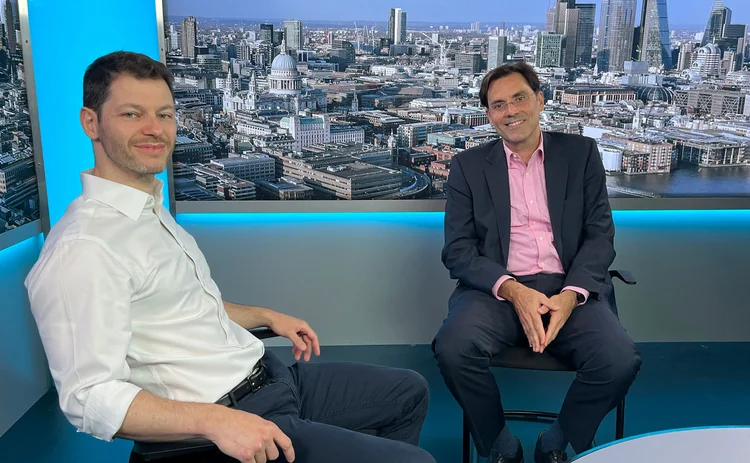

Slowly, machines are learning to mimic the behaviours and thought processes of humans. As they do, the risk of collusion between machine learning-powered trading algos is increasing, says Alvaro Cartea, director of the Oxford-Man Institute and professor of mathematical finance at Oxford University.
Cartea, our guest on this episode of Quantcast, has spent years digging through granular data on exchange-traded fund (ETF) and foreign exchange trades to uncover the techniques market-makers use to maximise profits.
His research has revealed some dubious activity. For instance, Cartea and his colleagues noticed the notional amounts of the largest orders placed on one exchange always seemed to end with the same two or three non-round digits. The reasons are not entirely clear, but it is unlikely that the optimal trade size always ends in the exact same unusual digits. Cartea reckons the unusual order sizes could be a way for big traders to signal their identity so other large players can avoid trading against them.
“The two big guys always post limit orders of a phenomenal size relative to what normally gets traded,” says Cartea. “And the data we have show that they roughly trade less than 1% of the time against each other.”
This type of behaviour deserves to be investigated further, Cartea says. But his bigger concern is that ML-based algos could learn this behaviour and collude with each other on a massive scale.
“They have the ability to read off information as they go along, and that information is fed back into the black box,” he says. “The codes will have more interaction with the market environment [and] with other players.”
Market-makers are the obvious winners in this game, while the losers will inevitably be retail traders
In a worst-case scenario, algos might co-ordinate and settle on what Cartea calls a “supra-competitive” outcome, where costs are higher than in a competitive equilibrium.
This could happen, he argues, because collusion is sustained by a reward/punishment mechanism, rather than competition. If two players agree to collude and one deviates from that agreement, the other will punish it for doing so. It is in effect a real-life prisoner’s dilemma that sustains collusion.
By the same token, an algo might quote a wide bid-offer spread and another algo entering the same market might do the same to avoid punishment for deviating from the norm. In these circumstances, Cartea says, it can be shown that algos will converge on a wider spread than they would do in a more competitive market.
Market-makers are the obvious winners in this game, while the losers will inevitably be retail traders. Institutional investors, including hedge funds and pensions, could also find themselves on the receiving end of sub-optimal spreads.
Regulators are increasingly paying attention to this risk. Cartea has spoken with the UK Financial Conduct Authority and US Securities and Exchange Commission about his concerns. He thinks the next questions that might arise are whether certain algo strategies amount to collusion or market manipulation, who is accountable for such behaviours, and what can be done to stop it. Cartea admits he does not have ready answers, but he says regulators should work more closely with universities and research centres to gain a better understanding of these issues.
Index:
00:00 Intro and ML algos
07:57 Patterns in human and automated trading
13:50 Algos colluding
15:28 Is this type of collusion illegal?
20:21 How do algos collude?
25:39 Is this already happening?
30:53 Winners and losers
37:40 The regulatory response
41:09 Other projects
To hear the full interview, listen in the player above, or download. Future podcasts in our Quantcast series will be uploaded to Risk.net. You can also visit the main page here to access all tracks, or go to the iTunes store or Google Podcasts to listen and subscribe.
Now also available on Spotify and Amazon Music
Only users who have a paid subscription or are part of a corporate subscription are able to print or copy content.
To access these options, along with all other subscription benefits, please contact info@risk.net or view our subscription options here: http://subscriptions.risk.net/subscribe
You are currently unable to print this content. Please contact info@risk.net to find out more.
You are currently unable to copy this content. Please contact info@risk.net to find out more.
Copyright Infopro Digital Limited. All rights reserved.
As outlined in our terms and conditions, https://www.infopro-digital.com/terms-and-conditions/subscriptions/ (point 2.4), printing is limited to a single copy.
If you would like to purchase additional rights please email info@risk.net
Copyright Infopro Digital Limited. All rights reserved.
You may share this content using our article tools. As outlined in our terms and conditions, https://www.infopro-digital.com/terms-and-conditions/subscriptions/ (clause 2.4), an Authorised User may only make one copy of the materials for their own personal use. You must also comply with the restrictions in clause 2.5.
If you would like to purchase additional rights please email info@risk.net
More on Views
Podcast: Alexander Barzykin on modelling FX market-making
HSBC quant discusses adverse selection, price reading and internal liquidity management

Burnett and Piau on their comprehensive framework for XVAs
Barclays quants explain the bank’s approach to a long-standing problem

Podcast: Lipton and Lopez de Prado on a quant approach to private equity
The pair introduce analytical methods to valuing and allocating private asset investments

Why do prices jump? by Jean-Philippe Bouchaud
After years of investigation, we still aren’t sure, says Jean-Philippe Bouchaud

Vinicius fortune: quantifying luck in the World Cup draw, by Julien Guyon
Julien Guyon explains how bias, variance and luck affect teams in this summer’s tournament – and explores wider relevance for portfolio managers

Podcast: Abi-Jaber and Li on a ‘sticky’ volatility problem
The pair discuss their model to jointly capture Vix, SPX and SSR

Markets perceive the future in very distorted ways, by Jean-Philippe Bouchaud
Discounting paradigms should adapt to be more realistic, says Jean-Philippe Bouchaud

In the age of GenAI, why do we still need good models?
Jean-Philippe Bouchaud says models can guide artificial intelligence through regime shifts and away from overfitting