
CCP Quantitative Fund: Cantab Capital Partners
Winner: Best managed futures hedge fund
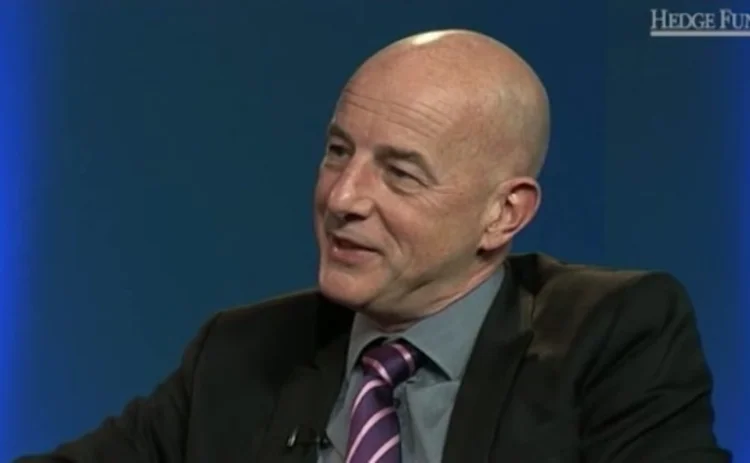
Being based in Cambridge has its advantages. For Cantab Capital Partners, taking its name from ‘Cantabrigia’, the medieval Latin name for Cambridge, emphasised its links to the university. For Ewan Kirk, chief investment officer, CEO and partner at Cantab, the association is essential.
“If you’re going to make a factory, it’s always good to make it next to your raw materials. Our raw materials are super-smart, super-bright people and being based in Cambridge means that it’s a great place to hire,” notes Kirk.
Cantab also has very close ties to the university, using it for research. For example, Professor Chris Rogers, who heads the statistics lab at the university, advises Cantab on a consultancy basis.
Sticking to the roots of academic research, Cantab has named its various share classes – Aristarchus, Babbage and Euler - after mathematicians. Aristarchus was an ancient Greek astronomer and mathematician who presented the first known model that placed the Sun at the centre of the known universe with the Earth revolving around; Charles Babbage was an English mathematician, philosopher, inventor and mechanical engineer who originated the concept of a programmable computer; and Leonhard Euler was a Swiss mathematician and physicist who made important discoveries in infinitesimal calculus and graph theory among others.
“We have ties into the statistical department. We find that it enhances that more academic, more scientific approach,” Kirk continues, “I don’t necessarily believe that it is always better to do systematic quantitative investment but it is different. I think when people are looking for things to put into their portfolio, one of the things they want to look for is things that are uncorrelated, things that are different rather than yet another equity long/short manager.”
This bodes well for the CCP Quantitative Fund, a fully systematic global macro program. Individual trades and portfolio construction are determined using highly sophisticated proprietary static models and risk management tools. The portfolio is diversified across three main trading sub-strategies: momentum, value and short term. The program itself is implemented through over 120 liquid futures and forward contracts.
Cantab was founded in 2006 by Kirk and Erich Schlaikjer, both former Goldman Sachs employees, and Chris Pugh, who was formerly with KBC. Tom Howat became a partner in 2011. The team has 21 people dedicated to research and trading.
Now managing assets of more than $2.5 billion, Cantab has become one of the more successful global macro funds in Europe.
The program run by the fund does not rely on specific conditions in any market or market direction to generate returns. It can take both long and short positions on all the markets that it trades. Over the long term, the program is uncorrelated with traditional hedge fund and long-only strategies that invest in equities and fixed income, according to Cantab.
The fund’s portfolio is diversified across more than 120 liquid markets in currencies, fixed income, equity indexes and commodities trading liquid futures and foreign exchange forwards.
The investment philosophy is based on a multi-model, multi-asset approach. There are several distinct sources of return identified from persistent statistical relationships between markets and these are combined systematically in an investment portfolio. There are over 800 individual sub-models.
“We are a scientific investment house,” notes Kirk. “In some ways we are a statistical investment house, as [the program] is a fully systematic process. That is not unusual in a quantitative environment but one of things we try to do is take account of the uncertainty in investment more than our peers do.”
This means that the team can chose between models depending on the market environment. “We run more than 20 models, all individually different, all potentially something we could invest in. However, the reason we don’t is very much the same as why allocators invest across multiple different hedge funds, because they don’t know which is the best one. In some senses we don’t know which is the best model, so we diversify away that implementation risk by diversifying across 20 or 30 models,” explains Kirk.
Some of these models are similar and others quite different. “We have clusters of trend return, clusters of value-style returns and more short-term returns. We try to implement them all in very different ways to diversify away risk.”
The strategy is available in three different versions. The idea behind that is to allow investors to chose the type of fund they think fits best into their own risk profile and portfolio construction. Investors can either take a high-volatility 20% return equivalent to equity-style volatility or 10% volatility, which is more similar to a bond fund or a low-volatility hedge fund. There is also a Ucits version of the strategy available.
Being a systematic fund, however, comes with some disadvantages. One is trying to explain to investors how it differs from other similar funds. “All we can really do is explain what we do and let potential investors make a decision,” says Kirk.
Cantab's investment process is based on a collaborative team approach with individuals working in loosely formed groups and associations on different interlocking projects. An extensive research agenda enables Cantab to encourage a culture of continuous innovation, believes Kirk. Current research projects involve portfolio construction, volatility forecasting methodologies, studies of evolving correlation relationships, trading and execution algorithms and other subjects.
“I’ve always said that the most difficult thing to understand is the inside of discretionary trader’s head. Our systems are systematic, algorithmic. They have rules and those rules are clearly understandable.”
Having rules, Kirk believes, is a benefit. “For a discretionary trader you don’t know whether or not what’s going to work, what they’re going to do in particular circumstances.” Cantab tries to be as transparent as possible for its investors, explaining what the models do and how they work.
“I think the thing that investors find harder is the fact that in general systematic managers don’t have a good story to tell. They can’t tell a nice story that fits people’s confirmation biases. Discretionary managers – they tell a story and it’s a fantastic story and if it fits what you believe, you get emotionally embedded in the story.”
The story Cantab tells is going to be “emotionally less appealing” admits Kirk but believes it is just a different way to trading markets. “It’s about being different, not necessarily the same. We endeavour as much as possible to explain what we do. But then there’s another side of this which is it is very complicated. One of the things that is true about finance is it’s an awfully complicated problem. There are some things that you just can’t simplify.”
Looking to the future of Cantab itself, Kirk believes the company will always remain relatively small. An organisation with more than 50 staff needs managers and a rigid structure. “I think rigid structures are something which works very poorly for creative bright quantitative programmers and mathematicians. We’re going to try and keep the firm relatively small.”
[Pictured: Tom Howat and Genia Diamond of Cantab Capital Partners with Renaud Huck from Eurex, which sponsored this award]
The strategy also has a limit. He believes $4 billion is the right capacity for it. “If we get to our capacity, we’ll close and then we’ll decide what we want to do.”
While he admits there is a temptation to have a “great strategic vision,” he likes to keep it simple. “As long as you can just keep making it to the end of this week without going bust that’s a pretty good place to be,” he says. “All we know about the future is that we believe that on average we’re going to make money.”
Fund facts
Fund name: CCP Quantitative Fund
Portfolio manager: Ewan Kirk, chief investment/executive officer and partner
Management company: Cantab Capital Partners
Contact information: Genia Diamond, City House, 126-130 Hills Road, Cambridge CB2 1RE, UK (+44 (0)1223 755 755; genia.diamond@cantabcapital.com; www.cantabcapital.com)
Launch date: March 1, 2007
Assets under management: $2.5 billion (strategy)
Net cumulative performance since inception: 82.4% (Aristarchus class)
Annualised performance: 12.3%.
Year-to-date return: 2.4% (at end April 2012)
Volatility target (gross): 20% (Aristarchus class); 10% (Babbage class); 20% (Euler class)
Sortino ratio 1.47 (Aristarchus class); 1.28 (Babbage class)
Sharpe ratio: 0.79 (Aristarchus class); 0.68 (Babbage class)
Strategy: systematic global macro
Share classes: Aristarchus (US dollar, sterling, euro); Babbage (US dollar, sterling); Euler (US dollar, sterling);
Administrator: Goldman Sachs Administrative Services (Dublin)
Auditor: KPMG
Custodian: BNY Mellon
Prime brokers futures: Goldman Sachs International, Newedge
Prime brokers foreign exchange: Newedge, UBS
Legal counsel: Maples and Calder (Cayman); Bingham McCutchen (US); Schulte, Roth and Zabel (UK)
Domicile: Cayman Islands
Management fee: 2% (Aristarchus class); 1% (Babbage class); 1.5% (Euler class)
Performance fee: 20% (Aristarchus class); 10% (Babbage class); stepped 10% to 30% (Euler class)
Minimum investment: $1 million
Managed accounts: minimum size with a 20% volatility target of $50 million or euro/sterling equivalent
Lock-in: none
Redemption/liquidity terms: Monthly with 30 days’ notice with no gate; daily liquidity available via Ucits vehicle; Euler class has a soft 12-monthly rolling lock
Only users who have a paid subscription or are part of a corporate subscription are able to print or copy content.
To access these options, along with all other subscription benefits, please contact info@risk.net or view our subscription options here: http://subscriptions.risk.net/subscribe
You are currently unable to print this content. Please contact info@risk.net to find out more.
You are currently unable to copy this content. Please contact info@risk.net to find out more.
Copyright Infopro Digital Limited. All rights reserved.
As outlined in our terms and conditions, https://www.infopro-digital.com/terms-and-conditions/subscriptions/ (point 2.4), printing is limited to a single copy.
If you would like to purchase additional rights please email info@risk.net
Copyright Infopro Digital Limited. All rights reserved.
You may share this content using our article tools. As outlined in our terms and conditions, https://www.infopro-digital.com/terms-and-conditions/subscriptions/ (clause 2.4), an Authorised User may only make one copy of the materials for their own personal use. You must also comply with the restrictions in clause 2.5.
If you would like to purchase additional rights please email info@risk.net
More on Single manager
Eurekahedge data on individual fund performance – November 2015
The latest statistical information on top-performing FoHFs and hedge funds
Winton sees problems with big data analytics
Social media and live newsfeeds not so far useful, hedge fund says
Wadhwani advocates defensive hedge fund position
Tough environment for CTAs likely to end as interest rates start to rise
Everest Capital bets big on frontier markets
Finding frontier value
Grandmaster Capital Fund: Grandmaster Capital
One move at a time
Armistice Capital Fund: Armistice Capital
Next small thing
Prosiris Global Opportunities Fund: Prosiris Capital Management
Independent thinker