
Counterparty credit risk

Capital savings from new IM regime elude dealers
Slow model development and approval processes mean banks yet to see benefits expected under margin rules

In a bind: how CCAR constrains US bank strategy
Fed’s stress tests are forcing banks to cut loan portfolios and trading assets

Bailout obsession holds back US CCP resolution regime
Dodd-Frank leaves legal uncertainty, but proposed alternatives could be even worse
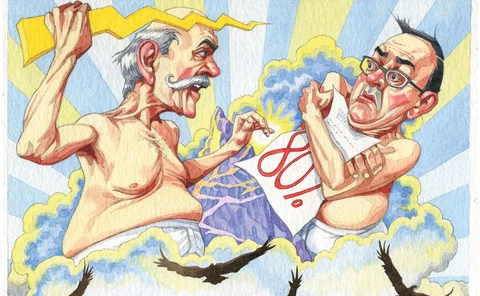
Basel capital floor faces credit risk eclipse
Impact of capital floor depends on new credit risk rules and changes to treatment of provisions

Time trial: the big risks that lurk in OTC margin gaps
Banks take aim at margin and trade-flow lag that can cause 95% of counterparty risk

EBA shelves CVA charge plans after twin defeats
Ongoing rule changes at Basel and EU could allow future bid to end corporate exemption

Derivatives start-up aims to cut costs at margin hub
Ex-Morgan Stanley bankers’ offering aims to reduce daily collateral flows that currently top $200bn

Big losses force banks to rethink energy lending
Unfunded loans and exposures to suppliers worry credit risk managers

Traders blame bail-in for Deutsche CDS jump
Debt subordination behind spread widening from January; CVA desks may need to adjust hedge ratios

CVA models may miss half of true default risk
Benefits of initial margin also overstated, new research finds

EBA connected counterparty plan raises compliance jitters
Guidelines would cut the large exposure due diligence threshold to 2%, versus the 5% Basel standard

Credit risk in energy: Best practices for challenging times
Sponsored webinar: Moody's Analytics

Brexit spurs rethink of political risk at global banks
Some banks are reserving capital against political risks, such as Brexit

Basel Committee’s CVA shocker ignores trade-offs
Ditching own models for CVA risk is too binary and eliminates possibility of further dialogue

Asian banks plead for extra time on Basel credit risk reforms
Switching to the standardised approach for credit modelling could have an impact on their legacy books

Dealers disagree over charge for CCP counterparty risk
Fed stress tests push US banks towards charging CVA for cleared derivatives

Regional banks may benefit from Basel CVA surprise
Basel Committee decision removes potential source of competitive advantage for large dealers

The double default value-of-the-firm model
This paper analyses whether the double default treatment under Basel II is appropriate to capture the asymmetric relationship between an obligor and its guarantor.

Fund industry defends use of credit lines as liquidity backstop
Concerns about systemic risk unjustified, say asset managers

What credit auction friction says about the OTC market
Benefits of risk bifurcation threatened by collateral conflicts


Oil rout sharpens energy companies' focus on credit risk
As defaults rise, firms step up sophistication of counterparty assessments

Banks forlorn over new Basel counterparty risk charge
Standardised risk charge delivers few benefits, and plenty of trouble

Dealers criticise Basel’s 'nonsensical’ CVA impact study
Tight deadline and limited portfolio makes measurement difficult