The Wild East
The fall of the Soviet Union and the end of its rule over the satellite states of eastern Europe came as a surprise to the industrialised nations of the West. But within a short time they had reacted: backing projects to secure Soviet nuclear technology; reconstructing diplomacy to deal with a Russia that, if not exactly an ally, was at least no longer an overt enemy; and, above all, coming to grips with the problem of turning the countries of the Warsaw Pact from centrally planned economies into free market nations.

The European Bank for Reconstruction and Development (EBRD) was founded in 1991 as part of this effort. Funded by 60 nations, the European community and the European Investment Bank, its mandate is to support the transition to market economies throughout the former Soviet bloc. To get EBRD funding, projects have to meet commercial criteria of success, as well as assisting the transition to market
Only users who have a paid subscription or are part of a corporate subscription are able to print or copy content.
To access these options, along with all other subscription benefits, please contact info@risk.net or view our subscription options here: http://subscriptions.risk.net/subscribe
You are currently unable to print this content. Please contact info@risk.net to find out more.
You are currently unable to copy this content. Please contact info@risk.net to find out more.
Copyright Infopro Digital Limited. All rights reserved.
As outlined in our terms and conditions, https://www.infopro-digital.com/terms-and-conditions/subscriptions/ (point 2.4), printing is limited to a single copy.
If you would like to purchase additional rights please email info@risk.net
Copyright Infopro Digital Limited. All rights reserved.
You may share this content using our article tools. As outlined in our terms and conditions, https://www.infopro-digital.com/terms-and-conditions/subscriptions/ (clause 2.4), an Authorised User may only make one copy of the materials for their own personal use. You must also comply with the restrictions in clause 2.5.
If you would like to purchase additional rights please email info@risk.net
More on Regulation
‘European SEC’ no silver bullet for growth
EU policymakers hope a single, centralised supervisor will help rev up Europe’s economy but critics are mustering
Permanent FRTB reforms seen as vital for IMA adoption
Temporary relief granted in June has done little to encourage internal model use in Europe
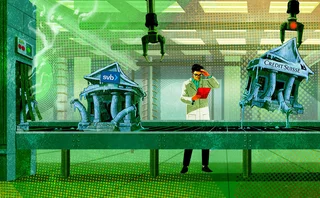
How to ensure the next Credit Suisse or SVB fails ‘well’
Regulators are planning changes to resolution rules after criticism that living wills were ignored in previous bank collapses
Asian firms waiting on exemptions from UST clearing mandate
Hoping for relief on extraterritoriality, 51% of Apac firms have yet to start compliance programmes
Already under FRTB, some banks hope for modelling reprieve
Risk Live: BMO and UBS opted for SA, but believe regulators could still opt to follow softer US rules

Regulators better prepared for next Credit Suisse, says SRB head
FSB strengthening guidance on international co-operation, but EU needs more mutual support
From Pillar to Pillar… to post: where now for op risk in Europe?
Experts think enhanced Pillar 2 charge informed by Dora would be more useful than a blunt Pillar 1

PRA struggles to follow Fed’s FRTB modelling moves
Market risk experts say minor differences in US rules add up to more incentives for IMA adoption