Iran confusion makes the case for causal modelling
A new test model built using Claude suggests oil prices may surge back above $100
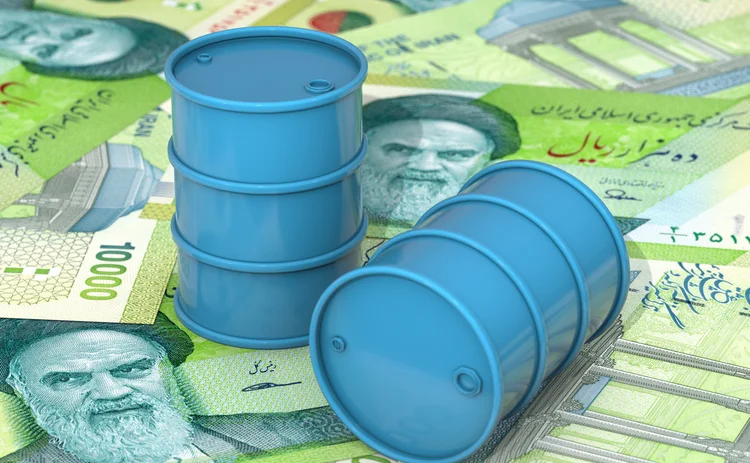

War – and possible peace – in Iran presents just the sort of tangle of threats and unknowns that buy-side risk managers find most difficult to handle.
At such times, risk managers would ordinarily test the sensitivity of portfolios to a handful of scenarios based on the projections of bank economists based, in turn, on similar episodes in history. What happens if oil rises to $150 a barrel, or US inflation reaches 5%? What happens if the warring parties agree – or break – a deal for peace?
The shortcomings are obvious and well understood. No two crises are the same. Oil prices recovered quickly at the end of the Twelve-Day War between Israel and Iran in June last year, which offers the last point of reference for many risk models. This time, disruption could go on much longer. Damage to Qatari liquified natural gas infrastructure will take three to five years to fully resolve, according to the country’s energy minister.
Some in finance have called for a different approach to stress-testing – arguing that risk managers should map the underlying paths of causation behind events using so-called Bayesian networks. Advocates say these networks capture the complexity of risks much better. Recently, fans of the approach have suggested that generative artificial intelligence might solve a problem that before now held causal modelling back.
Today’s uncertainties make the case compelling.
To illustrate the point, in late March, Alexander Denev, author of two books on Bayesian networks, used Anthropic’s large language model to create a causal map of how today’s conflict in the Middle East might play out. The process took about 10 minutes and a series of no more than 15 prompts, he tells Risk.net.
Denev, who runs Turnleaf Analytics, a macro forecaster, asked Claude first to read his own prior work, then to build a similar network for present events. Iran-US negotiations would provide the root node, leading to a cascade of possible consequences depending on whether the negotiations taking place at the time succeeded or not. Denev updated his experimental Iran war model shortly after our conversation and shared the results.
What did the model say? On April 7, before the ceasefire was announced, the model pointed to the likelihood of persistent market turbulence. It assigned a 45% probability, for example, to continued disruption to oil flow through Hormuz even with the strait open.
The relevant branch of the network encoded a scenario in which a ceasefire is reached, and the Strait of Hormuz reopens but with no US military withdrawal. Gulf infrastructure sustains severe damage. Oil prices range in the scenario from $100 to $130.
A conventional approach might lead to the assumption that oil prices would simply fall after a ceasefire and risk-on sentiment would return. After the Twelve-Day War, oil returned to prior levels within weeks. Calibrate on that episode and risk managers will assume a V-shaped recovery.
At the time of writing, the details of the US-Iran ceasefire remain unclear. Shipping companies such as Maersk have said they will exercise caution about resuming transit through the Strait of Hormuz. Brent crude oil fell to $95 a barrel after news of a deal but has risen again since.
Richer models
Bayesian networks offer a “probabilistic framework to tell causal stories”, Denev says. The networks comprise a series of nodes, each encoding, for example, what happens in the Strait of Hormuz or regarding sanctions or whether Gulf energy infrastructure suffers damage. Arrows that link nodes show causal influence, with probabilities assigned at each branch for events following the given line.
Conventional scenario analysis provides snapshots of possible outcomes. An economist who projects scenarios for war in the Gulf might propose three or four. Bayesian networks capture a richer picture. A simple network with just 10 nodes and only binary splits encodes over a thousand states, Denev points out.
The models can help risk managers understand and reason about the forces that determine how scenarios unfold, he says. “They encode a deep thinking process.” Users can challenge the model’s assumptions easily. “They’re transparent.”
Causal models arguably are more stable, too. The structural drivers they capture often change slowly. An Iran-Israel war network that Denev helped create 14 years ago included the closure of the Strait of Hormuz, the spread of war in the region and the involvement of Iranian proxies, all features of the conflict in recent weeks.
We’ve been writing for 15 years about this. Now it’s becoming usable
Alexander Denev, Turnleaf Analytics
The progress of causal modelling in finance, though, has been “quite tortuous”, Denev says. Economists such as Nobel prize-winners Harry Markowitz and Guido Imbens have endorsed the approach. “On paper it should have worked,” Denev says. “In practice, it didn’t.”
The models take time and effort to create. Denev spent a month in 2014 working on a network for the Scottish referendum. Building the old model for war in Iran required participation from experts with knowledge of multiple countries. Finding times to gather these people together proved difficult.
During the late 2010s, Denev led a team at IHS Markit that tried to build Bayesian networks at scale but gave up because the work proved too costly.
Now AI makes scaling the approach possible, Denev says. “We’ve been writing for 15 years about this. Now it’s becoming usable.”
Of course, for live applications, risk managers would need to verify the reasoning of the Claude-generated model. But Denev reckons the task would only take a few hours. Claude helpfully provides an explanation of its reasoning at each point in the network. Investors can rerun the process quickly and easily.
To be clear, the use of LLMs to create and populate Bayesian networks is still an experiment. Denev is not saying 45% is necessarily the correct probability of the scenario described. Nevertheless, the exercise shows that today’s LLMs can create a scaffold for the sort of reasoning investors may wish to carry out right now.
Editing by Kris Devasabai
Only users who have a paid subscription or are part of a corporate subscription are able to print or copy content.
To access these options, along with all other subscription benefits, please contact info@risk.net or view our subscription options here: http://subscriptions.risk.net/subscribe
You are currently unable to print this content. Please contact info@risk.net to find out more.
You are currently unable to copy this content. Please contact info@risk.net to find out more.
Copyright Infopro Digital Limited. All rights reserved.
As outlined in our terms and conditions, https://www.infopro-digital.com/terms-and-conditions/subscriptions/ (point 2.4), printing is limited to a single copy.
If you would like to purchase additional rights please email info@risk.net
Copyright Infopro Digital Limited. All rights reserved.
You may share this content using our article tools. As outlined in our terms and conditions, https://www.infopro-digital.com/terms-and-conditions/subscriptions/ (clause 2.4), an Authorised User may only make one copy of the materials for their own personal use. You must also comply with the restrictions in clause 2.5.
If you would like to purchase additional rights please email info@risk.net
More on Our take
Why AI agents are like staff you can’t trust
Uncertainty implicit in GenAI systems means risk managers have to take a more adversarial approach

Critics say perps are all froth. The numbers suggest otherwise
Healthy open interest in perpetual futures with TradFi underlyings could threaten incumbent exchanges like CME and Eurex

SpaceX gives CME’s single-stock futures a much-needed boost
New contracts could take off as IPO bolt-on to S&P 500 contracts
Bank vs non-bank: FX’s two-tier reality
CME and LSEG data show banks provide sticky and broad liquidity, while non-banks cling tightly to the price

Have regulators gone soft on enforcement? (And should we care?)
US agencies are scaling back punishments for technical rule breaches, raising concerns that small but crucial risks may be ignored

Beyond FX HedgePool: what’s next for all-to-all?
Proponents see bright future for trading model, but obstacles to take-up remain

Basel’s CVA upgrade: persuasive in the US, less so in Europe
Ban on credit risk models could encourage US banks to adopt more sophisticated CVA method

Is alt data betting on prediction markets?
While offering a rich source of new data, legal uncertainties remain