
Basel Committee on Banking Supervision (BCBS)


Contingency plans
Following recent issues of contingent capital by Lloyds Banking Group and Rabobank, other firms are eyeing similar issuance as a means of meeting higher capital requirements in a cost-effective way. But the Basel Committee, which is due to discuss the…

A capital suggestion
To prevent another financial crisis, should regulators introduce more of the same – that is, greater capital requirements – or should they take a completely different approach and address corporate culture and behaviour instead?

Road to transition
For a moment it looked as if the post-crisis drive for reform was losing momentum. But the Basel Committee on Banking Supervision has established working groups to keep the industry focused, and to propose ways to keep moving forward

Sigor finalises guidance on insurance as a mitigant
Guidance expected from the Basel Committee will make it more difficult for banks to claim capital relief through the use of insurance.

Basel QIS 6 a 'mini-LDCE'
The Basel Committee out with a mini loss-data collection exercise to track performance over crisis period
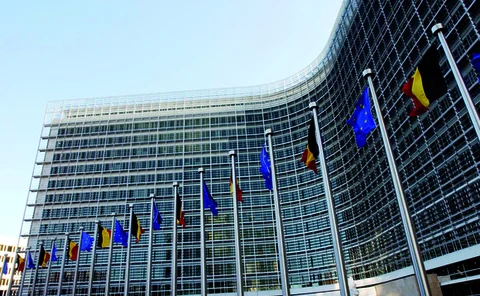
European Commission admitted to CPSS/Iosco working group on CCPs
The EC says its seat on the steering committee will help keep global regulation coherent.
Basel Committee proposals could break IASB loan-loss deadlock
The Basel Committee has revealed its thinking on loan loss accounting to standard-setters and industry experts.
US bank regulators align with Basel Committee on liquidity
US banking regulators have issued new liquidity risk policy co-ordinated with Basel Committee guidance.
Basel Committee targets boards in governance consultation
Regulators take aim at bank boards and managers in new corporate governance proposals

Out of their hands
Some regulators have suggested profits based on uncertain valuations of complex products should not be allowed to flow into earnings and be distributed in the form of dividends and bonuses – a move that potentially has massive implications for the…


Uncertain liquidity ratios
Like their counterparts elsewhere, South African banks are bracing themselves for a round of changes to Basel II rules. But it is the implications for liquidity and not capital that most concern market participants.

Remuneration: it's payback time
Disgruntled taxpayers and their political representatives are set on revenge, making bankers pay for their mistakes through compensation taxes and restrictions. But a more constructive approach will be needed to sustainably reform such a complex and…

Where there’s a will…
Living wills have quickly emerged as a new measure to ensure banks are better prepared for the next crisis. But clear definitions of exactly what information they should contain and how they should be drawn up do not exist. Joel Clark reports


West failed to learn lessons from Asian Financial Crisis
‘Hard fought’ battles expected ahead over scale and scope of new financial regulation

Regulators take aim at unrealised derivatives profits
Accounting changes promoting more fair-value reporting are forcing supervisors to consider radical restrictions on the way banks use profits.


Counterparty charge an act too far?
The Basel Committee shocked many bankers in December by unleashing proposals to significantly increase capital requirements for counterparty risk exposures. But industry participants argue the measures overlap with each other and could hike up capital to…

Unrealised gains out of their hands
Some regulators have suggested profits based on uncertain valuations of complex products should not be allowed to flow into earnings and be distributed in the form of dividends and bonuses – a move that potentially has massive implications for the…