Derivatives house of the year, Japan: Societe Generale

Asia Risk Awards 2023
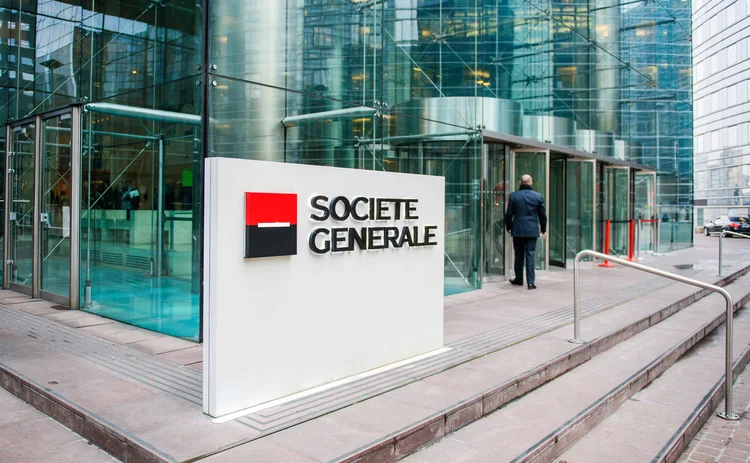
 socgen-orx-1118.jpg

The Fixed Index Annuity (FIA) product caused quite a stir among Japan’s life insurers when Societe Generale brought it to the Japanese market five years ago. This year, the French bank has reinvented the product to cater for lifers who are becoming increasingly focused on capital efficiency.

Japan’s insurance industry is gearing up for a new solvency regime that is due to come into effect from April 2025. While the precise details of the new regulation have not yet been published, it is expected to be aligned closely to the European Union’s Solvency II. This will intensify pressure on insurers, especially those with longer-dated liabilities, to be more efficient in their use of capital.

Societe Generale has now reworked its hugely popular FIA product to inject a greater level of capital efficiency into the structure.

An FIA is like a fixed annuity in that it provides policyholders with a guaranteed minimum coupon. However, the product differs slightly by also offering the opportunity to benefit from the potential upside of markets through a multi-asset exposure delivered via a custom-made index.

Most of the FIAs that Societe Generale offer on the market generate positive index performance via one-year call options but, under the new solvency regime, this is not a particularly capital-efficient way of doing things.

Last year, the bank was mandated by a large Japanese life insurance company to provide a more capital-efficient FIA structure.

The solution that Societe Generale eventually came up with was to combine reinsurance with an index overlay that provides positive performance via a vanilla call and daily lookback feature.

This structure has many advantages. For one thing, Societe Generale is now able to execute five- and 10-year call options, which is much more capital efficient than having to roll them over every year. The client is also able to enjoy some positive credit under Japanese rules for using reinsurance. This structure is simpler – operationally – for the client as well, resulting in an additional cost-saving.

“If you are trading derivatives, you need a full team around you to do this,” says Akiko Kuma, head of structuring for products and solutions, global markets, Societe Generale Securities Japan. “But if the FIA is done in a reinsurance format, the process is automatic once the reinsurance agreements are in place.”

There have been other innovations within Societe Generale’s suite of FIA products, too. During the first half of 2023, Societe Generale put together a new FIA structure.

Unlike the reinsurance FIA that Societe Generale executed last year, or indeed many of the other FIA structures that the bank brought to market since 2018, this product is not designed to beat the market but provide stable returns.

Akiko Kuma, Societe Generale

“The underlying of this product is quite unique. It is a multi-asset composition that combines a commodity strategy with an FX strategy, with the precise asset allocation determined by an AI model. I don’t think anyone else has done something similar on the market,” says Kuma.

By introducing these new FIA products onto the market, Societe Generale is hoping to broaden the appeal of the investment products it offers to Japan’s life sector. Predictable cashflows are a good thing for long-term liability matching and therefore likely to receive favorable capital treatment under Japan’s new solvency regime.

“Each company has its own preference, and we want to be able to offer whatever format our life insurance clients prefer,” says Kuma.

Delta hedging innovation

Societe Generale’s Japan franchise has also been innovating in other areas, too.

One regional Japanese bank wanted to benefit from the volatility risk premium embedded in US Treasuries that had been caused by the Federal Reserve’s aggressive interest rate hiking cycle. Societe Generale responded by embedding a unique delta hedging strategy within a collateralised structured note. This was the first trade of its kind in Asia and underscores the French bank’s well-deserved reputation for innovation on the Japanese market.

Under this systematic short volatility strategy, a global fund managed by Societe Generale purchases a product linked to the SGI VOLT US – an index that offers exposure to the volatility risk premium of 10-year US Treasuries. This is either through a secured note, typically one year, or via a total return swap linked to the performance of the index. At the same time, the fund invests in very short-term Japanese government bonds while selling swaps to receive the performance of the underlying index.

This strategy has been around for some time, but what makes in unique for the Japanese client is what Societe Generale refers to as “an innovative accelerated delta hedging technology”.

There are clear innovations embedded within this structure. But the bank remains tight lipped on the secret sauce of the innovation.

“The client recognises that we have come up with a more innovative delta hedging strategy than our competitors can offer,” says Kuma. “We also have an equity volatility carry strategy with unique construction based on academic investment rational. The product offers greater versatility than a standard one-month short vol strategy.”

The delta used for hedge in the strategy may differ from the theoretical delta, the difference remains contained in a way that will not impact the strategy’s risk-management process.

“This mechanism, therefore, provides some buffer for potential losses caused by realised volatility rising faster than implied volatility,” says Kuma.

As of June 2023, the Japanese client had traded ¥1.3 billion ($8.9 million) notional with Societe Generale under the strategy.

Kuma says Societe Generale is one of a few banks to provide a systematic short volatility strategy with a trend-following mechanism.

Three pillars

Kuma says there are “three pillars” to Societe Generale’s business in Japan.

One is the bank’s insurance business, where Societe Generale has a very strong team that also tries to be the first one on the market to offer new innovative strategies.

The second pillar is Societe Generale’s quantitative investment strategies [QIS] business, where assets-under-management continue to grow thanks to the bank’s ability to design, market and implement some smart and competitive strategies.

The third pillar is on the fixed-income side, where Societe Generale has been able to distinguish itself from the US banks with a keen focus on euro products.

“These are our core strengths that have been helping Societe Generale win significant mandates in Japan this year,” says Kuma.

This is something that Kuma hopes will continue going into next year, and beyond.

Only users who have a paid subscription or are part of a corporate subscription are able to print or copy content.

To access these options, along with all other subscription benefits, please contact info@risk.net or view our subscription options here: http://subscriptions.risk.net/subscribe

You are currently unable to copy this content. Please contact info@risk.net to find out more.

Most read articles loading...

You need to sign in to use this feature. If you don’t have a Risk.net account, please register for a trial.

Sign in
You are currently on corporate access.

To use this feature you will need an individual account. If you have one already please sign in.

Sign in.

Alternatively you can request an individual account here