
Candriam finds momentum with New York Life
Leaving behind the troubled past of its previous parent, Dexia, Candriam Investors Group is in equal parts ambitious and optimistic about its ability to grow its hedge fund business
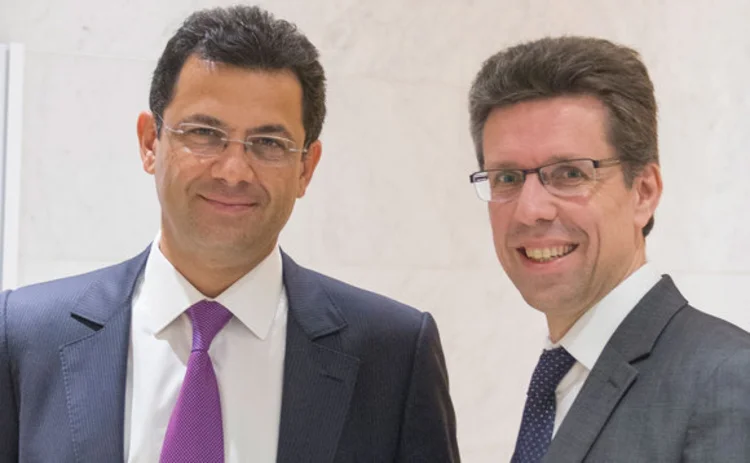
Plus ça change, plus c’est la même chose. If ever the French phrase were applicable to an asset manager, Candriam Investors Group, née Dexia Asset Management, would be it.
While the alternative and hedge fund investment provider has had an even rockier time than most since the financial crisis, the tide finally seems to be turning. Dexia, the thrice-bailed-out Franco-Belgian bank, was keen to sell its well-functioning and profitable asset management side.
That process unfortunately had its own dramas. After two failed attempts – sales to GCS Capital of Hong Kong and FinEx Capital Management, a London-based investment group, fell through – Dexia finally found what it hopes is the perfect partner.
After a second auction, New York Life, the largest mutual life insurer in the US, bagged Dexia Asset Management for €380 million ($520.7 million).
While some may have seen the union as a bit of shotgun marriage – certainly the French and Belgian governments that remain exposed to Dexia were keen to cut their losses and recoup some money – the partnership has many benefits for both sides.
The renamed Candriam Investors Group adds a further $100 billion in assets under management (AUM) to the US insurer’s $388 billion portfolio, propelling it into the top 25 largest asset managers in the world.
Meanwhile, the investments business has become a vital part of New York Life, significantly expanding the company’s profile and its profitability while contributing to its financial strength.
New York Life has the highest possible financial strength ratings of any US life insurer from all four of the major credit ratings agencies. That is certainly something Candriam will appreciate after the multiple bail-outs of its previous parent.
At the time of the sale, then-CEO Naïm Abou-Jaoudé – who keeps his chief executive title under the new management as well as becoming vice-president of New York Life Investment Management International – pointed out: “We are now better positioned than ever to provide continuity and stability to our clients and staff.” Synergies between Candriam and New York Life are “complementary” and Candriam’s specialist multi-local entity model fits well with New York Life’s multi-boutique approach, he says. Now with the backing of a strong international group and the chance to keep its entrepreneurial spirit, Abou-Jaoudé is confident of a better future for the asset manager.
Taking his cue from the origins of the name Candriam – a somewhat contrived acronym of the words ‘candle’ (or ‘conviction’), ‘responsible investment’ and ‘asset management’ – Abou-Jaoudé is keen to fast-track expansion of the company.
In addition to its home markets of France, Belgium and Luxembourg, “Candriam will look to create product synergies in the US and reinforce its presence in key local markets in particular the UK, Switzerland and Germany. Our aim is to develop two client segments specifically – third-party distribution and pension funds – as well as strengthening our relationships with consultants,” says Abou-Jaoudé.
“We are planning a series of launches to expand the business including a multi-asset income fund, an unconstrained high yield absolute return fund, a derivatives-based global equity fund with a measure of downside protection aimed at insurers, and a private placement debt vehicle designed to benefit from the disintermediation of the banking sector,” he adds.
Abou-Jaoudé’s conviction that Candriam can shake off the taint of Dexia and woo back investors is not without basis. He has a strong and loyal team that should be able to grow AUM as well as start to substantially expanding the product range.
In 1998, Abou-Jaoudé was essentially the chief investment officer of alternative investment at UBS Asset Management. This was the start of what would eventually become Candriam. He was running equity derivatives, convertible arbitrage, merger arbitrage and long/short equity funds. In 1999, he hired Fabrice Cuchet to become the manager for long/short equity. That was the beginning of a long and successful collaboration that remains to this day.
UBS sold the business to Dexia in 1999. Abou-Jaoudé was appointed chief executive of Dexia Asset Management at the beginning of 2007 while Cuchet, now chief investment officer, alternative investment strategies at Candriam, took over responsibility for the alternatives business at the same time.
Although the company grew in the first six months of 2007, Abou-Jaoudé’s honeymoon period was short lived. Although he believes he was proactive in trying to protect Dexia Asset Management and clients from the worst of the financial crisis, the management company was hit not only by the global financial crisis but by eurozone problems in 2010 and parent Dexia’s significant financial difficulties. In September 2011, Dexia decided to dismantle and sell all its subsidiaries, including what is now Candriam.
This was a volatile and challenging period, Abou-Jaoudé admits. “Today I feel personally like a marathon runner. We made it. We crossed the finishing line and finished the course. We have achieved something that everyone can be proud of with our new partner New York Life. Internally and externally there is a lot of optimism and dynamism, a new opportunity and a new story to write.”
He believes the opportunities for new business are there for the taking. Because the asset manager did not “take its eye off the ball” and kept the trust and confidence of not just its staff but more importantly its clients, Abou-Jaoudé now thinks Candriam can look forward to “exciting times”.
Part of this optimism is down to the fresh start Candriam has got from dropping Dexia’s name. The process of renaming all of the funds, something that should be completed by the summer, will help. The name change began first with the alternative investment fund range.
“Alternative investment strategies remain a priority for Candriam in 2014,” says Cuchet. “We have already seen renewed investor interest especially for our long/short credit and index arbitrage strategies. We are working on new strategies linked to new funds in the pipeline for the coming quarters.”
The mutual funds domiciled in France will now replace Dexia with Candriam, as will Belgian funds based on traditional strategies. Open-ended mutual funds under French jurisdiction will be renamed by the end of April. The names of Luxembourg funds will be changed slightly later.
Since 1996, the firm has managed exclusively European onshore funds, developing a track record in managing most of its single strategies under Ucits III wrappers. While AUM dipped to a low of €3.5 billion ($4.8 billion) in 2009, since then the company has managed to recover some ground. Hedge funds and funds of hedge funds account for around €4.6 billion ($6.3 billion) of Candriam’s current AUM. This is still a far cry from the pre-crisis peak of more than $10 billion before the issues with its former parent group hit.
“Nothing has changed in the daily management of the funds or the organisation of the business. The model of New York Life is multi-boutique, so we are a boutique inside that structure. Although on a practical level there are no changes in our daily life, it is positive to have a new brand name, new shareholders that are very strong and very much appreciated by our clients,” says Cuchet.
“We are already gathering some very positive feedback from clients and also gathering net new cash. That’s really good,” he adds.
This is a welcome change from the failing Dexia parent of the past. “Many clients were reluctant to buy our funds because of the Dexia brand name, but not because of our performance. They are now coming back,” Cuchet continues.
“We have the funds, the team in place and we are performing. The team is stable. Most of the key fund managers are still here and working within Candriam. The average time with us of our senior people is over 10 years. That’s clearly a very positive signal,” he adds.
Under the shadow of the Dexia brand, Candriam’s funds were blacklisted by third-party distributors in Europe, who did not want to promote any of the funds. Few distributors kept Candriam products on their lists. This also made it difficult to attract fund managers, build new teams and launch products, admits Cuchet.
The rebranding to Candriam will, he believes, reverse this situation. “We have a name, a cultural heritage, a long-standing reputation and strong European roots,” continues Abou-Jaoudé. “We are ambitious and are aiming to be a frontrunner in global asset management.”
For one, Abou-Jaoudé is positive that the structure of New York Life will allow Candriam to flourish. Out of the eight boutiques operating under the New York Life umbrella, Candriam is the only one in Europe. It will keep its autonomy and processes. “It is key to us to have proximity to our clients, to understand the local flavours and to be nimble and flexible. We have an entrepreneurial spirit and that is one of the strengths of the company,” he adds.
As a multi-specialist asset manager, Candriam now offers the best of two worlds, according to Abou-Jaoudé. “Asset management relies on people and skills. These are our most important assets. At the same time, we can also rely on the financial strength of our parent company, one of the largest and most solid companies in the world.”
Whether Candriam will be able to achieve its rather ambitious goals is, however, an open question and one that will be answered only by time.
At present Abou-Jaoudé is pursuing several objectives. One is to deepen the partnership with existing clients as well as build relationships with distributors, particularly in Belgium and Luxembourg as well as the existing home market of France. He believes selling Candriam funds into continental Europe will benefit from the fresh branding. At the same time he wants to broaden the client base as well as regain market share.
Abou-Jaoudé says third-party distributors will be able to avoid the historical problems of Dexia and promote the Candriam brand. At the same time he says asset managers like Candriam now have easier access to pension funds, insurance companies and consultants.
“We are going to reinvigorate business development and maximise our potential by unlocking opportunities that were put on hold. There is a lot in the pipeline and there are good prospects. We will also be able to benefit from the synergies with New York Life,” says Abou-Jaoudé.
Cuchet is equally optimistic. He believes continental investors are opening to alternatives, particularly if offered in onshore regulated vehicles such as Candriam’s funds. The low interest rate yield environment means many asset allocators and institutional investors are looking at alternatives to bonds.
For that, says Cuchet, alternative Ucits products are well placed to fill the gap. Investors that have a low to mid-volatility target but also want yield could find the answer with Candriam’s long/short credit, global macro and risk arbitrage alternative Ucits funds, he says.
The introduction of the alternative investment fund managers directive (AIFMD) will also give Candriam a boost. Until now there has been no pan-European regulation. Local laws and customs gave each country a very individual profile. Cuchet hopes AIFMD will change that.
“Will AIFMD become a success? It depends on the clients. I think it will help but the real success will come only if clients favour AIFMD products,” he says. Some institutional clients have constraints on investing in non-Ucits funds. While AIFMD removes many of the constraints Ucits funds have to contend with, Cuchet thinks the jury is still out on whether enough investors will want to switch to a different fund vehicle, even if it is regulated, although he admits the move will favour onshore versus offshore structures.
He also points to a rush towards ‘40 Act funds in the US, something he says is similar to Ucits. It now depends on whether investors will buy into AIFMD rules and favour these structures. Continued European Union legislation, such as Solvency II, could also help push insurance companies in particular into the regulated funds. Capital requirements will be very different for AIFMD funds compared with Cayman funds, according to Cuchet.
“If you look at Ucits, it took 20 years from Ucits I to Ucits IV to develop success. So with AIFMD it will take time. It will not happen in a couple of quarters. It is a positive development and it is better than before when there was no European regulation. But it is a new regulation and the success will take time,” concludes Cuchet.
Another factor that he thinks will help Candriam is the macroeconomic environment. “With systemic risks retreating since European Central Bank president Mario Draghi’s speech in July 2012 [to ‘do whatever it takes’ to save the euro] and, as a corollary, the return of fundamentals as the primary market driver, conditions are supportive for conviction-based and alternative investment strategies,” says Cuchet.
“Uncertainties remain on possible interest rate hikes, but this should not impact performance. On the contrary, history has shown periods of rising long rates to be supportive for alternative investment strategies, which fully serve their purpose of diversifying elements of the portfolio,” he adds.
“Everywhere there is competition. It’s tough. Competition is dependent on strategy, too. There are more and more players who are launching alternative funds and that competition is not limited to continental Europe, or the UK or US. The market is completely open, so you have to have a better trade record and be innovative. You have to be organised to give support to clients, offer transparency and be able to market your products. You have to fight. This is a winner-takes-all environment. Even if you are good in a specific strategy, there are only a few players gathering most of the assets,” reflects Cuchet.
His answer is to find the sweet spot for investors and that, he says, is to run low to mid-volatility funds. There he sees demand and fewer competitors. While many hedge funds can produce 8–12%, or higher returns, increased volatility will not be any use in terms of diversification for investors looking for an alternative to bonds and equities. “We’re well positioned in that specific market,” says Cuchet. “For me it is about using hedge funds as a diversification away from bonds or equities.”
On top of this, Candriam is keen on restarting its previous practice of launching new products every year. With a new name and big backer, Cuchet thinks it will be easier to attract individuals or teams looking to launch complementary strategies with the security and operational structure of a large asset manager such as Candriam.
This year the plan is to launch some new products in the second half, most probably in the long/short area. Candriam already offers 14 different strategies. Since it opened its first fund in 1996, a CTA programme, it has added risk arbitrage, index arbitrage, equity market neutral and global macro to name a few. “Clearly over the last few years, we have not been very active in [launching new funds]. But that is the objective for 2014,” says Cuchet.
One trend that may work in Candriam’s favour is the move towards concentration. With the regulatory barriers to entry continually being raised, many proprietary traders who are managing successful strategies for banks are keen to start their own funds. But that is not easy.
The sharp reduction in bank proprietary trading desks should help boost Candriam’s chances of attracting new talent. Starting a management company and launching a hedge fund as a single manager has never been easy but is now even more complex and expensive. Not only is it difficult to raise capital, the level of operational infrastructure needed to attract investors is costly.
Cuchet believes many traders thinking of setting up a hedge fund will look instead at coming into companies like Candriam where they will be given the scope and autonomy to develop a strategy, but within an operational and marketing structure already possessing significant AUM. Candriam has risk management, middle office, research and other functions that support a variety of teams, according to Cuchet. Managers are able to run products with a great deal of autonomy but at the same time are supported by the group functions available to a large company like Candriam.
“I really think that new strategies will emerge or new fund managers, ex-traders, will launch strategies within such organisations because it’s still challenging to survive below $200 million AUM. It is difficult to have sufficient size to invest in the regulatory and other functions, and at the same gather assets and clients,” says Cuchet. “We can offer the right combination between independence and strategic support from the whole group.”
He expects to see more concentration and more transfers from banks to asset managers continue this year and into 2015.
“We have already seen new momentum following the cementing of our partnership with New York Life Investments. This fresh start is opening new doors for us and we aim to build on this by increasing our market share and launching new, innovative products,” says Abou-Jaoudé.
Clearly the asset manager is off to a good start and if it regains the upward growth path it was on before the financial crisis hit, there is every likelihood that Candriam could become one of the leading players, not only in Europe’s asset management business, but globally.
Only users who have a paid subscription or are part of a corporate subscription are able to print or copy content.
To access these options, along with all other subscription benefits, please contact info@risk.net or view our subscription options here: http://subscriptions.risk.net/subscribe
You are currently unable to print this content. Please contact info@risk.net to find out more.
You are currently unable to copy this content. Please contact info@risk.net to find out more.
Copyright Infopro Digital Limited. All rights reserved.
As outlined in our terms and conditions, https://www.infopro-digital.com/terms-and-conditions/subscriptions/ (point 2.4), printing is limited to a single copy.
If you would like to purchase additional rights please email info@risk.net
Copyright Infopro Digital Limited. All rights reserved.
You may share this content using our article tools. As outlined in our terms and conditions, https://www.infopro-digital.com/terms-and-conditions/subscriptions/ (clause 2.4), an Authorised User may only make one copy of the materials for their own personal use. You must also comply with the restrictions in clause 2.5.
If you would like to purchase additional rights please email info@risk.net
More on Hedge funds
JP Morgan warns hedge funds to expect intraday margin calls
US bank may demand variation margin ‘up to seven’ times a day after Archegos default

Alternative markets give edge to Florin Court strategy
By concentrating on exotic and alternative markets, Florin Court Capital Fund has sidestepped overcrowding and correlation to the main trend following commodity trading advisers, offering investors a diversified alternative to the standard systemic macro…

Global macro views combine with quantitative models to produce consistent returns
The team behind River and Mercantile Group’s global macro strategy team operates under two key principles: that macro is the most important aspect of any investment decision and that decision-making should incorporate both systematic and discretionary…
On the offensive – Seeking a new edge, buy-side invests in portfolio and risk analytics
A fast-moving, headstrong hedge fund – hit by rare losses after a black swan event touched on an overweight country exposure – ponders adding fresh quantitative expertise. Much to traders’ chagrin, the chief investment officer and chief operating officer…

Esma backtracks on account segregation
Status quo protected for rehypothecation of collateral in tri-party, securities lending and prime brokerage
Redemptions focused within strategies suffering losses in 2016

Hedge fund redemptions a dismal end to a bad year
Managed futures funds saw big inflows in 2016, but left investors disappointed

Larger funds are net losers as outflows continue
Managed futures funds have seen biggest redemptions for three years