Riksbank's Persson: Making the European financial system safer

Regulators and politicians know what needs to be done to put the eurozone on an even keel and fix the holes exposed by the subprime crisis, says Mattias Persson, head of financial stability at the Sveriges Riksbank, Sweden’s central bank. The result will be a safer financial system – but it won’t be free of cost. By Duncan Wood
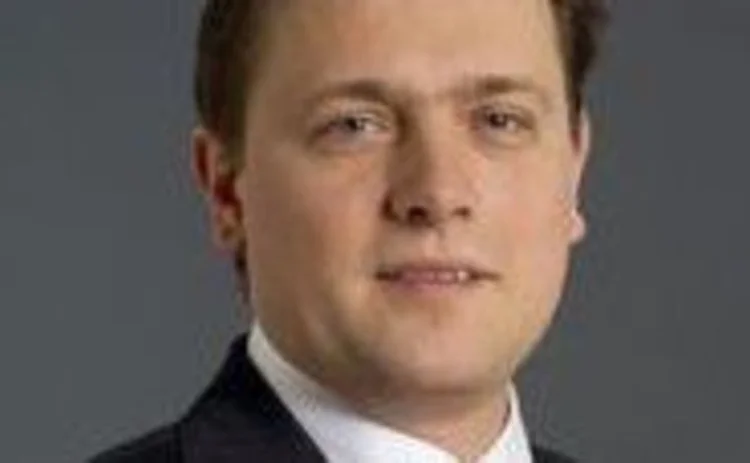

mattias-persson

At the start of the 1990s, the Swedish banking system was brought to its knees by bad real estate loans. But the memories of that crisis helped protect Sweden when US subprime mortgage risk threatened to choke the global financial system – so says Mattias Persson, head of financial stability at the Riksbank, Sweden’s central bank.

During the crisis, domestic authorities co-operated, banks were exposed to severe stress tests, the results were made public and the industry was quickly shored up through a combination of private capital raising and state support. Today, as a local problem of bad Baltic loans starts to recede, Nordic banks look stronger than many of their European peers, which have been badly rocked by fears about eurozone debt.

But Persson wasn’t in a self-congratulatory mood when Risk interviewed him in Stockholm in May. For one thing, the crisis isn’t yet over, although he argues Europe’s debt-laden economies can follow the example of Latvia last year and successfully – if painfully – rehabilitate themselves. For another, the subprime crisis has revealed how interconnected the financial system is, meaning even the region’s conservative, well-capitalised institutions face a wave of change.

Here, Persson identifies what he sees as the key weaknesses in the financial system – the lack of transparency, liquidity standards and regional and global co-ordination – and also calls for central banks and supervisors to be given new macro-prudential tools that would allow them to curb excessive risk-taking.

As a member of the Committee on the Global Financial System and the Committee of Payment and Settlement Systems – forums that operate under the auspices of the Bank for International Settlements – Persson is in a position to influence some of this change, but he accepts it can’t be accomplished without some impact on the real economy.


Risk: Has the crisis highlighted the need for central banks to be given any new tools and powers?

Mattias Persson: One lesson we can draw, not only from this crisis but also from others, is the fact that risks aren’t restricted to individual institutions – there are also systemic risks, and maybe the central bank or the supervisor should have some responsibility for managing these. We need to consider new types of macro-regulation and I definitely think something will emerge in this area.


Risk: Are there any particular powers you like?

MP: At the Riksbank, the executive board has asked us to look into the housing and commercial real estate markets in Sweden. Of course, you could argue the current crisis started in the real estate market and, looking back at other crises, a lot of losses have been connected to commercial real estate – not just in Sweden, but globally.

So we need to be constructive and think about what kind of macro-prudential regulation could be applied in the real estate space – in Asia, for example, they use loan-to-value ratios in an attempt to influence market development. There are a number of things we need to look into, to weigh up the pros and cons. But we definitely need new tools.


Risk: You imagine a situation where supervisors and central banks are able to set some kind of limit on the amount of risk banks take in different business segments?

MP: Yes, I think so. We’re already starting to see that sort of macro-prudential regulation being discussed and flavours of it are appearing in the work being done by the Basel Committee on Banking Supervision and the Committee of European Banking Supervisors.


Risk: The credit default swap (CDS) market has become a target for politicians during the eurozone debt crisis. Is it a symptom or a cause of stress?

MP: There are issues we need to address in the CDS market, but they are more in terms of infrastructure – we need to build a good clearing system and progress is already being made, obviously. That aside, I think we shouldn’t shoot the messenger. Looking at this crisis, the CDS market has been a bit slow to react to some things that turned out to be amiss, but there was also some foresight in it.


Risk: Concern about eurozone debt levels has been around for some months now. What do you think is the most likely outcome? 

MP: The easy part has been done – agreeing a support package. The difficult part will be to implement austerity programmes locally. Sweden, as a society, managed to survive its own crisis in the early 1990s because there was political consensus and consensus between unions, corporates and the man on the street that we really needed large cuts and savings. Greece is now in the same situation as Latvia two years ago – it needs an internal devaluation and it needs the commitment to fulfil that programme. It will be very painful, but it can be done.


Risk: Would it have been less painful for Greece to step outside the eurozone for a while?

MP: I don’t think so. If you look at Latvia, it’s very much like Greece – it has a fixed exchange rate, it needs to make large savings – and Latvia has shown it is possible to do this, but you need commitment and you need to deliver on your promises. So there is a precedent and, relative to the sizes of their economies, the cuts needed in Greece are about the same magnitude as those in Latvia.


Risk: There has been limited contagion already. Could it go as far as the closing of capital markets to a big country like Spain or Italy?

MP: A couple of years ago, I would probably have said ‘no’ to that question but, in this crisis, we saw after Lehman what can happen when confidence vanishes from the market. I think the eurozone has shown there is a commitment to help Greece – it’s a tough programme but it’s too early to know the outcome today.


Risk: Some people have suggested the eurozone countries are in the same situation that banks were in following Lehman – a set of dominoes ready to fall. What can be done to prevent that happening? 

MP: That observation is right to some extent. Europe is missing some important tools and that’s something I think is going to be rectified – the De Larosière Report has been debated at the European Parliament level, with a view to creating the European Systemic Risk Board (ESRB). That’s something that is very important for the functioning of the financial system and for financial stability across Europe, and it’s why transparency is essential. If the ESRB is going to give recommendations and warnings it will need a huge amount of information, much of which we’re missing today. We don’t have all the offices, authorities and committees needed to gather and act on it, but at least Europe is learning its lessons and is moving to create new bodies. That’s something we support very much.


Risk: There is a bewildering amount of regulatory change and new ideas are still being proposed. Is a clear vision emerging?

MP: Yes, I think so – but there are a number of different ideas and positions out there. What is clear is the politicians and policy-makers have the view there has been too much risk in financial institutions and financial markets and that’s something that needs to be changed. Most of the discussion is around how exactly to achieve that. 

Something I’d particularly like to see is a standard around the disclosure of funding and liquidity positions – this is something the Riksbank asked Swedish banks to provide from mid-2007 onwards and it proved to be very helpful, but different banks use very different measures of liquidity.

Risk: What information did you ask for?

MP: We just said ‘give us the same information you give to your senior management’, and then we had discussions with all the institutions about what they actually meant, how they measured cashflows, the assumptions they made about deposits, and so on. It was an iterative process to understand what each bank meant.

But, in terms of making this kind of information public, we’re facing a co-ordination problem. As we saw in the crisis, if one institution starts being more transparent about liquidity and starts disclosing more, then the market assumes they have a problem, so the only way to have more information is to have a common standard on disclosure. So, I’d like to see the Basel Committee come up with a suggestion on how to communicate liquidity and funding – we need one measure that’s the same for all banks and can be easily understood and communicated.


Risk: Basel II was quite radical and involved a series of consultations and quantitative impact studies. With Basel III, regulators have been asked to go from proposals to a final rule in less than a year. Is that realistic?

MP: It’s being fast-tracked. The communication from central bank governors and heads of supervision in the Group of 20 countries has been quite clear: you need to produce something and it needs to be implemented quite quickly. So far, that’s still the goal everyone is working towards. But Basel III is an addition – the basic framework of Basel II still remains.


Risk: Is it more important to have a good set of rules or to have something in place quickly?

MP: I think you can have both. I’m not sure you have to sacrifice good rules in order to have them implemented fast. Looking back at the crisis, there have been some clear lessons about regulation – the Basel Committee has thought hard about it and is trying to fix it and fill the holes in the areas where there has not been any regulation.

Of course, there is always a risk there will be over-regulation – and this is something that needs to be handled carefully and looked at in detail. Also, we’ll need to look at the overlap between regulations – for example, how the introduction of central clearing in the derivatives market should be connected to capital regulation.

So there’s a lot to think about. But the signals are clear – there has been too much risk and it’s not a free lunch. There will be implications and hopefully we will get it right first time.


Risk: Banks have been arguing that if risk is cut too much, it will have a big impact on growth, on living standards and on jobs. Do you share that concern?

MP: If you’re looking for something that was very bad for the economy and imposed extremely high social costs, you don’t need to look much further than the financial crisis. There will be new regulations and that always means some kind of spillover to the real economy, but I’m not sure it will have the dire effects you hear about from bankers and lobbying organisations. What needs to be decided – and this will come from the impact study results – is how to calibrate the rules and what the impact will be on the economy. There is a trade-off and we need to find the right balance.


Risk: And you think regulators can find that balance within the year?

MP: That’s the timetable we have right now. There will need to be some fine-tuning to the proposals from the Basel Committee, but I haven’t heard any changes to the timetable – we just have to work hard.

Risk: Nordic banks – as well as their counterparts in Canada, Australia, the Netherlands and elsewhere – may be feeling a little aggrieved about the regulatory burden they now face. It wasn’t their crisis, but they now have to pay for it. Do you have any sympathy for that point of view?

MP: Yes, I have sympathy. But we have globally connected financial markets – look at the huge action that has been required, and is still required, to keep the system functioning. Most central banks injected liquidity to protect the system. Even in Sweden we had to pass a law in October 2008 to support the banks.

The Swedish banks didn’t invest in complex structured instruments, but impacts were still transmitted through funding markets and the fact other segments of the markets just broke down – so this is a discussion about how much risk there should be in the whole financial system. And because we have integrated markets and institutions that work cross-border, it needs to be implemented globally.


Risk: The Swedish authorities received high marks for their handling of the crisis. What did you get right? What are you proud of?

MP: That’s a dangerous question. I’m not sure we’re out of the crisis. But we have some advantages compared to some other countries. For one thing, it wasn’t long ago that we had our own crisis and some of our colleagues in the Swedish banks were working during that crisis – the banks still have those memories. Both the Riksbank and the Swedish supervisor shared the view that real capital is important and we needed to fix funding and liquidity.

Another thing that worked very well in Sweden was the level of co-operation between the authorities – the Riksbank, the finance ministry, the national debt office and the Swedish bank supervisor. We had very good co-operation that, admittedly, is easier in a small, concentrated market like Sweden than it is in a global centre like London or New York. It’s easier for us to talk to the participants and find out what’s going on.


Risk: Your stress tests in particular were well-received. What did you do differently?

MP: We are the only central bank in the world that publishes bank-by-bank stress tests in our financial stability report (FSR) and names the banks. We are extremely transparent – even though there were scenarios where the losses were very high, leaving some banks close to Tier I capital ratios of just over 4% – and that proved something important.

I wasn’t with the Riksbank when the financial stability department was set up, but I know some people felt that when a crisis hit, it would make it impossible to communicate via the FSR. This crisis showed it’s not impossible – in fact, it’s a very important tool for communicating with institutions and the markets. If you’re transparent, it actually increases confidence in the methodology and the results. 


Risk: You said you don’t think the crisis is over yet. What are the things you’re most worried about over the next year?

MP: One challenge will be exit strategies for central banks with regard to facilities started during the crisis and ending liquidity support to the banks. I’m not so concerned for Sweden, where my base case is that the exit will be quite easy – the Riksbank has only lent against collateral and we haven’t bought assets or anything like that – but still there is funding pressure globally, there’s a lot of debt to be rolled over and there are some risks out there. We’re not completely out of this yet. So my view is it’s best to have some caution and to try and understand what’s going on – and also, if you see things developing in a risky way, you need the ability to take action.

Only users who have a paid subscription or are part of a corporate subscription are able to print or copy content.

To access these options, along with all other subscription benefits, please contact info@risk.net or view our subscription options here: http://subscriptions.risk.net/subscribe

You are currently unable to copy this content. Please contact info@risk.net to find out more.

Most read articles loading...

You need to sign in to use this feature. If you don’t have a Risk.net account, please register for a trial.

Sign in
You are currently on corporate access.

To use this feature you will need an individual account. If you have one already please sign in.

Sign in.

Alternatively you can request an individual account here