CFTC names Chilton head of energy committee
Bart Chilton, one of four commissioners at the US Commodity Futures Trading Commission, took charge of the regulator's energy markets advisory committee yesterday.
He replaces fellow commissioner Walter Lukken, who has headed the committee since its establishment in February 2008. Lukken was also acting chairman of the regulator until he stepped down in January. Acting chairman Michael Dunn said Chilton and the committee would be investigating the role of speculation in driving energy prices and the regulation of carbon futures.
The CFTC set up the committee, which consists of 25 representatives of major investment banks, energy producers and consumers, after a reported surge in energy market manipulation: during the 2002-2007 bull market, the US energy markets saw an "all-time high" of market manipulation, false reporting and trading violations, the CFTC reported in October 2007.
Also this week, the regulator revealed it would step up efforts to control speculative distortions in the soft commodity markets, by founding a new subcommittee on convergence. Last month, the CFTC acted to limit non-commercial holdings of delivery instruments in several grains listed on the Chicago Board of Trade, in an attempt to stop speculators inflating the price of grain futures, harming commercial futures buyers and distorting the market.
Dunn said the committee would hold at least three hearings by the end of June this year to examine "continuing problems with lack of convergence and weak basis" in the agricultural markets.
See also: CFTC names temporary chiefLukken calls for regulatory overhaul as he prepares to step down
CFTC dismisses speculation speculation
CFTC acts to shut out grain futures speculators
CFTC: record levels of crime in energy markets
Only users who have a paid subscription or are part of a corporate subscription are able to print or copy content.
To access these options, along with all other subscription benefits, please contact info@risk.net or view our subscription options here: http://subscriptions.risk.net/subscribe
You are currently unable to print this content. Please contact info@risk.net to find out more.
You are currently unable to copy this content. Please contact info@risk.net to find out more.
Copyright Infopro Digital Limited. All rights reserved.
As outlined in our terms and conditions, https://www.infopro-digital.com/terms-and-conditions/subscriptions/ (point 2.4), printing is limited to a single copy.
If you would like to purchase additional rights please email info@risk.net
Copyright Infopro Digital Limited. All rights reserved.
You may share this content using our article tools. As outlined in our terms and conditions, https://www.infopro-digital.com/terms-and-conditions/subscriptions/ (clause 2.4), an Authorised User may only make one copy of the materials for their own personal use. You must also comply with the restrictions in clause 2.5.
If you would like to purchase additional rights please email info@risk.net
More on Regulation
Council plans take Aquis, BME out of Esma oversight
German push to exempt Deutsche Börse catches three others, according to sources

Why watering down resolution plans is a bad idea
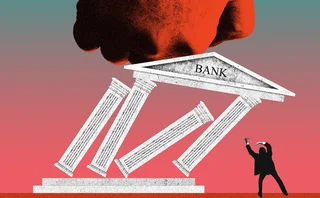
Bank failures are inevitable; banking crises are not
BIS’s Hernández de Cos on AI, non-bank risk and tokenisation
General manager talks about how the BIS is navigating a complex global environment

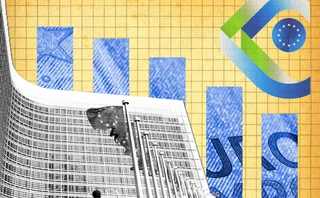
‘European SEC’ no silver bullet for growth
EU policymakers hope a single, centralised supervisor will help rev up Europe’s economy but critics are mustering
Permanent FRTB reforms seen as vital for IMA adoption
Temporary relief granted in June has done little to encourage internal model use in Europe
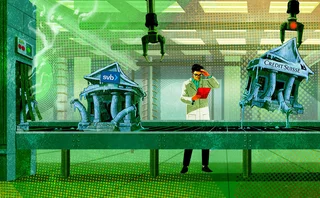
How to ensure the next Credit Suisse or SVB fails ‘well’
Regulators are planning changes to resolution rules after criticism that living wills were ignored in previous bank collapses
Asian firms waiting on exemptions from UST clearing mandate
Hoping for relief on extraterritoriality, 51% of Apac firms have yet to start compliance programmes
Already under FRTB, some banks hope for modelling reprieve
Risk Live: BMO and UBS opted for SA, but believe regulators could still opt to follow softer US rules