

House of the Year, Hong Kong: HSBC
Asia Risk Awards 2016


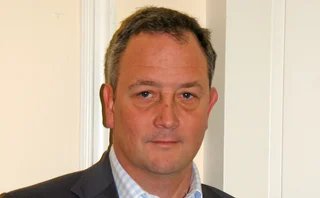
For Antony Shaw, Hong Kong-based head of institutional and wealth sales at HSBC, the twin themes of regulatory change and stubbornly low global yields have been the driving forces behind the firm's business.
"The last 12 months have clearly been challenging for our clients: even the most sophisticated investors have found it difficult to generate returns in this low yield environment. Navigating regulatory change as well as market conditions has added to the complexity for investors. Everyone in the industry has had to think hard about their business model in this environment and consider new possibilities, such as generating more revenue from fee income as opposed to investment returns," says Shaw.
As a result, HSBC's activities focused on ensuring that Asia's disparate pools of liquidity are joined together: "We have been working hard to use HSBC's global network on behalf of our clients and to ensure that Asia's disparate pools of liquidity are connected for their benefit. We need to ensure that we're solving our clients' problems, whether those concern funding for portfolios, managing risk or enhancing returns."
One of the bank's customised risk solutions was an interest rate swap containing a floor and a so-called flexi-start feature. A client in Hong Kong issued a floating-rate loan with a six-month drawdown period. It is the company's policy to maintain a certain portion of fixed-rate exposure and to achieve hedge accounting, but in a low-rate environment it could face losses from paying a fixed rate if interest rates fall.
HSBC included a floor in the interest rate swap to protect the client from negative interest rates. Although the Hong Kong dollar is pegged with US dollar, at the time of the trade there was uncertainty about the prospects of a rate hike by the Federal Reserve, while yen and euro interest rates were both negative.
"Clients buy protection to insulate themselves from negative rates. If the protection is more likely to be triggered then the cost will be higher. If the interest rate is negative, or deeply negative, the protection will be quite expensive. In general, it could cost 10 basis points on a three- to five-year transaction. It depends on the currency pairs, tenors, the credit risk of the counterparties and the probabilities that the currency will go negative," says Desmond Suen, head of corporate treasury solutions for Greater China at HSBC.
In addition, the bank provided the flexible starting date in order to fully hedge the client's position.
Suen says HSBC was able to provide these features thanks to its experienced traders: "This is how we stand out from our competitors. It is why the client chose us. Obviously, we got additional risk, but it is manageable. Our trading desks are trading a large amount of similar products in the market, so they are in a relatively better position to manage this kind of risk for the client."
Because the hedging instrument fully matched the underlying loan, the transaction satisfied hedge accounting requirements and large movements in profit and loss were avoided. "The essence of this structure involves matching the term of the loan. The more similarity there is between the two transactions – the underlying and the hedge – the greater the hedging effectiveness will be," says Suen.
As a major provider in the credit default swap (CDS) market, the bank has also demonstrated its ability to provide risk solutions in a tough business environment. While many of its competitors exited the market due to stringent regulation, higher clearing costs and fewer counterparties, HSBC bolstered its CDS capabilities. In 2014, it expanded its CDS team by adding traders and salespeople. The bank also grew its monthly CDS trading volume sixfold last year.
"I think we were able to help our clients rise to the challenges they faced under some difficult conditions over the last year. Investors are increasingly worried about disappearing market liquidity as they see some banks scaling back their balance sheets. We have demonstrated our enduring commitment to growing our business in Asia, and our clients have rewarded our consistency in this region," says Shaw.
He adds that the bank has seen increasing demand for CDS, not only from credit investors but also equity investors seeking to hedge macro or single names.
コンテンツを印刷またはコピーできるのは、有料の購読契約を結んでいるユーザー、または法人購読契約の一員であるユーザーのみです。
これらのオプションやその他の購読特典を利用するには、info@risk.net にお問い合わせいただくか、こちらの購読オプションをご覧ください: http://subscriptions.risk.net/subscribe
現在、このコンテンツを印刷することはできません。詳しくはinfo@risk.netまでお問い合わせください。
現在、このコンテンツをコピーすることはできません。詳しくはinfo@risk.netまでお問い合わせください。
Copyright インフォプロ・デジタル・リミテッド.無断複写・転載を禁じます。
当社の利用規約、https://www.infopro-digital.com/terms-and-conditions/subscriptions/(ポイント2.4)に記載されているように、印刷は1部のみです。
追加の権利を購入したい場合は、info@risk.netまで電子メールでご連絡ください。
Copyright インフォプロ・デジタル・リミテッド.無断複写・転載を禁じます。
このコンテンツは、当社の記事ツールを使用して共有することができます。当社の利用規約、https://www.infopro-digital.com/terms-and-conditions/subscriptions/(第2.4項)に概説されているように、認定ユーザーは、個人的な使用のために資料のコピーを1部のみ作成することができます。また、2.5項の制限にも従わなければなりません。
追加権利の購入をご希望の場合は、info@risk.netまで電子メールでご連絡ください。
詳細はこちら 受賞歴
Innovation of the year – tech firm: MatLogica
Energy Risk Awards 2026: Fintech’s breakthrough enables firms to compute pricing and Greeks faster than traditional products can compute price alone
Base metals house of the year: Societe Generale
Energy Risk Awards 2026: Tech focus helps bank support clients through base metals market shifts
Derivatives house of the year – bank: Natixis CIB
Energy Risk Awards 2026: Bank’s physical market expansion and ETRM enhancements underpin innovative derivatives structures that address volatility

One to watch: CarbonAI
Energy Risk Awards 2026: Start-up uses AI to create dynamic, auditable carbon market intelligence

Weather house of the year: Parameter Climate
Energy Risk Awards 2026: Parameter Climate launches innovative new vehicle to connect corporate hedgers with capacity providers

Voluntary carbon markets house of the year: SCB Environmental Markets
Energy Risk Awards 2026: SCB’s robust methodologies ensure compliance with tighter standards in voluntary carbon markets
OTC platform of the year: AEGIS Markets
Energy Risk Awards 2026: Energy swap platform hits record volumes despite regulatory relief

Derivatives house of the year – corporate: Bharat Petroleum Corporation Limited
Energy Risk Awards 2026: Indian national oil company transforms derivatives offering amid geopolitical upheaval
