LCH.Clearnet CEO calls rival 'reckless' as Fannie, Freddie clearing battle heats up
Politicians love the idea of central clearing, but with competition for this new business increasing, so are concerns some venues might not be robust enough.

Politicians love the idea of central clearing, but with competition for this new business increasing, so are concerns some venues might not be robust enough.
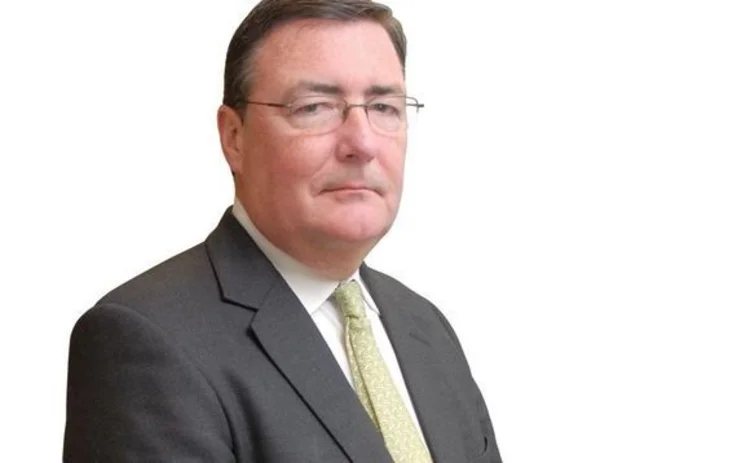
The slender margins charged by upstart interest rate swap clearer International Derivatives Clearinghouse (IDCH) are "bordering on reckless", says Roger Liddell, chief executive of its main rival, LCH.Clearnet. IDCH denies the claim - but it is increasing the margin it requires from clearing members in an attempt to win over big derivatives dealers, who are also sceptical the firm's existing standards, derived from the futures market, are high enough to absorb the risk associated with over-the-counter derivatives.
The two firms are competing for the huge portfolios of Fannie Mae and Freddie Mac, which are being pushed by their regulator to transfer the bulk of their swaps to a central counterparty (CCP) by the end of this year. But Liddell's comments - made in an interview with Risk - are more than the usual competitive rough-and-tumble, he insists.
"The biggest single concern I've got is that clearing becomes adopted - which is great in general - but is adopted along the lines used in the futures market. That's nowhere near adequate to survive the stresses and the default of a large clearing member. Quite apart from the competitive aspect, that genuinely worries me," he says.
The robustness of CCPs has been relegated to a side issue in the rush to tackle the opacity and counterparty risk that paralysed the derivatives market during the crisis. Politicians and regulators have argued the stability of the whole financial system would be enhanced if dealers had used CCPs as a counterparty for the bulk of their trades, rather than another dealer. But the argument falls apart if the CCPs are less than bullet-proof.
As far as their corporate memory is concerned, it means Lehman never happened - which I think is quite remarkable
LCH.Clearnet was the only swaps clearer operating during the crisis, and Liddell argues its standards have been proven appropriate - the firm charges margin to cover a five-day move in swaps prices, deriving an estimate of the maximum possible move from the past five years of historical data. LCH.Clearnet also applies a 100% confidence level, meaning there should be no situation in which an actual five-day move exceeds the firm's estimate. By contrast, IDCH's requirements are for margin to cover a one-day move. The firm uses a 99.7% confidence level - meaning the possibility of the estimate being exceeded is small, but not non-existent - and only looks back at 125 trading days of data.
"If you think about that, as far as its corporate memory is concerned, it means Lehman never happened, which I think is quite remarkable," says Liddell.
IDCH's chief risk officer, Michael Dundon, defends the firm's approach. "I vehemently disagree that any risk management procedure we have is reckless. If our margins are lower than theirs, that is a decision they have made based on methodology I'm not aware of. But our back-tested view of how we do things - from initial margin to variation margin and our strongly stress-tested guarantee fund - is anything but reckless," he says.
Dundon says IDCH's margin standards are a minimum - the margin levels implied by those standards would be $300 per $100,000 of notional cleared on a two-year swap contract. The firm currently requires $700 of margin per $100,000 and is increasing that to cover a three-day move at the behest of the derivatives dealers whose business it is hoping to win. "Increasing margins to cover a three-day move is additive to an already high level of protection," says a spokesman for the firm. "The decision to accommodate this request was reasonable - IDCH thus will be employing a commercially acceptable level of margin that is in excess of the level needed to neutralise risk."
A further mitigating factor is IDCH's business model. Its service promises to convert interest rate swaps into interest rate swap futures - contracts that aim to replicate the economic effect and cashflows of a swap, but wipe out the tailored features of many OTC trades. The simpler futures contracts come with less price risk and should therefore attract lower margins, Dundon argues.
His rival isn't convinced. "Absolutely not. No. It's the same risk, just represented using a different financial instrument essentially," says Dan Maguire, director and head of over-the-counter interest rate and foreign exchange derivatives, risk and operations at LCH.Clearnet.
In competitive terms, the bottom line is the cost advantage IDCH enjoys is likely to be considerable, says LCH.Clearnet's Liddell. He estimates his own firm's margins could be two or three times higher than those charged by IDCH.
How will that affect the battle for Fannie and Freddie's portfolios? "I think it's impossible for any price-sensitive customer not to consider it, but our hope would be they are now in a phase where they're getting beyond the attractiveness of posting less margin and are really assessing how they feel about the residual risk," Liddell says. One path could be for the mortgage giants to split their portfolios up, clearing the simpler, shorter-dated swaps with IDCH and the more unwieldy, riskier trades with LCH.Clearnet, he adds.
The May issue of Risk will include a feature looking in detail at risk management standards for CCPs.
For a trial to Risk magazine, please click here.
Click on the link below for another recent story on LCH.Clearnet.
Further reading
コンテンツを印刷またはコピーできるのは、有料の購読契約を結んでいるユーザー、または法人購読契約の一員であるユーザーのみです。
これらのオプションやその他の購読特典を利用するには、info@risk.net にお問い合わせいただくか、こちらの購読オプションをご覧ください: http://subscriptions.risk.net/subscribe
現在、このコンテンツを印刷することはできません。詳しくはinfo@risk.netまでお問い合わせください。
現在、このコンテンツをコピーすることはできません。詳しくはinfo@risk.netまでお問い合わせください。
Copyright インフォプロ・デジタル・リミテッド.無断複写・転載を禁じます。
当社の利用規約、https://www.infopro-digital.com/terms-and-conditions/subscriptions/(ポイント2.4)に記載されているように、印刷は1部のみです。
追加の権利を購入したい場合は、info@risk.netまで電子メールでご連絡ください。
Copyright インフォプロ・デジタル・リミテッド.無断複写・転載を禁じます。
このコンテンツは、当社の記事ツールを使用して共有することができます。当社の利用規約、https://www.infopro-digital.com/terms-and-conditions/subscriptions/(第2.4項)に概説されているように、認定ユーザーは、個人的な使用のために資料のコピーを1部のみ作成することができます。また、2.5項の制限にも従わなければなりません。
追加権利の購入をご希望の場合は、info@risk.netまで電子メールでご連絡ください。
詳細はこちら 市場
Alphabet, Micron ramp up FX hedging
Tech pair leads FX derivatives surge in year to Q2, while notionals at Apple and Johnson & Johnson decline

OTC市場に参入するディーラーが増えている――しかし、その数は十分なのか
2026年のディーラーランキング:データによると、多くの市場でセルサイドの参加企業数が増加していることが示されています。また、大手バイサイド企業にとっては選択肢が限られている可能性も示唆されています。

マヌエラ・ヴェローゾ氏が語る、銀行がAIのビジョンを現実のものにする方法
JPモルガンの元AI研究責任者は、自由な探究こそが技術の真の可能性を引き出すと述べています

KOSPIとウォン相場の連動性が弱まる中、トレーダーたちは引き続き警戒を緩めていない
ボラティリティが沈静化するにつれ、ネガティブ・エクイティとFXの相関関係は正常化していますが、ファンドは今後の機会を視野に入れています
銀行各社は、オプションのヴァンナ・ポジショニングが2024年のボラティリティ急上昇を反映していると警告している
極端なショートポジションは、米国株式市場の売り圧力によるボラティリティの反応をさらに悪化させる可能性があります

「スーパーサイズ・ミー」:米国の大手住宅メーカーが市場シェアを拡大
2026年のディーラーランキング:提出書類によると、米国のファンドや保険会社において、5社の国内ディーラーへの取引が増加していることが示されています

ステーブルコイン・コンソーシアムは、銀行による単独発行に向けた「過渡的な」段階である可能性がある
シティグループの元決済部門責任者であり、Ubyxの創業者である同氏は、すべてのG-Sibsが独自のコインを発行するようになると述べています。

批判派は、パーペチュアルはすべてフロスだと言っています。しかし、数字はそうではないことを示唆している
TradFiを原資産とする永久先物に対する堅調な未決済建玉は、CMEやEurexといった既存の取引所にとって脅威となる可能性があります