Questions raised over UK’s forex volume surge

Market participants attribute a range of factors to the 23% rise in foreign exchange turnover in the UK reported by the Bank of England's FX Joint Standing Committee on July 25
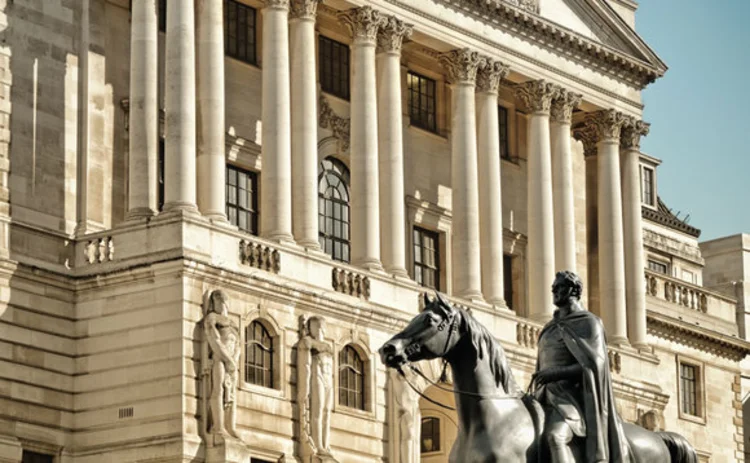
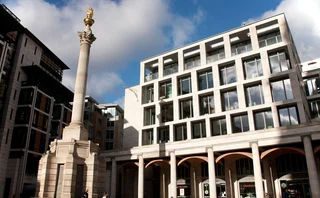
Close up of Bank Of England facade with the statue of Duke of Wellington Statue created by Francis Chantrey City of London England

Senior market participants and industry association officials have expressed surprise at a 23% rise in foreign exchange turnover in the UK that came to light last week, with speculation it could be attributed to a rise in high-frequency trading activity in London.

On July 25, the Bank of England's Foreign Exchange Joint Standing Committee (JSC) reported in its semi-annual turnover survey that average daily reported turnover in the UK had jumped to $2,191 billion in April; 23% higher than in October 2010 and 30% higher than a year earlier.

Average daily turnover in spot rose by 43% year-on-year, climbing from $642 billion in April 2010 to $919 billion in April this year, while average turnover in swaps rose from $756 billion to $909 billion in the same period.

The JSC provided little explanation as to why the UK might have experienced such a dramatic rise in spot and swaps volume, but figures for North America released on the same day by the Foreign Exchange Committee at the Federal Reserve Bank of New York were much more modest. Average daily volume in over-the-counter FX instruments reached $799 billion in April, up just 3.5% from $772 billion in the October 2010 survey.

Although the UK would be expected to attract greater volumes than North America, given the dominance of London as a centre for forex, the startling disparity between the two sets of figures has baffled participants, with some attributing the UK growth to the increasing activity of high-frequency traders, and others suggesting it has been caused by a confluence of factors.

"We are making some enquiries as to how the data is counted, but we think the increase in London over New York is due to high-frequency types trading in London hours and so coming through London trading desks. When the pricing is held in London, the server is here so the volume is here," says Mark Johnson, global head of cash forex trading at HSBC in London.

The JSC data doesn't explicitly show the extent to which the volume increase might be due to high-frequency trading activity, but it does reveal a sharp increase in the average daily spot volume transacted by non-bank financial institutions, which jumped from $209 billion to $300 billion between October and April.

David Clark, chair of the Wholesale Markets Brokers' Association in London, believes high-frequency trading is one of a number of factors that might have contributed to the volume spike, with others including the eurozone crisis, the effects of the Japanese earthquake and subsequent G-7 intervention in March, the growth of retail forex and the regulatory environment that makes forex an attractive asset class for banks seeking capital relief.

"The 23% rise in volume is an arresting number, but it's probably consistent with a number of forces that have come together at once. Consistently over the years higher forex volumes have been associated with a combination of economic and political turbulence, and we've seen this in spades recently. When the survey was taken in April, volumes are likely to have been high in the aftermath of the earthquake and with the European situation worsening," says Clark.

Meanwhile foreign exchange committees in other financial centres also revealed volume spikes on July 25, albeit on a lesser scale. The Tokyo Foreign Exchange Market Committee reported that average daily turnover in spot, swaps, forwards and options had increased from $264 billion in April 2010 to $285 billion in April 2011.

The Singapore Foreign Exchange Market Committee reported that average daily turnover in spot, outright forwards and forex swaps had increased by 12.9% since October, reaching $314 billion in April. Average daily reported turnover in OTC forex derivatives increased by 20.5% to $47 billion.

The Canadian Foreign Exchange Committee reported average daily turnover in spot, outright forwards and swaps increased by 5.9% from $57.8 billion in October to $61.2 billion in April. Average daily turnover in forex derivatives jumped by 14.7% over the same period, reaching $3.9 billion. That figure encompasses a particularly large increase of 38% in currency swaps volume.

Lastly, the Australian Foreign Exchange Committee reported average daily turnover in all OTC forex instruments increased by 12% from October to April, when it reached $219.1 billion. Spot, outright forwards and swap transactions made up the bulk of that volume, while volume in OTC options and cross-currency interest rate swaps declined by 7% since October, dipping to $9.1 billion, although it was still up 43% on the previous year.

While all foreign exchange committees reported overall volume increases in April, it is the 23% rise in UK turnover that sparked the most questions and discussion in the market.

"Volumes traded on the major electronic spot forex trading platforms have not risen over the same period, so the data indicates a genuine increase in market share for the UK, rather than a loss for the US. The magnitude of the increase seen in the UK indicates this is probably a genuine result, rather than simply noise in the data," says HSBC in a research note.

Read more articles like this one at FXWeek.com

Only users who have a paid subscription or are part of a corporate subscription are able to print or copy content.

To access these options, along with all other subscription benefits, please contact info@risk.net or view our subscription options here: http://subscriptions.risk.net/subscribe

You are currently unable to copy this content. Please contact info@risk.net to find out more.

Most read articles loading...

You need to sign in to use this feature. If you don’t have a Risk.net account, please register for a trial.

Sign in
You are currently on corporate access.

To use this feature you will need an individual account. If you have one already please sign in.

Sign in.

Alternatively you can request an individual account here