
Feature

Bank risk manager of the year: Deutsche Bank
Bank risk manager of the year: Deutsche Bank

Corporate risk manager of the year: Microsoft
The first US clearing mandates came into force last year in three separate phases. While most corporates looked to take advantage of the corporate hedging exemption, Microsoft decided right from the start to voluntarily clear everything

Sovereign of the year: Riksgälden
Sweden's national deficit forecast roughly trebled at the start of this year, after the central bank decided to boost its US dollar reserves. The Riksgälden publicly questioned the need for the money - but had to go through with the financing. This year…
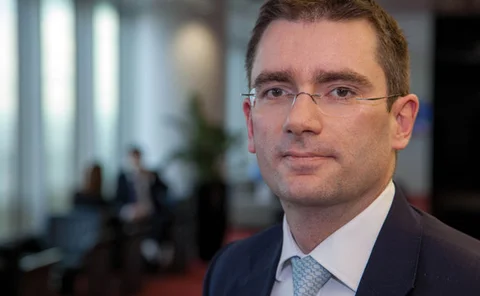
Deal of the year: Arqiva/HSBC
Deal of the year: Arqiva/HSBC

Insurance risk manager of the year: Axa
Axa moved early to address lapse risk concerns – now a pressing issue for the French insurance sector – and has also been vocal on regulatory change

Hedge fund of the year: Chenavari Investment Managers
With around $1 billion deployed in capital relief trades and the same amount in direct lending, Chenavari has found a sweet spot for investors - but a danger area for regulators

Lifetime achievement award: Wilson Ervin
Lifetime achievement award: Wilson Ervin

Pension fund risk manager of the year: PKA
After moving to Eonia discount rates for its swaps in 2011, Denmark's PKA decided to make Eonia the benchmark for its hedge portfolio at the end of 2012. It's a smart move, dealers say - but one with some risks of its own

Quant of the year: Michael Pykhtin
The banking rulebook is becoming increasingly complex, so regulators need good quants to design and explain it - but they must also tackle the big questions of the crisis

Derivatives house of the year: HSBC
Derivatives house of the year: HSBC

Risk management system of the year (bank): Barclays
Hedge fund clients of Barclays can use the bank's own margin calculator to construct their portfolios - while the bank uses it to manage net counterparty exposures. Both sides benefit

Risk management system of the year (vendor): Markit Group
Capital and funding efficiency is a new discipline for derivatives desks, and there is a shortage of comprehensive systems - so Lloyds Banking Group teamed up with Markit to build one

Trading technology product of the year: Nasdaq OMX
Trading technology product of the year: Nasdaq OMX

In-house system of the year: Royal Bank of Scotland
A 30-fold increase in its computing grid, enabling coverage of 90% of the bank's derivatives business - a two-year overhaul of the counterparty risk framework at Royal Bank of Scotland wins this year's in-house system award

Vague Volcker causes confusion
Vague Volcker bemuses

CFTC cross-border guidance 'has the feel of a rule', lawyers agree
A rule by any other name

Not too big to fail: Has US crossed bank resolution Rubicon?
Not too big to fail?

People: Brevan Howard hires HSBC’s forex derivatives chief
Vincent Craignou moves to Brevan Howard, Gavin Wells takes responsibility for CDSClear, and Thomas Poppensieker takes Deutsche risk role

Structured deposits face uncertain future under UK ring-fence plans
Caught in the net

EMR heralds greater government intervention in UK power
UK Electricity Market Reform, which is set to come into effect in July, will introduce a level of government intervention not seen in the country’s power market since the early 1990s. The impact will be felt by UK power firms and could ripple across…

Crude-by-rail data gains in value for traders
As an increasing volume of crude oil is transported via North America’s railroads, market participants are growing hungry for data and market intelligence on crude-by-rail. Such insight had been in short supply, until recently. Alexander Osipovich reports

Insurers to ramp up private equity exposure in 2014
Insurers are rethinking their investment strategies and beginning to increase their exposure to private equity. Some are even looking at it from an asset-liability management perspective.
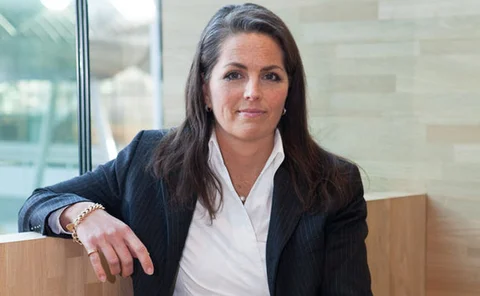
AMA, RCSAs and dealing with Libor at Rabobank
Dutch bank Rabobank has shaken off its Libor label pretty quickly, leaving it to focus on its co-operative roots, the AMA and its RCSA roll-out. Anne Snel-Simmons, head of operational risk management at Rabobank, talks to OpRisk about the challenges of…

The rising problems of PEPs
Instability in the Middle East and Africa coupled with growing regulatory pressure on financial institutions has raised the profile of political risk for banks – in particular, the problems of dealing with politically exposed persons, or PEPs, as…