Moscow Exchange closure leaves equity swap contracts in limbo
Isda plans to issue guidance on the application of commonly used disruption event clauses
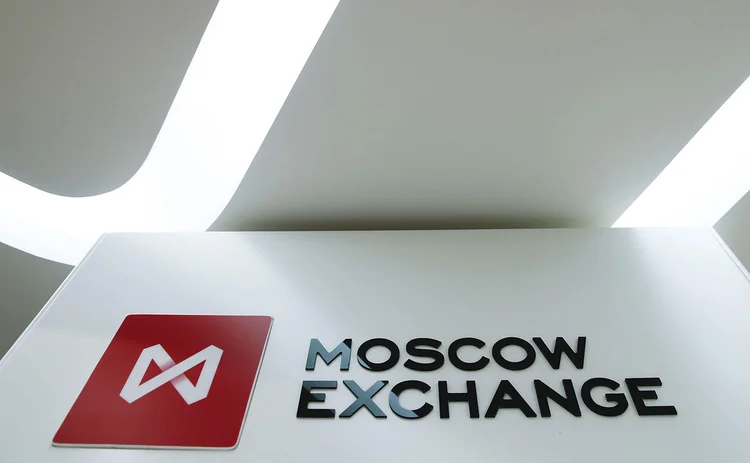
Over-the-counter equity derivatives referencing Russian stocks could be abruptly closed out or forced to settle on subjective valuations if the Moscow Exchange remains closed for an extended period.
Under equity definitions published by the International Swaps and Derivatives Association, a calculation agent – typically the dealer counterparty to a trade – is tasked with valuing swap contracts in the event of an eight-day stock market closure. Additional clauses in confirmation agreements, which are often heavily negotiated, could force the removal of Russian securities from reference baskets, or trigger full contract terminations.
Isda held a meeting with market participants on March 3 to determine the scope of standard clauses used in swap contracts with a view to issuing new guidance on how they should be applied in light of recent events.
“We’re following our standard procedure with working group members in order to identify where issues lie and ensure we provide guidance useful to them in terms of which contractual terms might be applicable,” says Rick Sandilands, senior counsel for Europe at Isda.
“We’re talking to our equity groups about which markets have closed, how long they have been closed for, what the impact would be if they reopen in a certain timeframe and what the impact would be if they don’t reopen in a certain timeframe.”
Isda has issued similar guidance when stock markets have shut down in the past, such as during the extended Lunar New Year holiday in 2020.
Market shutdown
The Moscow Exchange shut its doors on February 25 after western governments announced a slew of sanctions against Russian banks and oligarchs in response to the country’s invasion of Ukraine. The Bank of Russia has confirmed that trading will not resume until March 9 at the earliest.
Some see little chance the exchange will reopen in the short term. “I find it hard to believe given the sanctions and their economic impact that anything is going to happen any time soon,” says an executive at a US exchange.
Under Isda’s equity definitions, a market closure would push valuation and settlement of affected securities to the next trading day. If the market remains closed for eight consecutive days, a calculation agent becomes responsible for valuation.
Lawyers say the fate of individual contracts will be determined on a case-by-case basis.
“There’s a lot of language out there that exists in published and widely used industry templates but whether or not any of that applies to any specific trade really depends on what the individual parties have negotiated, determined on a trade-by-trade review,” says Harry Jho, founder of Harry Jho LLC, a law firm specialising in equity derivatives trading agreements.
“You generally get a close-out provision, but that doesn’t necessarily mean you have it on all the trades that were affected. If you want to know the answer, you have to read your docs with the counterparty, taking into account how the situation is developing.”
What’s going on right now is so broad it could well be triggering more than one event
Harry Jho, Harry Jho LLC
The documentation for equity derivatives tends to be more bespoke than for interest rate and credit instruments, with many contracts including an array of disruption event triggers that could force counterparties to take action. For instance, a hedging disruption event that interferes with a dealer’s ability to manage its risk could force the termination of Russia-focused contracts. Contracts referencing a basket of stocks may also contain disruption clauses that could cause affected underlyings to be removed.
“What’s going on right now is so broad it could well be triggering more than one event,” says Jho. “Not every event has the same exact consequence. Some might trigger partial cancellation of only the affected stocks in a basket, some might trigger complete cancellation, or a postponement option if it’s been separately negotiated. You might find yourself in a situation where there’s a potential range of outcomes and how those get applied will depend on the broader circumstances surrounding the contract, and which rights a party actually uses.”
Contracts that contain only Russian underlyings are likely to be terminated, he adds. Where Russian stocks are part of a wider basket of thousands of names, those underlyings are more likely to be removed, allowing the contract to continue.
Force majeure clauses would also come into play if it were impossible for parties to make payments after eight business days. These clauses are unlikely to trigger for equity contracts, according to another industry lawyer, though they could still be terminated for other reasons.
“This termination right [force majeure] is only exercisable if it is impossible or impracticable for a party to make or receive payments due to a force majeure event or act of state outside of its control,” says the lawyer. “There are different illegality and change-in-law termination triggers if dealing in Russian equities was prohibited by sanctions.”
Tricky calculation
Calculation agents could have a hard time valuing derivatives contracts in the current circumstances. Proxies are few and far between – the London Stock Exchange has suspended trading in 36 Russian companies including Sberbank, Gazprom and Lukoil after the stocks shed almost all their value.
“The contract will provide a broad, general-purpose methodology for how you run a close-out process. But where the rubber meets the road of actually getting quotes when there are no quotes available or estimating the value of securities that haven’t traded in a week, those are practical challenges with no clear answer,” says Karl Fey, chief operating officer at Harry Jho LLC. “When you look at the level of the contract, if there’s a dispute over a calculation, the resolution process either references a third-party pricing source like an exchange or a vendor screen, or it will be a market poll. Beyond that, there’s not much else the contract can do.”
While the dealer typically acts as the calculation agent, some firms have negotiated a more active role in the process.
“A lot of the buy side might have negotiated some sort of steps where, if there is a calculation agent determination, they can dispute it within a number of days and there’s a methodology to resolve that. Some have a joint role, where both parties come to an agreement on the provisions. A lot of the time they calculate that across all of their contracts,” says one industry expert.
While participants believe direct Russian exposure in the $7.5 trillion over-the-counter equity derivatives market is limited to a small number of hedge funds and large asset managers with Russia-specific funds, the number of contracts impacted could be high in a market dominated by global baskets and indexes. The majority of affected contracts are likely to be equity swaps.
While it’s not uncommon for pricing disagreements to be fought out in the courts, Jho expects most of these cases to be resolved without litigation.
“Anything can go to litigation, but in this instance, for a broad global index, it’s less likely because most of the exposure is not in Russia – the exposure to a Russian underlier would be a fraction of the overall trade. In that type of scenario there’s going to be more room for parties to work out a price,” he says. “Parties are calculating their exposures, reviewing their contract terms, and in nearly all cases they will sort out what adjustments need to be made to the contracts and they’ll attempt to work out a mutual agreement.”
Additional reporting by Costas Mourselas
Only users who have a paid subscription or are part of a corporate subscription are able to print or copy content.
To access these options, along with all other subscription benefits, please contact info@risk.net or view our subscription options here: http://subscriptions.risk.net/subscribe
You are currently unable to print this content. Please contact info@risk.net to find out more.
You are currently unable to copy this content. Please contact info@risk.net to find out more.
Copyright Infopro Digital Limited. All rights reserved.
As outlined in our terms and conditions, https://www.infopro-digital.com/terms-and-conditions/subscriptions/ (point 2.4), printing is limited to a single copy.
If you would like to purchase additional rights please email info@risk.net
Copyright Infopro Digital Limited. All rights reserved.
You may share this content using our article tools. As outlined in our terms and conditions, https://www.infopro-digital.com/terms-and-conditions/subscriptions/ (clause 2.4), an Authorised User may only make one copy of the materials for their own personal use. You must also comply with the restrictions in clause 2.5.
If you would like to purchase additional rights please email info@risk.net
More on Markets
Hedge fund holdouts boost euro steepener bets into year-end
After some investors took profits in September, those that stayed in the trade are now doubling down
Hong Kong tech stocks flirt with peak vega on structured boom
Note issuers sell vol to flatten exposures as Alibaba, BYD, Tencent zig-zag lower
Dutch pensions weigh hedge unwinds ahead of transition
As January 1 nears, Dutch pension funds consider unwind timing to avoid rush to the exit in thin year-end liquidity
Dealer views mixed over future of profitable EM FX carry trade
Emerging market FX carry trades have generated 7.5% returns since April, but dealers question longevity
Playing the yield: rates rev up structured products
Higher government bond yields and steeper forward curves fuel demand for new range of fixed income structures
Banks scale back short-dated FX swaps trading, BIS finds
Interbank FX swaps hit by higher short-term hedging and funding costs, while longer-dated forwards activity jumps
LSEG streamlines post-trade efficiency across cleared and uncleared markets
LSEG’s Post Trade Solutions extends clearing-style efficiencies to bilateral markets, helping Apac clients navigate rising margin and risk management pressures
Ardagh review sparks CDS warnings
Lawyers warn a panel’s decision on the company’s restructuring will have wider implications