Op risk data: SEC says no to Charles Schwab robo-adviser

Also: China steps up scrutiny of wealth management products; Libor fines still rumble on. Data by ORX News
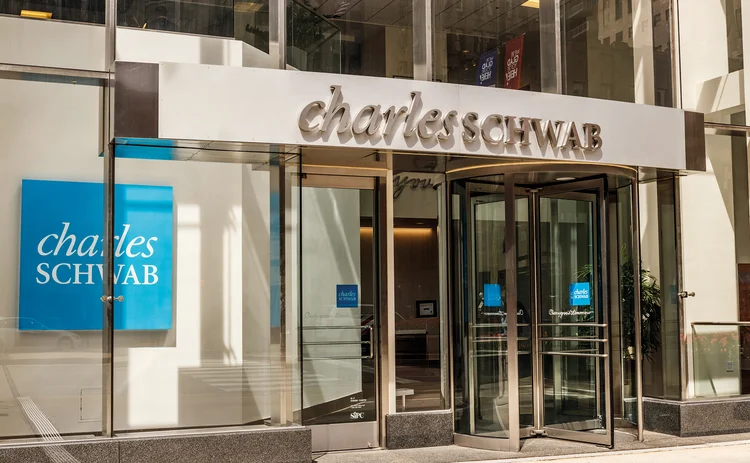
Charles Schwab, Chicago

Charles Schwab suffered June’s largest loss by a considerable distance – the broker was fined $186.5 million for making false and misleading statements about its robo-adviser product, Schwab Intelligent Portfolios.

The US Securities and Exchange Commission (SEC) found that three of Schwab’s subsidiaries had stated that investment allocation was determined through a “disciplined portfolio construction methodology” that would ensure “optimal returns” for clients. Algorithms were, in fact, configured to make the firm the most money. Additionally, cash from these investments was transferred to Schwab’s affiliate bank, loaned out, and Schwab kept the difference between the interest on these loans and the returns paid to its robo-adviser clients. Not only did Schwab fail to adequately disclose this conflict of interest, but it also advertised SIPs as a no-advisory-fee product.

Between 2015 and 2021, Schwab’s misconduct may have cost its clients up to $500 million in total. The broker also agreed to an independent review of its advertising, marketing and disclosure policies in relation to its robo-adviser services to ensure compliance.


An executive of payday loan company Sky Group, Efrain Betancourt, defrauded investors of $39.3 million in the month’s second-largest loss. The SEC took Sky Group to court, and obtained a penalty of $7 million plus disgorgement of approximately $32.3 million.

Betancourt drew in over 500 retail investors by making false claims about the company’s profitability and alleging that the promissory notes he sold them would deliver annual returns of between 24% and 120%. Of the $66 million raised from investors, only $12.2 million was used to finance payday loans, while Betancourt misappropriated approximately $6.5 million for personal use. The 52 external sales representatives that Sky Group hired to expand their operations were neither registered as brokers nor associated with registered brokers and dealers. Additionally, the group itself failed to acquire a licence to deal in payday loans, and had to enter a consent order with the Washington State Department of Financial Institutions on June 18, 2019. The following month, Sky Group was forced to suspend investor repayments.

On September 29, 2021, the SEC announced that it was bringing charges against the group. The regulator alleged that investments were pooled together in Sky Group’s bank accounts, and false statements were made by Betancourt and his representatives concerning the safety of the notes, including promises that they were secured or guaranteed. Sky Group and Betancourt were charged with failing to adhere to anti-fraud and registration provisions in securities legislation, while Betancourt was also accused of acting as an unregistered broker.

The month’s third-largest loss was suffered by UBS, which reached a $24.6 million settlement with the SEC over its Yield Enhancing Strategy. UBS’s financial advisers did not understand the significant downside risks associated with the strategy, and mis-sold it to customers as a result.

In late 2015, UBS poached a group of financial advisers from Credit Suisse with awards of approximately $50 million. The advisers had developed YES, an option overlay strategy that sold short-term out-of-the-money European-style put and call options on the S&P 500, and hedged those positions by purchasing below-market puts and above-market calls with the same duration – an options trading strategy dubbed ‘iron condor’. The former Credit Suisse team conducted roadshows and pitched it over the phone to advisers across UBS’s US offices. The bank’s advisers relied solely on a blast email from the team that had developed YES and a 17-page slide deck to understand the product. YES was thus marketed as ‘hurricane insurance’, with the possibility of experiencing significant gains during periods of high volatility by selling options at premium prices.

US Securities and Exchange Commission
The SEC, flying the flag of Washington, DC

By February 2017, internal audits confirmed that financial advisers did not understand and adequately communicate and recommend the product to clients, and, a month later, UBS closed the strategy to new clients. Too late for clients – in early 2018, YES accounts began experiencing losses caused by high market volatility, and, by the end of the year, they were down 18%.

In June’s fourth-largest loss, the Swiss Federal Criminal Court ordered Credit Suisse to pay a Sfr2 million ($21.5 million) fine and to return Sfr19 million it had obtained from a Bulgarian drug cartel, which could not be confiscated because of the bank’s internal deficiencies. The court also confiscated an additional Sfr12 million worth of assets.

It was the first time a major bank had faced criminal charges in a Swiss court. Credit Suisse was found guilty over its role in laundering money for the cartel. Former employees of the bank were also found guilty, including former Bulgarian tennis player Elena Pampoulova-Bergomi, who liaised with the criminal organisation and executed their instructions.

Between 2004 and 2008, Credit Suisse accepted deposits of millions of euros, despite the obviously suspicious origin of the funds. The court found that the bank had exhibited deficiencies in management and compliance and legal departments, with regard to both its client relationship management and its implementation of anti-money laundering regulations. Reportedly, Credit Suisse had learned of murders and cocaine smuggling connected to its clients, but continued to accept and manage their money.

Closing the month’s top five is NatWest Markets, which agreed to a $21 million settlement with a class of investors accusing the firm of manipulating the Swiss franc Libor, along with a cartel of other banks, including Deutsche Bank, JP Morgan, Credit Suisse and UBS. Deutsche Bank reached a similar settlement of $13 million, while JP Morgan settled for $22 million in 2017 (jump to box: In focus).

Investors sued the banks in February 2015, and claimed that they had undercut competition and made large profits by fixing the bid-ask spread. The cartel allegedly co-ordinated efforts to manipulate the price of the Swiss franc Libor, which they then used as a reference to price other derivatives, thereby affecting US investors.

The settlements were the result of years of negotiations, with both the first and second pleas being rejected. Both NatWest and Deutsche Bank agreed to co-operate with the investors in the litigation against the remaining co-conspirators.


Spotlight: China intensifies focus on wealth management spin-outs

The China Banking and Insurance Regulatory Commission (CBRC) has recently targeted the wealth management subsidiaries of Bank of China and Everbright Bank in its first regulatory action since new rules governing this activity took effect at the start of 2022. Bank of China (BOC) was fined 2 million yuan ($298,700) and its subsidiary 4.6 million yuan, while Everbright had to pay 4 million yuan and its subsidiary 4.3 million yuan for various risk-related and management failures pertaining to wealth management products (WMPs). WMPs are uninsured financial products sold in China.

It was the first time the wealth management units of state-owned banks had been penalised since they were spun out from parent banks in 2019. Back in October 2018, the CBRC announced its intention to allow funds from WMPs to be invested in stocks, and subsequently issued new regulations allowing commercial banks to establish wealth management subsidiaries. The regulator’s aim in spinning out the wealth management units was reportedly to remove any notion of the parent bank providing implicit guarantees for WMPs.

Banks had until the end of 2021 to meet the new requirements, but BOC and Everbright fell short. Everbright’s wealth management unit committed five violations, including a failure to maintain sufficient high-liquidity assets in open-ended publicly offered WMPs, and inconsistent or inaccurate information in WMP promotions. Meanwhile, BOC’s wealth management unit committed six violations, including excessive leverage in open-ended publicly offered WMPs, and the use of amortised cost valuations for investment assets, in breach of regulations. Other violations included breaching limits for single security exposures in the WMPs.

WMPs have been a long-standing source of compliance failures for Chinese banks. In December 2018, when the products were still sold directly by parent banks, six banks including Everbright were fined over issues including misleading advertising and guaranteeing principal.

Jump to top

In focus: Libor-rigging settlements rumble on

Over a decade after the scandal first broke, settlements relating to the manipulation of interbank offered rates are still being reached in 2022. Cases in the dollar markets have generally concluded, and the more recent operational risk losses tend to involve smaller markets such as Switzerland or Singapore.

Most recently, at the end of June 2022, NatWest (formerly RBS) and Deutsche Bank agreed to pay $21 million and $13 million respectively to settle claims by US investors that they had colluded to fix the bid-ask spread for Swiss franc Libor-based derivatives. The investors filed a suit in 2015 against several members of the British Bankers’ Association Swiss franc Libor panel, with JP Morgan, Credit Suisse and UBS also named among the defendants.

JP Morgan was reportedly the first to reach an agreement with the investors in August 2017, when it agreed to pay $22 million. According to court documents in the JP Morgan case, the banks’ anti-competitive conduct extended between at least 2005 and 2009. NatWest, JP Morgan, UBS and Credit Suisse have collectively paid over $2 billion in fines to US and UK regulators and the European Commission over their manipulation of the Swiss franc Libor.

In May this year, US investors finalised settlements against 19 Singapore interbank offered rate (Sibor) panel members, which had allegedly artificially high or low Sibor or swap offer rates to benefit the positions of their traders, and conspired with other panel members to achieve “collective financial benefit”. The complaint, filed in July 2016 by two hedge funds, initially named 46 defendants, but claims were only upheld against the 19 institutions that were members of the Sibor panel.

The first to settle were JP Morgan and Citibank, which agreed to pay $11 million and $10 million respectively in 2018. ING, Credit Suisse, HSBC and Deutsche Bank had individual $11 million settlements preliminarily approved on 13 May, while the remaining 13 defendants agreed to a combined settlement of $91 million. It has not been disclosed how the $91 million would be split among the following banks: United Overseas Bank, Australia and New Zealand Banking Group, Bank of America, Barclays, BNP Paribas, Commerzbank, Crédit Agricole, DBS, MUFG, Oversea-Chinese Banking Corporation (OCBC), NatWest (formerly RBS), Standard Chartered and UBS. In total, investors recovered a total of approximately $155.5 million.

There are still some outstanding cases in larger markets such as the euro. In May, it was announced that Crédit Agricole had submitted a settlement of $55 million for preliminary approval. The class action, filed by US investors in 2013, accused the French bank, along with five other firms, of colluding to rig the euro interbank offered rate (Euribor) between 2005 and 2011. Crédit Agricole was the last to settle the allegation. Barclays, HSBC, Deutsche Bank, JP Morgan and Citigroup agreed similar settlements, totalling $491.5 million, with the investors in 2018.

The methods allegedly used by the institutions included co-ordinating false Euribor submissions – for example, through instant messaging and emails sent via the Bloomberg network. They were also accused of ‘pushing cash’ – borrowing or lending euros at above or below prevailing market rates to manipulate the cost of interbank borrowing. A further allegation was spoofing – transmitting false bids and offers for money-market instruments through brokers to change the perceived cost of borrowing euros.

Jump to top

All information included in this report and held in ORX News comes from public sources only. It does not include any information from other services run by ORX, and we have not confirmed any of the information shown with any member of ORX.

While ORX endeavours to provide accurate, complete and up-to-date information, ORX makes no representation as to the accuracy, reliability or completeness of this information.

Only users who have a paid subscription or are part of a corporate subscription are able to print or copy content.

To access these options, along with all other subscription benefits, please contact info@risk.net or view our subscription options here: http://subscriptions.risk.net/subscribe

You are currently unable to copy this content. Please contact info@risk.net to find out more.

Most read articles loading...

You need to sign in to use this feature. If you don’t have a Risk.net account, please register for a trial.

Sign in
You are currently on corporate access.

To use this feature you will need an individual account. If you have one already please sign in.

Sign in.

Alternatively you can request an individual account here