

Derivatives house of the year: Citi
Risk Awards 2026: Rev up, RWAs down, as US bank gets back on track (with added XiNG and XiP)


One of the fundamental challenges in banking is that – at any point in time – a bank’s capital base is pretty much fixed, while opportunities and risk are not. That makes it hard to ensure an organisation commits the right amount of this scarce resource to its various businesses.
Traditionally, it’s up to someone who sits in a fancy corner office to make these decisions – and then to live or die by them – an arrangement that always struck Andy Morton as “kind of crazy”.
Citi’s head of markets says there’s a better way to do it – allocate capital dynamically, so it follows the opportunities, and engage the businesses in doing so.
At a time when Citi has plenty to be proud of – a banner year for both rates and equities, marked by some stand-out, jumbo deals – it’s the bank’s new approach to managing capital, and the technology that underpins it, that could prove the most lasting achievement.
The derivative engine is thriving
Andy Morton, Citi
The foundations for these changes were laid years ago. The sweeping turnaround plan unveiled by Citi chief Jane Fraser at the firm’s investor day in 2022 gave Morton the perfect opportunity to put his ideas on capital allocation into practice.
Citi’s markets division was set a goal of improving its ratio of revenue to risk-weighted assets (RWAs) by 100 basis points, in the medium term. When the plan was unveiled, investor day attendees were told that – all else being equal – a 10bp increase in this ratio would correspond to a 60–70bp improvement in returns.
“Within the business, we really started thinking, ‘Ok, how do we get to that target?’,” says Morton. “And we effectively designed a mechanism where the businesses have internal incentives to transact RWA limits with each other. That took it away from one person sitting in an office, listening to presentations and making allocations, to a much more sensible, economic-based method where everybody – 10,000 employees in markets – is looking for the best RWA opportunity, surfacing it, and possibly trading it with some other part of the business.”
Plenty of opportunities have been available. Revenues for the markets business were up by 14% for the first nine months of the year.
Citi topped Coalition’s rankings for G10 swaps in the first half of 2025 – up from third for the same period in the prior year. FX options revenues also more than doubled over the same period. Equities revenues were up 17% through the third quarter.
The bank also notched up some landmark transactions, notably acting as the swap hedge co-ordinator for a $12 billion debt offering by the Mexican government to shore up the finances of state-owned oil company Pemex in August, and providing a $9 billion FX swap for a sovereign client in the same quarter.
The businesses get the credit for that performance. In rates, Morton says the bank’s “origination skill has strengthened. We have the people, we have the product and we’re proud to put our capabilities to work for our clients”.
In equities, derivatives trading has helped to fire up the rest of the business. “Like a starter motor for an engine, equity derivatives has driven our performance. Whether it’s structured notes or strategic equity solutions, that has helped fund our growth in prime. The derivative engine is thriving and prime is starting to pick up,” he says.
When all of this is adjusted to take capital into account, the bank seems to be picking its spots more effectively.
Return on tangible common equity (RoTCE), which dipped to 7.4% in 2023, is running at a level of 13.5% as of end-September – that’s up from a little under 10% for the first nine months of last year. The fourth quarter often sees banks post lower returns, though.
“One of the things we’re most proud of is how effectively we have optimised our use of capital,” says Morton. “And the capital management mechanism has been a big part of how we’ve done it.”
Do the right XiNG
The technology foundations of Citi’s risk and capital management system were laid more than a decade ago. Morton first discussed the idea of establishing a common set of standards for pricing models with the bank’s quant and tech teams in 2014, when he was head of rates, with responsibility for quantitative analytics across markets. Everyone loved the idea and the project was given a codename – XiNG, an acronym for Xi Next Generation, with Xi being the internal nickname for Citi’s quant models.
And then, nothing happened.
Morton says: “After six months, I’d enquire: ‘Did you get any of your code put into XiNG?’ And they’d say, ‘I meant to. It’s such a good idea, we’re definitely going to do it’.”
This went on for a while. Eventually, around 2016, Morton assigned additional developers to the quant team on condition that they would only work on XiNG.
“Suddenly it just took off,” says Morton.

By 2022, every live trade on Citi’s books could be priced on XiNG. The bank’s group CIO, Jon Lofthouse, was leading operations and technology for markets at the time, and could see how the universal pricing library would open doors to a range of other applications.
“We had our entire markets business represented in this library,” says Lofthouse. “And that becomes very, very interesting, because now we can start looking at use cases front-to-back – not just in trading, but in our risk and finance division.”
For starters, all the trades on Citi’s books could now be valued in a consistent manner at the click of a button.
“We needed some infrastructure to really make that useful and meaningful,” says Lofthouse.
As early as 2018, the tech team had begun work on building a layer of services around XiNG, which they called Xi Platform, or XiP.
The first step was to assign a XiP code (yes, that’s pronounced zipcode) to every trade on Citi’s books so they could be retrieved via an API.
We have the people, we have the product and we’re proud to put our capabilities to work for our clients
Andy Morton, Citi
Next, they built a system – known as XiNG Calc – to provide on-demand compute capacity for end-users, sourced both internally and from external cloud providers.
The final piece of the puzzle was the XiNG Risk Store, where the results of calculations are archived so they can be re-used.
The end result is a market risk platform now used by every part of the business – from the front office to risk and finance. “After many, many years of investment and sticking with the plan, we find ourselves with a risk platform that is complete in terms of capabilities for our entire markets business,” says Lofthouse. “We have a set of services around trades, market data calculations and risk results that are used front-to-back across our entire organisation – not just in the front office, not just on a single trading desk, but across trading desks and within our risk and finance functions.”
XiP was rolled out to the risk and finance functions within markets in 2021 and 2023, respectively.
While XiNG’s capabilities are extensive and increasingly entrenched in the way the business operates, Morton stresses it is not intended to be a single, all-encompassing markets technology system.
“A single system for markets can’t be done,” he says. “You end up with different versions, all kinds of hassles. It’s just too complex a business to have one big system.”
He describes XiNG as “the backbone of our decentralised technology architecture”.
Each markets business – from commodities to rates – has its own system designed for its own needs. Those systems connect to XiNG and XiP – Citi’s common valuation library and trade database. “It’s not an option to not write your code in XiNG,” says Morton. “But it is an option to embed your code in your own system that’s on the desktops of the traders in your business.”
That, he says, “is consistent with the spirit of how we do things in markets at Citi”.
Bidding for RWAs
XiNG was essentially still just a risk and pricing engine – albeit a highly sophisticated, high-end one – when Citi’s markets division was set its new profitability targets in 2022. Quickly, Morton and his team began exploring capital management as a use case beyond pricing.
Like any other bank, Citi’s official capital metrics are crunched by the treasury and finance teams on a quarterly basis. For what Morton had in mind, the markets division would need to compute these metrics daily – for each trade, desk and business unit – and forecast them out to quarter end.
The markets XVA team, then led by Dina Faenson, took on the task of developing the tools necessary to run the calculations, starting with standardised RWAs. Over the next 18 months, they added the capabilities to assess all the various regulatory capital components that contribute to Citi’s RoTCE – standardised and advanced RWAs, leverage ratio, G-Sib surcharge and stress capital buffer – on a daily basis.
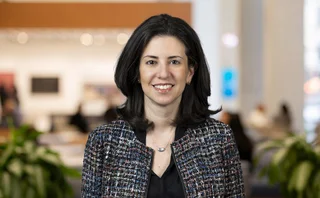
Morton, meanwhile, was looking for ways to incentivise Citi’s markets business to use capital more efficiently. After some trial and error, he settled on a quarterly auction mechanism. The general idea was that businesses that are having a relatively slower quarter should be willing to give up some of their RWA limit to units with more trades in the pipeline, for the right price.
The first RWA auction was held in early 2024. Morton, along with Faenson and Jia Chen, head of in-business market risk, assigned RWA budgets to the business lines as usual. The twist was that any unused capacity could be auctioned to the highest bidder in the final month of the quarter.
Like any new idea, it took time to catch on. At first, the business lines seemed unsure of how much they should bid or offer for RWAs. Some thought it was a gimmick. But with every passing quarter, pricing became tighter and the sizes got bigger. Before long, managing RWAs in this way became second nature.
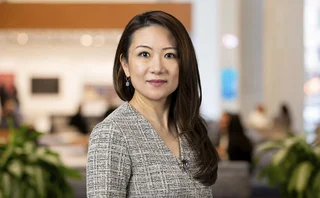
“It’s now part of our DNA across the board,” says Faenson, who is now head of markets counterparty trading and risk.
“That’s been a great cultural shift that we’re really proud of over the last few years,” she adds. “It’s about making sure we’re doing return-accretive business and growing in the right ways. Sales and trading think about capital profitability and not just revenue when they do business.”
The approach might prove an old axiom in markets: that providing traders with more information leads to better outcomes. And it’s not the end of the story. Morton continues to look for ways to create the right incentives for Citi’s trading desks to deploy capital optimally, introducing internal incentives to dynamically allocate RWAs outside of the quarterly auctions.
Passing the tariff test
The applications of XiNG within Citi’s markets division extend far beyond capital management.
When US president Donald Trump’s Liberation Day tariff announcement sent shockwaves through markets in April, the technology allowed Chen and her in-business risk team to construct scenarios and run stress tests on the fly, with full revaluation of positions.
“In the most foundational way, how it helps us in terms of actual risk management is that we can now run full revaluation stress tests using common sets of market reference data and apply that holistically across the trading book portfolio,” says Chen.
Full revaluation is the most accurate and computationally intensive way to estimate risk. Every position is revalued under various stress scenarios, using actual pricing models, rather than approximations or sensitivities.
You never want to be hamstrung by the risk that you keep on the books. Psychologically, you don’t want people to overly focus on that and then stop making markets
Deirdre Dunn, Citi

The XiNG library, coupled with the ability to dynamically source compute capacity and re-use archived calculations in XiP, means Citi’s risk teams can now run these calculations on-demand, which wasn’t previously possible.
“When the market is very volatile, we can run stress tests as needed on a full revaluation basis to capture any higher order risks, such as convexity profile, for some of the more exotic derivative products we trade,” says Chen. “And we can do that more effectively and efficiently across all the trades.”
Citi went into Liberation Day light on risk, with the rates business, for instance, operating at around 60% of its limits. As markets began moving in response to the tariff news, the big concern was that a surge in value-at-risk would drive up RWAs.
“In April, every day, we took a targeted action to reduce risk,” says Chen.
That allowed the bank to keep pumping liquidity to clients through the worst of the volatility.
“You never want to be hamstrung by the risk that you keep on the books. Psychologically, you don’t want people to overly focus on that and then stop making markets,” says Deirdre Dunn, head of global rates at Citi. “That’s why you keep risk light, come in nimble, and take these steps to ensure you can scale up in the moment.”
Citi’s rates business estimates it handled 25–30% of the risk transacted in popular relative value trades, such as invoice spreads – packages of swaps and futures traded at CME – in the week after the tariff announcement. The FX unit saw record daily electronic trading volumes, with hedge funds increasing their activity by 23% in the first four months of the year.
The discipline around risk management meant Citi was able to absorb some large trades in the weeks that followed – including one Asian client’s cross-currency hedge for a bond issuance that abruptly tripled in size at the end of April – when many dealers were capital constrained.
“For us, April was very much about executing a really disciplined risk management strategy,” says Chen. “What we did to manage risk in April and May, also meant we were not unduly constrained when we were thinking about meeting quarter-end RWA targets in June.”
Part human, part machine
While Citi’s derivatives businesses have increased revenues and grown market share this year, Morton is confident there is more to come.
The bank is following a barbell strategy of automating and electronifying flow trading on one end and capturing more episodic, strategic transactions on the other.
On the latter, the firm closed some eye-popping trades in 2025, headlined by the $12 billion interest rate swap hedge for Pemex and that $9 billion FX swap for one sovereign client.
Even businesses that don’t typically traffic in large, strategic transactions have gotten in on the act. “FX is not an episodic business by nature,” says Flavio Figueiredo, Citi’s global head of foreign exchange. “It’s more of a transactional flow business, but we have been working very closely in partnership with the investment bank on large, cross-border deals.”
That work has paid off, with Citi executing a bumper crop of deal-contingent hedges in 2025.
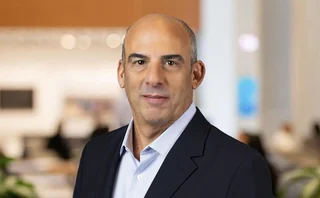
Morton gives much of the credit to Citi’s sales and trading teams. “You need experienced, sophisticated people – people who know the client and build enough trust that they say, ‘I have this issue’ – to originate these deals,” he says. “With these transactions, the client does not come to you saying, ‘I’ve written out a term sheet, can you give me a price?’. That’s never happened in my time on Wall Street. What happens is, the client describes their problem, and we find a solution. And that takes a certain amount of trust.”
The second prong of Citi’s markets strategy – electronifying flow trading – is more about investing in machines.
This presents different challenges for each asset class.
The FX business is already highly automated, with 75% of options trades now priced electronically. This level is even higher in spot. Electronic FX revenues were up by more than 40% in the first four months of the year, following upgrades to the algo suite and trading platform, according to Figueiredo. The firm is now working on automating what Morton calls the “last mile” of FX trades – investing in tools to help clients improve execution and hedging and reduce forecasting errors.
“Electronification for us is about eliminating as many manual steps and processes as possible, both on our side and on the client side,” says Morton.

Other businesses are catching up. The algo stack on the rates side has been completely rebuilt to reduce latency and improve pricing. Work is now underway on fully integrating fixed income exchange-traded funds (ETFs) into the central risk book for rates, with support for on-exchange market-making expected in 2026. The long-term plan is to combine algo execution and the single-dealer API to offer execution across a broad set of rates products, which Citi believes will be a first for the industry.
Electronification is also well underway in credit, where bid/offer spreads have continued to collapse with the growth of passive strategies and systematic trading.
Last year, Citi exited distressed debt and municipal bond trading, which were struggling to hit the firm’s new return targets.
This year, Mickey Bhatia, global head of spread products, reorganised that business. A new structured trading unit, led by Vikram Prasad, includes non-flow structured products across all asset classes. All flow credit trading has been combined under Mike Daniel, who continues to oversee securitised trading.
The common theme, according to Bhatia, is that “the whole flow ecosystem can be traded electronically”.
“The reason we combined them,” he says, “is because when clients are trading passively and more electronically, very similar drivers apply in all these markets, and they expect quality execution.”
The bank doubled down on this idea in June by hiring Paul Glezer, the former head of global portfolio trading at JP Morgan, to oversee the build-out of its electronic trading services for credit.
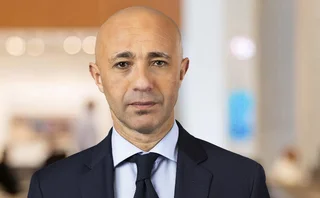
The push to electronify credit trading is in part defensive. Trading vanilla products such as investment grade corporate bonds is not nearly as profitable as it used to be. To stay in these markets, Citi must innovate.
Bhatia is convinced electronic trading will take hold in the credit markets faster than many expect. “You can sit back and say, ‘CLOs will never become that electronic’, but even that has surprised us and everybody else,” he says. “Just look at the CLO ETFs and how quickly they have grown.”
Citi is also continuing its push to become a top-tier player in equities, which entails investing in both people and technology over a multi-year horizon.
“A big part of our strategy is about consistency,” says Fater Belbachir, Citi’s global head of equities. “It’s about continuous investment in technology, continuous investment in people, and making sure we provide the right oxygen and organisation for them to deliver.”
That strategy, which began to take shape in 2020, is already starting to deliver, with equities revenues up 17% through the first three quarters, and a 24% jump in the third quarter alone. There are also signs of Citi making inroads with key clients. A trader at one large asset manager says his firm sometimes takes down Citi’s entire inventory in certain trades. “There are instances when we look at the liquidity, and if we’re convinced by it, we take out the entire capacity, so we can work with them on it and they don’t show it to the Street,” this person says. “I value that. Some banks can’t do it.”
Belbachir notes the momentum built up with certain client segments – especially hedge funds, which increased their prime balances with Citi by approximately 44% in the third quarter of the year. “Those balances did not go up overnight. It’s been a lot of work over the years,” says Belbachir. “What’s exciting is the momentum. This is a firmwide focus, which has delivered for us so far this year.”
Only users who have a paid subscription or are part of a corporate subscription are able to print or copy content.
To access these options, along with all other subscription benefits, please contact info@risk.net or view our subscription options here: http://subscriptions.risk.net/subscribe
You are currently unable to print this content. Please contact info@risk.net to find out more.
You are currently unable to copy this content. Please contact info@risk.net to find out more.
Copyright Infopro Digital Limited. All rights reserved.
As outlined in our terms and conditions, https://www.infopro-digital.com/terms-and-conditions/subscriptions/ (point 2.4), printing is limited to a single copy.
If you would like to purchase additional rights please email info@risk.net
Copyright Infopro Digital Limited. All rights reserved.
You may share this content using our article tools. As outlined in our terms and conditions, https://www.infopro-digital.com/terms-and-conditions/subscriptions/ (clause 2.4), an Authorised User may only make one copy of the materials for their own personal use. You must also comply with the restrictions in clause 2.5.
If you would like to purchase additional rights please email info@risk.net
More on Awards
Newcomer of the year: Abaxx Exchange
Abaxx Exchange traded more than 1.5 million contracts in Q3 2026 and has launched 18 futures across energy, battery materials and metals

Precious metals house of the year: Marex
Despite unprecedented market volatility, Marex remained committed to pricing risk across spot, forwards and swaps

CTRM software house of the year: Topaz Technology
Topaz Technology’s risk and valuation platform can be used on a standalone basis or integrated across customers’ existing CTRM systems

Natural gas/LNG house of the year: ENGIE
ENGIE stood out in the Apac gas markets with long‑term contracting activity and continued participation in the Japan Korea Marker benchmark

Derivatives house of the year: ENGIE
With more than 200 clients across 13 countries in Asia, ENGIE combines deep experience of physical energy markets with cross‑commodity derivatives expertise

Regulatory capital calculation product of the year: Regnology
Regnology’s cloud-native platform helps banks streamline regulatory capital calculation while strengthening strategic decision-making

Prudential regulation reporting system of the year: Regnology
Regnology’s cloud-native platform helps firms unify risk, regulatory reporting and finance on a single data foundation, using AI‑ready architecture to support future innovation

CTRM software house of the year: Hitachi Energy
Energy Risk Awards 2026: Software developer’s portfolio approach meets changing needs of energy market participants
