Adoboli: management was aware of unauthorised trades
Desk supervisor told traders to disobey orders, rogue trading defendant claims
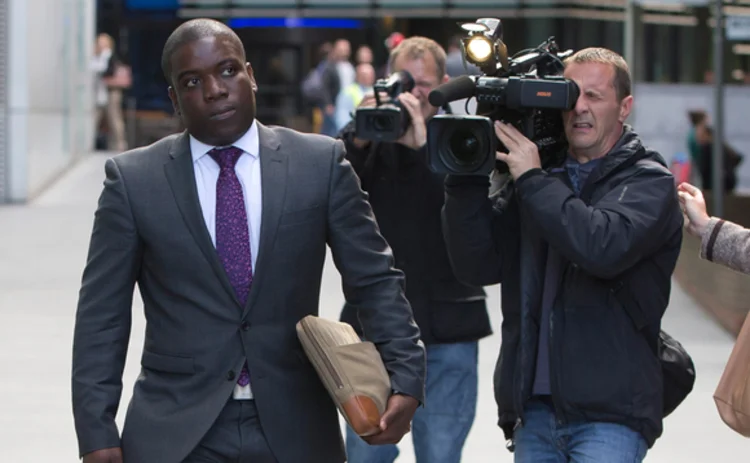
Accused UBS rogue trader Kweku Adoboli continued to argue today that the bank's management - including managing director Ron Greenwich and senior equities trader John Bennie - knew of the unauthorised trading strategy that ultimately lost the bank $2.3 billion in 2011. Adoboli was testifying for a fifth day in his own defence at London's Southwark Crown Court. He faces six charges of fraud and false accounting, which he denies.
Adoboli's defence throughout the trial has been to claim that while he falsified trading records and made unauthorised trades for three years before the losses were discovered, he did so with the knowledge and approval of his supervisors, meaning his actions were not dishonest. This morning, he claimed one of these supervisors was John Hughes - the other senior trader besides Adoboli on the four-man exchange-traded fund desk.
Immediately after the losses were discovered on September 14 and 15 last year, Adoboli told a UBS internal investigation that he and Hughes were co-managing the desk from February 2009, according to a record of the meeting read out earlier in the trial. But today, for the first time, Adoboli claimed he had never said this. "I saw [Hughes] as my supervisor," he said.
"You have just discovered that what you said in this document has contradicted a fundamental part of your defence," argued Sasha Wass, for the prosecution, pointing out that Adoboli had not challenged the document's accuracy earlier in the trial.
Adoboli listed several occasions on which he said senior management had encouraged him to execute unauthorised directional trades and conceal the risk this brought on to the desk's book. On one instance, he was in the pub with desk supervisor Ron Greenwich and senior trader John Bennie, "and they told me ‘We know what you are doing, we were young once too'", he claimed. Both Greenwich and his successor, John Di Bacco, "knew about the mechanism and knew that the actual risk profile was different from the displayed risk profile - they didn't know how, but they knew we had a way to hold trades off book", he added.
We were in the pub and they told me ‘We know what you are doing, we were young once too'
And on July 19, 2011, after Francois Gouws, then co-head of UBS investment bank's equities division, had ordered all desks to hold risk down in advance of a meeting of European Union ministers later in the week, Di Bacco had told Adoboli to continue trading, but to disguise the risks by saying the trades were on behalf of clients. Adoboli quoted Di Bacco saying, "If you are trading today, make it so you are trading client facilitation deltas" - and said this was effectively an order to mischaracterise prop trades. But in court earlier, Di Bacco had said this was an order to stop prop trading and carry out client trades only, the prosecution pointed out.
"Your argument depends on arguing that when one thing is written it means quite the opposite. You are taking us into a fantasy world," Wass said.
Mounting losses
The wheels started to come off in late June 2011, the court heard. On his return from holiday on June 20, Adoboli started to take much larger directional positions, still concealing the true risks involved by logging false offsetting trades. On July 1 - after Adoboli claimed he had come under heavy pressure from his superiors - he switched from short to long positions, and continued to increase the risk involved, increasing from $1 billion on July 1 to $3.2 billion on July 8, and $11.7 billion by August 3.
Adoboli also admitted he had lied about the nature of his trades to back-office employee Russel Miah in order to conceal the large overnight risk the desk was holding. "Yes, I told him a lie," he said. "He was junior and didn't understand our trading methodologies. As a desk, we had agreed to hold the trades for a bounce." He claimed to have told Miah's manager, Rory Boulton, the truth about the trades, but Wass pointed out that Boulton had denied this in court earlier in the trial.
In general, back-office staff were expected to fall into line, Adoboli said. "The way the bank works is that if senior management in the front office are happy, operations staff, even at senior management level, will go along, because their role is to support the front office in pursuit of profit for the bank."
Adoboli also claimed his initial explanation of his behaviour - in the so-called "bombshell email" sent to Di Bacco and back-office accountant William Steward - was also false. In the email, dated September 14, he claimed his trades had lost money in June and he had tried to recoup them in July. In fact, he said, the trades had made money overall until pressure from management had led him to switch from short to long, leading to heavy losses. He had also written that "nobody else was aware of these trades". This too was a lie, intended to shield others from the damage, he said.
Adoboli's cross-examination will continue on Monday.
Only users who have a paid subscription or are part of a corporate subscription are able to print or copy content.
To access these options, along with all other subscription benefits, please contact info@risk.net or view our subscription options here: http://subscriptions.risk.net/subscribe
You are currently unable to print this content. Please contact info@risk.net to find out more.
You are currently unable to copy this content. Please contact info@risk.net to find out more.
Copyright Infopro Digital Limited. All rights reserved.
As outlined in our terms and conditions, https://www.infopro-digital.com/terms-and-conditions/subscriptions/ (point 2.4), printing is limited to a single copy.
If you would like to purchase additional rights please email info@risk.net
Copyright Infopro Digital Limited. All rights reserved.
You may share this content using our article tools. As outlined in our terms and conditions, https://www.infopro-digital.com/terms-and-conditions/subscriptions/ (clause 2.4), an Authorised User may only make one copy of the materials for their own personal use. You must also comply with the restrictions in clause 2.5.
If you would like to purchase additional rights please email info@risk.net
More on Operational risk
Evalueserve tames GenAI to boost client’s cyber underwriting
Firm’s insurance client adopts machine learning to interrogate risk posed by hackers

Integrated GRC solutions 2024: market update and vendor landscape
In the face of persistent digitisation challenges and the attendant transformation in business practices, many firms have been struggling to maintain governance and business continuity

Vendor spotlight: Dixtior AML transaction monitoring solutions
This Chartis Research report considers how, by working together, financial institutions, vendors and regulators can create more effective AML systems
Financial crime and compliance50 2024
The detailed analysis for the Financial crime and compliance50 considers firms’ technological advances and strategic direction to provide a complete view of how market leaders are driving transformation in this sector
Automating regulatory compliance and reporting
Flaws in the regulation of the banking sector have been addressed initially by Basel III, implemented last year. Financial institutions can comply with capital and liquidity requirements in a natively integrated yet modular environment by utilising…

Investment banks: the future of risk control
This Risk.net survey report explores the current state of risk controls in investment banks, the challenges of effective engagement across the three lines of defence, and the opportunity to develop a more dynamic approach to first-line risk control

Op risk outlook 2022: the legal perspective
Christoph Kurth, partner of the global financial institutions leadership team at Baker McKenzie, discusses the key themes emerging from Risk.net’s Top 10 op risks 2022 survey and how financial firms can better manage and mitigate the impact of…

Emerging trends in op risk
Karen Man, partner and member of the global financial institutions leadership team at Baker McKenzie, discusses emerging op risks in the wake of the Covid‑19 pandemic, a rise in cyber attacks, concerns around conduct and culture, and the complexities of…