

Could energy follow finance into meltdown?
Energy companies aspiring to gain Tier I status have long emulated the banking model, in which trading is the repository for pricing and the management of market risk. In light of what has happened to many banks, should energy companies be adopting this model, asks Lawrence Haar


With 2009 entering its final quarter, to observe that the last year and-a-half has been a challenging period would be an understatement. Since the collapse of mortgage-backed securities pounded the foundations of credit risk management, the scope for managing counterparty risk has been severely impaired. Major financial institutions have imploded. Economic uncertainty has led to a contraction in
Only users who have a paid subscription or are part of a corporate subscription are able to print or copy content.
To access these options, along with all other subscription benefits, please contact info@risk.net or view our subscription options here: http://subscriptions.risk.net/subscribe
You are currently unable to print this content. Please contact info@risk.net to find out more.
You are currently unable to copy this content. Please contact info@risk.net to find out more.
Copyright Infopro Digital Limited. All rights reserved.
As outlined in our terms and conditions, https://www.infopro-digital.com/terms-and-conditions/subscriptions/ (point 2.4), printing is limited to a single copy.
If you would like to purchase additional rights please email info@risk.net
Copyright Infopro Digital Limited. All rights reserved.
You may share this content using our article tools. As outlined in our terms and conditions, https://www.infopro-digital.com/terms-and-conditions/subscriptions/ (clause 2.4), an Authorised User may only make one copy of the materials for their own personal use. You must also comply with the restrictions in clause 2.5.
If you would like to purchase additional rights please email info@risk.net
More on Risk management
Rising reliance on internal auditors spooks regulators and industry
Risk managers warn US is substituting supervisors with auditors; could compromise independence

What futures and options say about the cost of war
Spot prices reveal major disruption, futures indicate this will pass, options imply ongoing instability
For collateral, can TINA become TIA?
US Treasuries’ dominance as collateral in repo and derivatives is no longer set in stone, argues economist
CME-FICC cross-netting terms fuel clashes
Hedge funds worried by CCP powers to suspend arrangement; clearing members say it’s standard practice

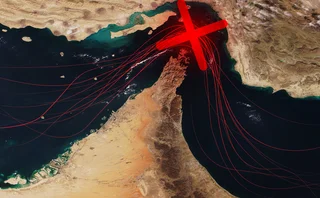
A Hormuz tipping point may be days away
Agent-based model suggests delays and shortages likely to accelerate after four weeks
Op risk data: HK gets tough on takeover in $200m takedown
Also: Bank staff steal state funds in India; Vanguard settles US net zero lawsuit. Data by ORX News

CRO view: Emerging risks in the age of AI
The risk agenda is shifting beyond market and credit volatility towards operational resilience, AI governance and culture

Interest rate crosswinds buffet IRRBB teams
Political intervention and rapid-fire law changes are skewering bank models for forecasting cashflows
