Weather house of the year: Parameter Climate

Energy Risk Awards 2024: Advisory firm shakes up weather market with raft of new services
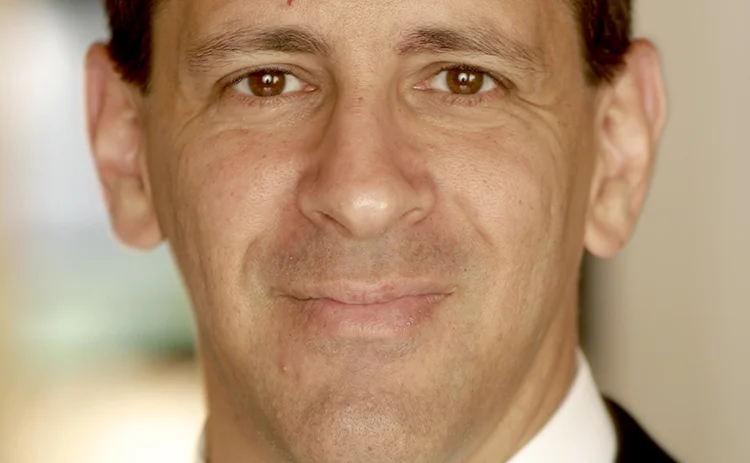
Martin Malinow – Sompo
Martin Malinow, Parameter Climate

Weather risk has become more complex and harder to manage in recent years, leaving energy firms with a precarious ‘protection gap’, says Martin Malinow, founder and chief executive of Parameter Climate, winner of Energy Risk’s 2024 Weather house of the year award.

The firm was launched in November 2021 by a team of weather experts from Sompo Global Weather with seed funding from a global insurance company. Its aim was to bring unique and much-needed services to the climate risk transfer market.

“We set out to bring meaningful, rather than incremental, change to the market,” says Malinow. “It has been under-serviced for years, meaning energy firms have not been able to optimally assess and protect themselves against weather risk and are suffering unnecessary volatility in earnings,” he says. He adds the potential downstream impacts of this volatility could be higher energy costs for consumers and higher financing costs, both of which could impede the global energy transition.

The need to manage weather risk has become more acute in recent years with the increase in severe weather events and the spread of intermittent, weather-dependent renewables in the global generation stack. Additionally, rising geopolitical tensions have created ongoing energy supply concerns, leaving utilities even more exposed to potential weather-related surges in demand or constraints on supply.   

However, Malinow believes the weather market has been unable to respond adequately to rising demand due to a shortage of three key ingredients: risk capital; effective hedging products; and analytics. Parameter set out to address all of these, bringing new risk-capacity providers into the market, advising on and structuring hedging products for both buyers and sellers, and developing its state-of-the-art analytics platform, ‘ClimateDelta’.   

Its mission began by engaging large insurers and reinsurers through underwriting advisory.

“Some of these large firms had a real interest in entering this space and diversifying their existing insurance risks, but had no experience of underwriting and pricing weather risk or running a book,” says Malinow.  Parameter was able to educate them on weather derivatives structures, how to calculate the risk and return profile of a deal and structure a portfolio, so they could get comfortable with deploying their capacity to these new risks.

In late 2021, Parameter facilitated the entry of two global reinsurers who committed “significant capital” to the weather market for the first time, Malinow says.

He believes there is significant untapped capacity from pension funds, insurance-linked securities funds, alternative asset managers and multi-strategy hedge funds, as well as other (re)insurance firms, who are attracted by the non-correlated nature of weather risk to their other investments. “We’d like to broaden out the capacity ecosystem to potentially another 30 or 40 firms and believe our advisory services and ClimateDelta will give them the help they need to get involved,” he says.

When it comes to engaging with (re)insurance firms, Parameter has a definite advantage in the longevity of its staff in the weather market, says Malinow, whose experience dates back to Enron in the late 1990s before co-founding his first company, XL Weather & Energy, in 2000. Many others on the team can trace their origins in the weather world back to Galileo, the company co-founded by Malinow in 2005 that was then bought in 2012 by Endurance Re, eventually becoming part of Japanese insurance giant Sompo in 2017.

“Having been underwriters and traders for over 20 years, we’ve been very well received,” says Malinow. “I think the underwriting community appreciates our market experience and understanding of their business.”

Parameter, which is now independent after a November 2023 management buy-out of its seed investor, also targets the buy-side, harnessing its decades-old relationships with energy firms. In the last year it has closed multiple transactions indexed to proxy wind generation based on satellite-measured wind speeds, proxy solar generation based on satellite-measured irradiance and proxy hydro generation based on actual metered river flow.

It is also a leading adviser on quanto transactions in the highly volatile Australian electricity market. These complex, multi-trigger products have payouts based on the interaction of extreme weather outcomes with five-minute spot electricity prices.

Underpinning the business is ClimateDelta, which went live in January 2024. Designed to enable firms to take a consistent, commercial approach to weather risk management using best-in-market analytics, Malinow believes the platform is a game-changer for the weather risk-transfer business.

“We are super excited about ClimateDelta,” says Malinow. “The lack of a consistent analytical foundation has been one of the things slowing the growth of the weather market.”  Parameter uses ClimateDelta to support its commercial business but also licenses it as a standalone product.

The platform allows firms to analyse an underlying weather risk, structure a financial contract, model it, consider it in the context of a portfolio and then, in effect, ‘reinsure’ that portfolio.

“Analysing and transacting non-catastrophic weather risk at the portfolio level is a market first. By providing the ability to slice and dice portfolios, we have opened up new risk pathways like captives, which will provide additional access points for buyers and capital providers,” says Malinow.

“Parameter is already in talks with several global players who clearly see how ClimateDelta can unlock strategic risk management by self-insuring via their insurance captives, an approach that will add scale and diversification to the weather market,” says Malinow. “Our mission is to unlock more risk transfer, which we believe will help close the global energy protection gap, delivering multiple economic benefits for a broad range of stakeholders.” 

Only users who have a paid subscription or are part of a corporate subscription are able to print or copy content.

To access these options, along with all other subscription benefits, please contact info@risk.net or view our subscription options here: http://subscriptions.risk.net/subscribe

You are currently unable to copy this content. Please contact info@risk.net to find out more.

Most read articles loading...

You need to sign in to use this feature. If you don’t have a Risk.net account, please register for a trial.

Sign in
You are currently on corporate access.

To use this feature you will need an individual account. If you have one already please sign in.

Sign in.

Alternatively you can request an individual account here