Commodity traders won’t replace banks, says Citi’s Staley

Citi head of global commodities “doesn’t lay awake at night awaiting a full-scale assault” from non-bank companies, such as oil majors and commodity trading houses
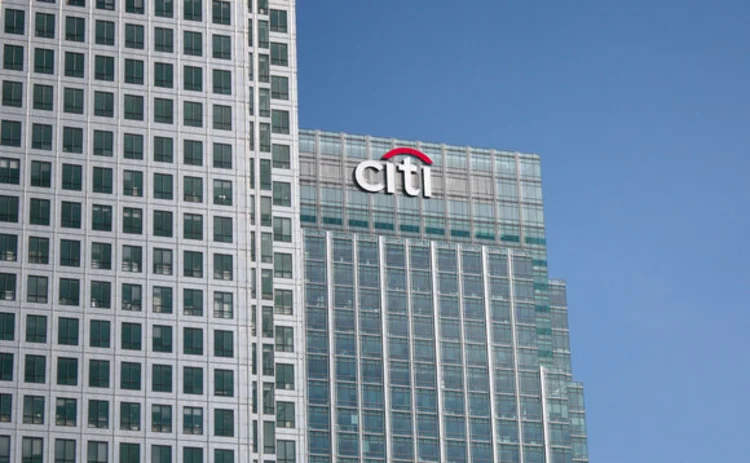
citi-canary-wharf

Harsher regulation and capital requirements are making life harder for banks in commodities, but Stuart Staley, London-based head of global commodities at Citi, says he doesn’t lose sleep about the threat from trading houses and oil majors eager to eat into banks’ market share.

In an exclusive interview with Energy Risk, Staley says such physical commodity traders have a “fundamentally different construct in terms of balance sheet, credit rating and liquidity management”. While there are some overlaps between the businesses of banks and these non-bank players, he notes, there are also some big differences.

“When you look at the fundamental activity of banks – underwriting commodity risk on behalf of their clients and re-packaging and distributing those risks through their franchise – that is not a space where the physical traders are active,” says Staley. “Maybe around the edges there is some business… that may be poached, but I don’t lay awake at night awaiting a full-scale assault from physical traders.”

Staley makes the point using an example taken from Charles Darwin – the grandfather of the theory of evolution – who held up the traits of different kinds of bird as proof of natural selection. “Some finches develop a shape of their beak that allows them to crack seeds open to eat, while other finches develop a beak shape that allows them to catch flying insects. You’re not going to see the second species decide one day, all of a sudden, to start eating seeds,” says Staley.

During the past year, banks including Barclays, Deutsche Bank and JP Morgan have been scaling back their presence in commodities. The moves come amid tighter regulation, such as the US Dodd-Frank Act and the European Market Infrastructure Regulation, as well as higher capital requirements in the form of Basel III. Slender volatility has also contributed to a lack of client hedging and trading opportunities, denting the revenues of bank commodity desks.

[The fundamental activity of banks] is not a space where the physical traders are active

“There are significant changes that are happening as a result of the changing regulatory environment,” Staley says. “Those predominantly revolve around capital. What you’re seeing is that people are largely trying to get their capital usage and expense base in line with the opportunity set that is available.”

One piece of regulation that has proven a headache for banks is the Volcker rule – part of Dodd-Frank named for former Federal Reserve chairman Paul Volcker, which bans them from proprietary trading. Firms have already axed dedicated proprietary trading desks in advance of Volcker’s full implementation, which is not scheduled until July 2015. But despite the introduction of Volcker, Staley thinks banks will have to keep warehousing risk to effectively serve their commodities clients. “The stand-alone proprietary desks have gone the way of the dodo… [But] I still firmly believe that in this business, you are still only really rewarded for taking risk. It’s not an agency business, nor will it ever be an agency business.”

Another worry is the so-called Lincoln amendment, which requires banks to separate their swap dealing activities from their federally insured banking entity. Although Staley says the rule will “impose significant administrative burdens” due to the need to re-document and move client relationships, he is relaxed about the broader impact. “As with all of these things, the tendency is to judge them against how business has historically been done and say ‘hey, wow, that represents a significant change against history’,” he says. “As the rules change, the markets react to find the most effective way to manage these risks in the new regulatory regime.”

In contrast with other banks that have been scaling back their efforts, Citi remains highly active in physical commodities. Many market participants are unnerved by proposals to constrain banks’ physical commodity activities, which the US Federal Reserve Board unveiled in an advance notice of proposed rulemaking (ANPR) in January.

The Fed’s ANPR expressed concern at the potential systemic risk that could be caused if a bank were found liable for a huge environmental catastrophe, such as the 2010 Deepwater Horizon oil spill in the Gulf of Mexico, for example. To help alleviate these concerns, the Fed suggested three potential courses of action: increasing capital requirements, increasing insurance requirements, or capping the amount of assets or revenue attributable to physical commodities trading.

Banks and some commodity derivatives end-users have fiercely attacked the Fed’s ANPR. But Citi’s Staley is more sanguine. While it is hard to tell whether the Fed will push ahead with the plans, he stresses that Citi’s physical activities are “very much in line with what the Fed originally envisioned” when it first allowed US Bank Holding Companies to engage in physical trading. Moreover, Citi should be able to adapt whatever the Fed decides. “We feel very strongly that we’ve positioned our platform to be able to adjust, regardless of what the outcome is.”

Staley acknowledges that Citi has benefited as a result of its competitors woes. During the past 18 months, the bank has snapped up top traders and salespeople from stricken rivals, including Barclays, Deutsche Bank, JP Morgan and UBS. But even as these larger players retreat, he notes that many smaller and regional banks are seeking to enlarge their footprint in commodities. “Right now, you see a lot of the banks that historically had smaller commodity presences also increasing their profiles,” he points out.

Although the rise of non-bank commodity traders has generated plenty of interest among market observers, the influx of these smaller banks could be more significant, he thinks. “My belief about the way the market is evolving is that it will change from one in which a lot of market share was very concentrated in the top two or three players, to one in which the largest players are a lot smaller than they used to be and market share is much more well-distributed,” comments Staley. “The tail will probably become more significant.”

Staley’s remarks came after Citi triumphed as the winner of this year’s Energy Risk Derivatives House of the Year award. A longer transcript of the interview is available in the June 2014 issue of Energy Risk.

Only users who have a paid subscription or are part of a corporate subscription are able to print or copy content.

To access these options, along with all other subscription benefits, please contact info@risk.net or view our subscription options here: http://subscriptions.risk.net/subscribe

You are currently unable to copy this content. Please contact info@risk.net to find out more.

Most read articles loading...

You need to sign in to use this feature. If you don’t have a Risk.net account, please register for a trial.

Sign in
You are currently on corporate access.

To use this feature you will need an individual account. If you have one already please sign in.

Sign in.

Alternatively you can request an individual account here