Carbon experts forecast global trading agreement by mid-2011
The outlook for the COP-15 in Copenhagen this year has been buoyed by reduction target pledges by the US and China, despite almost unanimous agreement from experts that a legally binding treaty is unlikely to be concretised. Katie Holliday and Pauline McCallion report
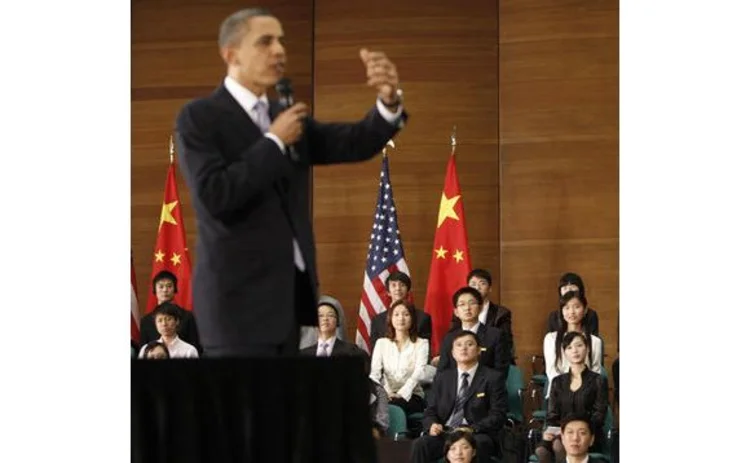
At the end of last month, US President Barack Obama announced he would be attending the Copenhagen meeting and would be going armed with a reduction target of 17% below 2005 levels by 2020 (see page 6). The news was immediately followed by China’s announcement that it would commit to a voluntary 40–45% cut in carbon intensity by 2020.
Experts say the dual pledge has boosted sentiment for progress
Only users who have a paid subscription or are part of a corporate subscription are able to print or copy content.
To access these options, along with all other subscription benefits, please contact info@risk.net or view our subscription options here: http://subscriptions.risk.net/subscribe
You are currently unable to print this content. Please contact info@risk.net to find out more.
You are currently unable to copy this content. Please contact info@risk.net to find out more.
Copyright Infopro Digital Limited. All rights reserved.
As outlined in our terms and conditions, https://www.infopro-digital.com/terms-and-conditions/subscriptions/ (point 2.4), printing is limited to a single copy.
If you would like to purchase additional rights please email info@risk.net
Copyright Infopro Digital Limited. All rights reserved.
You may share this content using our article tools. As outlined in our terms and conditions, https://www.infopro-digital.com/terms-and-conditions/subscriptions/ (clause 2.4), an Authorised User may only make one copy of the materials for their own personal use. You must also comply with the restrictions in clause 2.5.
If you would like to purchase additional rights please email info@risk.net
More on Risk management
Manuela Veloso on how banks can make their AI dreams reality
Former JP Morgan head of AI research says open-ended enquiry will unlock technology’s full potential

The ECB’s geopolitical stress test needs a price
Only a market can say how much it should cost to insure against losses from a geopolitical risk event, and none exists, argues academic

Risk managers grapple with hazards and benefits of intraday repo
Expected increase in collateral velocity and re-use could also boost leverage and risk in markets

Repo tokens won’t be cleared. Or will they?
Uncertainty lingers over clearing status of tokenised Treasuries, with decision likely devolved to DTCC

Op risk data: Japanese restaurant payments firm swallows $700m loss
Also: Bank of Baroda fraud filing, Wells’ Ponzi woes, and Swedbank’s Panama Papers payout. Data by ORX News

ECB finds gaps in geopolitical stress-testing frameworks
Current methods fail to properly capture impact of geopolitical stress on liquidity
How internal reporting data can strengthen governance and risk oversight
Japan’s revised whistleblower regime provides an opportunity to strengthen internal reporting arrangements

Rapid-fire repo raises hopes of cheaper, faster trading
Tokenised Treasuries piloted by DTCC could squash settlement cycles and enable 24/7 repo