

Swiss banks reveal record money-laundering levels
Regulators in Switzerland say suspicious transactions have increased
BERNE - Swiss authorities say the volume of suspicious financial activity has increased to record levels. Switzerland denies being a tax haven, but is renowned for a lack of banking transparency.
Switzerland's Money Laundering Reporting Office (MLRO) received a record number of suspicious activity reports related to money laundering from the country's banking sector in 2008, with 851 reports last year - up from 795 the year before.
The Swiss Federal Department of Justice and Police (FDJP) said the combined value of assets covered by the reports had also reached a record high, doubling from 2007 levels to hit $1.65 billion in 2008.
It said two-thirds of all reports were from the banking sector and that frauds represented the majority of cases under suspicion. Investment fraud accounted for 38.5% and 9.5% was linked to bribery. It added that most offences were alleged to have taken place outside Switzerland and the money deposited in Swiss bank accounts.
Switzerland was named by the Organisation for Economic Co-operation and Development (OECD) as one of its "grey list" of 38 territories yet to comply with its banking secrecy code. The list also included EU members Austria, Belgium and Luxembourg, along with Switzerland and Liechtenstein.
Switzerland has already pledged to reach OECD compliance and the grey list elicited an angry response from Swiss authorities, who rejected the notion that the country is a tax haven.
"Switzerland is not a tax haven. It always meets its obligations and is always ready to engage in dialogue. [Swiss] president Hans-Rudolf Merz regrets this procedure," said a statement from the Swiss finance ministry.
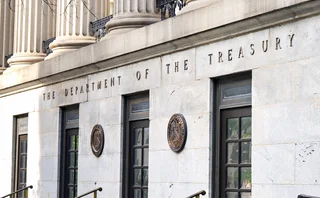
Swiss authorities will meet their counterparts from the US Treasury in Berne on April 28 to amend a bilateral income tax treaty between the two countries and improve transparency. Switzerland is co-operating with the US in investigating the private wealth management business of Swiss bank UBS and its US customers for tax evasion.
The OECD has previously placed the Philippines, Malaysia, Costa Rica and Uruguay on its "black list" of jurisdictions refusing to comply with its guidelines. It subsequently removed all four countries from the list in the face of angry political rebuttals and pledges of compliance.
Only users who have a paid subscription or are part of a corporate subscription are able to print or copy content.
To access these options, along with all other subscription benefits, please contact info@risk.net or view our subscription options here: http://subscriptions.risk.net/subscribe
You are currently unable to print this content. Please contact info@risk.net to find out more.
You are currently unable to copy this content. Please contact info@risk.net to find out more.
Copyright Infopro Digital Limited. All rights reserved.
As outlined in our terms and conditions, https://www.infopro-digital.com/terms-and-conditions/subscriptions/ (point 2.4), printing is limited to a single copy.
If you would like to purchase additional rights please email info@risk.net
Copyright Infopro Digital Limited. All rights reserved.
You may share this content using our article tools. As outlined in our terms and conditions, https://www.infopro-digital.com/terms-and-conditions/subscriptions/ (clause 2.4), an Authorised User may only make one copy of the materials for their own personal use. You must also comply with the restrictions in clause 2.5.
If you would like to purchase additional rights please email info@risk.net
More on Regulation
Banks want AML data upgrade to complement US regulatory reform
FinCEN’s proposed overhaul sparks debate on whether it will lead to smarter or weaker supervision
Industry pushes EU exchanges to solve equity post-trade frictions
Deutsche Bank, Goldman Sachs and JP Morgan join calls for mandatory cash CCP interoperability

Regulatory clarity urged for CME’s single-stock futures
SEC short selling and market access rules may hamper clearing and broker participation

Imminent US shake-up of LCR slated to include discount window
Adding Fed liquidity facility to bank regulation may help overcome stigma, raise lending capacity

French regulator wants permanent changes to EU’s output floor
Push for capital relief faces resistance from supervisors in Finland and the Netherlands

Council plans take Aquis, BME out of Esma oversight
German push to exempt Deutsche Börse catches three others, according to sources

Why watering down resolution plans is a bad idea
Bank failures are inevitable; banking crises are not
BIS’s Hernández de Cos on AI, non-bank risk and tokenisation
General manager talks about how the BIS is navigating a complex global environment
