

EU Rules may shake up equity data
In a move that shows no good deed goes unpunished, industry associations and insiders want to nix a current European Union proposal to improve trade reporting transparency because the new regulation will have a host of unintended consequences.
Now the European Union has proposed
Only users who have a paid subscription or are part of a corporate subscription are able to print or copy content.
To access these options, along with all other subscription benefits, please contact info@risk.net or view our subscription options here: http://subscriptions.risk.net/subscribe
You are currently unable to print this content. Please contact info@risk.net to find out more.
You are currently unable to copy this content. Please contact info@risk.net to find out more.
Copyright Infopro Digital Limited. All rights reserved.
As outlined in our terms and conditions, https://www.infopro-digital.com/terms-and-conditions/subscriptions/ (point 2.4), printing is limited to a single copy.
If you would like to purchase additional rights please email info@risk.net
Copyright Infopro Digital Limited. All rights reserved.
You may share this content using our article tools. As outlined in our terms and conditions, https://www.infopro-digital.com/terms-and-conditions/subscriptions/ (clause 2.4), an Authorised User may only make one copy of the materials for their own personal use. You must also comply with the restrictions in clause 2.5.
If you would like to purchase additional rights please email info@risk.net
More on Infrastructure
Communications surveillance solutions 2024: market update
A report offering Chartis’ latest view of the vendor landscape for communications surveillance solutions

SIMONE, the AI that nearly took down a bank
An algorithm designed to create new structured products ran out of control last year with almost catastrophic consequences for a major bank, as our exclusive whistleblower account reveals

Revealed: where banks are (literally) warehousing their swaps
As derivatives notional grows, dealers experiment with novel storage solutions

E-trading takes hold for FX swaps – sort of
Bulk of trades are being executed over screen, but bolder changes have stalled

From DNA to DHA – Preparing for a new era of digital human augmentation
As technology increasingly permeates societies, cultures and everyday activities, its integration into people’s lives is having a profound impact on what is expected of people in the workplace. Deloitte examines this evolution of today’s workforce, the…

Risk and finance: Working more closely together
Video interview: Thomas Kimner, SAS

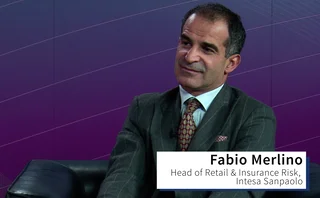
Video interview: Fabio Merlino, Intesa Sanpaolo
Fabio Merlino, head of retail and insurance risk discusses how the wealth management division of Intesa Sanpaolo upgraded its risk analytics capabilities with the algo system used by its proprietary traders
The changing face of Risk.net and our magazines
Extensive reader consultation has helped us reshape editorial teams and our site
